
At 11 p.m., after forcing your way through work, skipping messages, and lying awake for the third night in a row, the idea of finding help can feel like one more task you do not have the energy to manage. That is a common place to begin.
Depression often makes decision-making harder at the exact time treatment decisions matter. People in Philadelphia also run into a crowded mental health market with long wait times, confusing credentials, and a mix of in-person and virtual options that can be hard to sort through.
A clear starting point helps. If you are looking for a depression specialist who can assess treatment options, it helps to know that care no longer has to follow the old pattern of calling office after office, arranging travel across the city, and waiting weeks for an opening.
Psychiatric nurse practitioners now diagnose depression, prescribe and adjust medication when appropriate, and provide ongoing treatment through secure telehealth. That model tends to work well for adults who need expert psychiatric care that fits around jobs, parenting, school, physical health issues, or the simple reality that getting across Philadelphia is not always easy.
The goal is not to make treatment feel complicated. The goal is to make it more accessible, more personal, and more realistic for daily life.
Table of Contents
- The Search for Depression Help in Philadelphia
- Understanding Your Specialist Options
- Why Telehealth Is a Lifeline for Pennsylvanians
- Your Integrative and Personalized Treatment Plan
- Navigating Insurance and Payment Options
- How to Begin Your Journey with IPA Today
The Search for Depression Help in Philadelphia

It is 10:30 p.m. You are exhausted, you finally decide to look for help, and within fifteen minutes you are staring at a screen full of terms that do not answer the crucial question. Who can reliably assess depression, prescribe if needed, and keep following your progress in a way you can realistically stick with?
That confusion is common in Philadelphia. A large city should make mental health care easier to find, but many people run into the opposite problem. Too many listings, long waits, unclear provider roles, and office-based systems that ask a depressed person to manage forms, phone calls, transportation, and time off work before treatment even begins.
As noted earlier, depression affects a substantial share of adults in Philadelphia and across Pennsylvania. High need helps explain why so many practices are booked out and why a simple search can feel discouraging fast.
The first useful filter is not “Who treats depression?” It is “Who can evaluate my symptoms thoroughly, explain my options clearly, and provide follow-up that fits real life?”
For many adults, that means looking beyond the traditional model of psychiatric care in a major city. A short medication visit in a busy office can help in some cases, but it may leave out important pieces such as sleep, anxiety, trauma history, past medication response, substance use, medical contributors, and daily functioning. Depression care works better when the clinician has enough time and scope to see the whole picture.
That is one reason many people now seek online depression treatment with a psychiatric provider. Telehealth with a psychiatric nurse practitioner can offer a more accessible path, especially for Pennsylvanians who need both medical assessment and a more personal, integrative treatment plan.
What usually helps early in the search
Adults who find a good fit tend to focus on a few practical points first.
- A provider with the right scope: Depression may require diagnosis, medication review, safety assessment, and ongoing monitoring, not just a one-time conversation.
- A care model you can continue: Treatment only works if appointments, follow-up, and communication are realistic during a period when energy and concentration are low.
- Clear logistics: Fees, insurance, refill rules, scheduling, and response times should be easy to understand before the first visit.
- Room for adjustment: Early treatment often involves fine-tuning. Symptoms, side effects, and life stressors change over time.
I often tell patients that the best option is not the listing that looks most impressive. It is the one you can access, understand, and keep using long enough to see whether it is helping.
Common mistakes that slow people down
| Situation | Why it causes problems |
|---|---|
| Booking the first available appointment without checking scope | Fast access matters, but the wrong fit can delay useful treatment |
| Assuming therapy alone or medication alone is always the answer | Depression treatment should follow an evaluation, not a guess |
| Waiting until symptoms are severe | Earlier care usually gives more room to plan safely and carefully |
| Ignoring practical barriers | Cost, scheduling, privacy, and transportation often determine whether care continues |
Philadelphia offers many mental health options. The harder part is finding care that is both clinically appropriate and easy enough to access when depression is already making daily tasks harder. That is where the modern PMHNP telehealth model stands out. It can reduce friction, shorten the path to an evaluation, and give patients a treatment relationship that is medical, personal, and built for follow-through.
Understanding Your Specialist Options
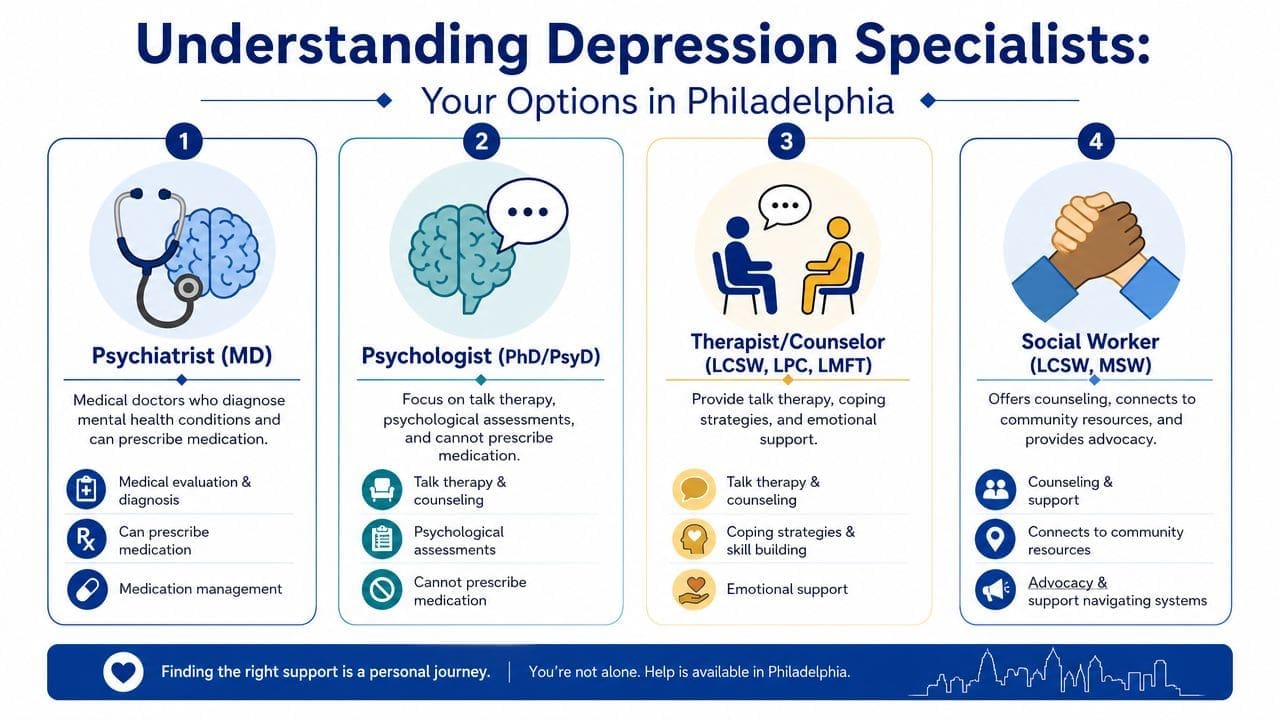
A Philadelphia search for depression care can quickly turn into a list of psychiatrists, psychologists, therapists, counselors, and psychiatric nurse practitioners. The titles sound similar. The actual roles are different, and choosing the right starting point can save weeks of delay.
For many adults with depression, the question is simple. Do you need therapy, medication evaluation, or both?
The main provider types
A psychiatrist is a physician who diagnoses mental health conditions and prescribes psychiatric medication. Some also provide psychotherapy, but in large city practices many appointments are focused on diagnosis and medication follow-up.
A psychologist usually provides therapy and psychological testing. Psychologists often help clarify diagnoses, identify patterns in thinking and behavior, and deliver structured treatments such as CBT. They do not typically prescribe psychiatric medication.
A therapist or counselor may be an LCSW, LPC, or LMFT. These clinicians provide talk therapy, skills work, support during life stress, and treatment for relationship or behavior patterns that are contributing to depression.
A psychiatric-mental health nurse practitioner, or PMHNP, diagnoses mental health conditions, prescribes medication, and follows treatment over time. PMHNP care often includes close attention to sleep, stress, medical history, substance use, daily functioning, and the practical factors that affect whether a plan is realistic.
Why the PMHNP model fits many adults with depression
Traditional psychiatry in a city like Philadelphia can be hard to access. Some practices have long waits. Some offer brief medication visits with limited room to sort through trauma, anxiety, burnout, hormonal changes, ADHD, or medication side effects that may be shaping the picture.
A PMHNP can often offer a more flexible entry point, especially through telehealth. The clinical scope includes diagnosis, medication management, and ongoing follow-up, but the style of care is often more conversational and function-focused. In practice, that means the visit is not just about whether a symptom checks a box. It is also about whether you are sleeping, getting through work, eating regularly, thinking clearly, and keeping up with daily life.
That combination matters in depression treatment.
If medication may be part of care, and the person also needs a careful assessment instead of a rushed prescription, a PMHNP or psychiatrist is usually the right place to start. Readers who want a side-by-side explanation can review this comparison of a psychiatric nurse practitioner and psychiatrist.
The American Psychiatric Nurses Association also explains psychiatric nursing as a specialty.
How to choose where to start
The best first contact depends on the problem in front of you.
- Start with therapy first if the main goal is emotional support, grief work, relationship stress, or structured talk therapy and there are no immediate medication questions.
- Start with a PMHNP or psychiatrist if depression is affecting sleep, appetite, concentration, work performance, or safety, or if previous treatment has not helped enough.
- Use both if symptoms are more layered. Medication and therapy often work better together than either one alone.
I often tell patients to look beyond credentials alone. Read how the clinician explains treatment. Check whether follow-up is realistic. Make sure the practice can handle both the medical and day-to-day side of depression care. That is one reason telehealth PMHNP care has become an important option. It gives many Pennsylvanians access to psychiatric evaluation and follow-up in a format that is often easier to start and easier to continue.
Why Telehealth Is a Lifeline for Pennsylvanians
Philadelphia has excellent health systems, but access is still a problem. The issue usually isn't whether treatment exists. It's whether someone can get evaluated quickly, attend consistently, and keep care going without work disruptions, travel strain, or long gaps between appointments.
A Pennsylvania-focused summary reports that 25.7% of adults with symptoms of anxiety or depression were unable to get the therapy they needed, according to this mental health access overview for Philadelphia and Pennsylvania. That figure captures a core reality of depression care. Need and access aren't the same thing.
What telehealth solves
Telepsychiatry works well because it removes several common failure points at once.
- Travel burden drops: No commute into Center City, no parking issue, and no extra transit planning when motivation is already low.
- Privacy improves: Many adults feel more comfortable attending from home than sitting in a waiting room.
- Scheduling is easier: Telehealth often fits better around jobs, caregiving, and school.
- Follow-up becomes more realistic: Ongoing medication checks are easier to maintain when the visit doesn't take half a day.
For many Pennsylvanians, telehealth isn't a backup option. It's the version of care they can consistently use.
What still matters in virtual care
Telehealth only works well when the clinical standards stay high. The platform should be secure and HIPAA-compliant. The intake should still be thorough. Medication decisions should still be careful and individualized.
A strong virtual visit doesn't feel rushed or generic. It should include symptom review, history, prior treatment response, side effects, sleep, substance use, and functional impact. Patients should also understand what happens between visits, including messaging, refill requests, and when to seek urgent help.
Good telepsychiatry feels organized, personal, and clinically grounded. If it feels like a quick prescription stop, the model is too thin.
Readers who want a closer look at how virtual depression treatment works can review this online psychiatry option for depression in Philadelphia. For a broader public-health view of virtual mental health care, the National Institute of Mental Health offers general mental health information that can help people prepare for treatment questions and options.
Your Integrative and Personalized Treatment Plan
A good depression plan shouldn't start and end with a prescription pad. Depression affects mood, but it also affects sleep, energy, appetite, concentration, motivation, relationships, and the ability to do ordinary tasks. Treatment works better when the evaluation is broad enough to catch what's driving symptoms and what may be complicating them.
Pennsylvania data reported in a behavioral health summary show 19.3% of adults had a clinical diagnosis of depression and 18.5% showed symptoms consistent with generalized anxiety disorder, according to Pennsylvania mental health statistics. That overlap matters because a depression specialist shouldn't assume low mood exists in isolation. Anxiety, trauma, bipolar spectrum symptoms, substance use, and attention problems can all change treatment choices.
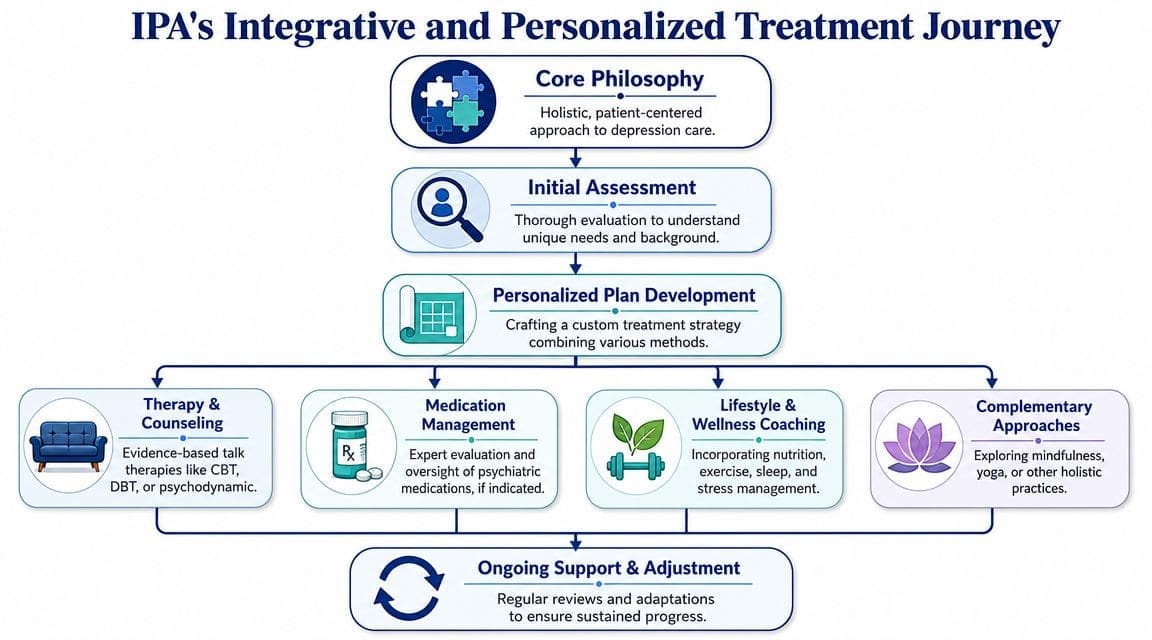
What a thorough plan usually includes
A modern treatment plan often combines several layers of care rather than relying on a single tool.
- Diagnostic clarification: The first task is confirming whether symptoms fit major depression, persistent depression, anxiety-related depression, trauma-related symptoms, grief, burnout, or another condition.
- Medication management: When medication is appropriate, the focus should be on fit, side effects, prior response, and careful follow-up rather than fast prescribing.
- Psychotherapy support: Skills-based work such as CBT can help with avoidance, distorted thinking, hopelessness, and behavioral shutdown.
- Lifestyle review: Sleep routines, nutrition, movement, alcohol or cannabis use, and stress load can all affect response.
- Medical context: Labs or other medical review may be considered when symptoms suggest a possible physical contributor.
A whole-person approach can also include discussion of exercise, not as a simplistic fix, but as one useful part of recovery. For patients who want structure around movement habits, an exercise and workout platform can be a practical complement to therapy and medication planning.
When standard treatment hasn't worked
Another important question is what happens after a first medication or therapy trial doesn't help. Generic depression pages often stop there, but real care can't.
The Penn Mood Disorders Treatment Center specifically identifies treatment-resistant depression as a distinct focus. That's clinically important. Some patients need medication adjustments, augmentation strategies, a fresh diagnostic review, or referral to higher-intensity specialty care rather than repeated versions of the same first-line approach.
This is also where integrative telepsychiatry can be useful. Integrative Psychiatry of America's holistic depression treatment describes a model that combines medication management with psychotherapy and broader wellness strategies, including when clinically indicated reviews of lab and other individualized factors.
Conditions that often travel with depression
Comorbidity changes treatment. A provider may need to look sideways, not just straight at depressive symptoms.
- Anxiety symptoms: worry, panic, tension, restlessness
- Attention concerns: difficulty organizing, sustaining focus, or following through
- Trauma patterns: hypervigilance, numbness, avoidance, reactivity
- Weight and appetite changes: these can be both symptoms and treatment considerations
Related service pages such as ADHD care, anxiety treatment, and medical weight loss support reflect how often depression sits inside a broader clinical picture.
Navigating Insurance and Payment Options
Cost worries stop many people before treatment even begins. That hesitation is understandable, especially in Philadelphia, where mental health search results often push people toward private clinics without making pricing or coverage easy to understand.
A Philadelphia-focused community resource summary notes that many people struggle to find affordable, ongoing depression care and that the local system can feel fragmented, according to this overview of mental health services in Philly. In practice, that means transparent payment information isn't a small detail. It's part of access.
What to check before booking
A useful payment review starts with a few concrete questions.
| Question | Why it matters |
|---|---|
| Is the practice in-network with the patient's plan? | This shapes out-of-pocket cost |
| Are self-pay rates listed clearly? | Hidden pricing creates stress and delays |
| Is there help with insurance verification? | Patients shouldn't have to guess what's covered |
| Are follow-up visits and refills explained? | Ongoing care costs matter more than intake alone |
Patients should also look at whether a practice offers membership-style options, straightforward self-pay pathways, or documentation for out-of-network reimbursement when applicable.
Practical trade-offs to expect
Insurance can lower direct cost, but it may narrow provider choice or add administrative friction. Self-pay can offer more flexibility and faster scheduling, but only if rates are clear and sustainable. Neither route is automatically better. The right choice is the one that allows treatment to continue without repeated financial surprises.
Payment clarity is part of good care. People make better clinical decisions when they aren't decoding billing language at the same time.
For people who want to understand common insurance terms before booking, the National Alliance on Mental Illness guide to navigating health insurance is a useful starting point. Practices should also make their own process easy to review. This insurance and fees page is the kind of resource patients should expect to find before scheduling.
What doesn't help
Three approaches tend to create more stress than they save:
- Waiting to ask about cost until after the intake
- Assuming telehealth always means lower out-of-pocket expense
- Choosing a provider without confirming follow-up affordability
Depression treatment works best when it's continuous. A realistic plan for payment matters just as much as a realistic plan for medication or therapy.
How to Begin Your Journey with IPA Today
Starting care should feel manageable. If the process is confusing, many people postpone it, especially when depression is already making simple tasks feel heavy. The practical answer is to reduce the next step to a few actions and do them in order.
A simple way to get started
Most adults do well with this sequence:
Review the service fit
Make sure the practice treats depression in adults and offers the type of care needed, whether that's evaluation, medication management, psychotherapy support, or an integrative approach.Check the financial details
Verify insurance participation or review self-pay options before booking. That removes guesswork and prevents delays.Request the appointment online
A modern telepsychiatry practice should make scheduling straightforward through a secure portal or online form.Prepare for the intake
Write down current symptoms, prior medications, therapy history, sleep patterns, medical issues, and any questions about side effects or diagnosis.
What to bring into the first visit
A strong first appointment usually goes better when the patient has a short reference list ready.
- Symptoms list: low mood, loss of interest, poor sleep, fatigue, irritability, appetite changes, hopelessness, or concentration problems
- Treatment history: any prior antidepressants, therapy experiences, side effects, or partial response
- Medical context: other medications, chronic health issues, and substance use
- Goals: better sleep, more stable energy, fewer crying spells, improved work function, less isolation
People often worry about saying the “right” thing in a psychiatric intake. That isn't necessary. Honest detail is more useful than polished language.
Why the portal matters
A good patient portal does more than schedule visits. It can support secure messaging, appointment requests, refill coordination, and ongoing communication between follow-ups. That matters in depression care because treatment often requires adjustment over time rather than one fixed plan.
This online depression treatment page shows what that type of virtual care path can look like. For many Philadelphia-area adults, that model is easier to start and easier to maintain than the older system of repeated phone calls, paper forms, and in-person logistics.
Depression often tells people to wait, cancel, or try to push through alone a little longer. That's one of the reasons taking one small action matters. A single appointment request can interrupt a long period of delay.
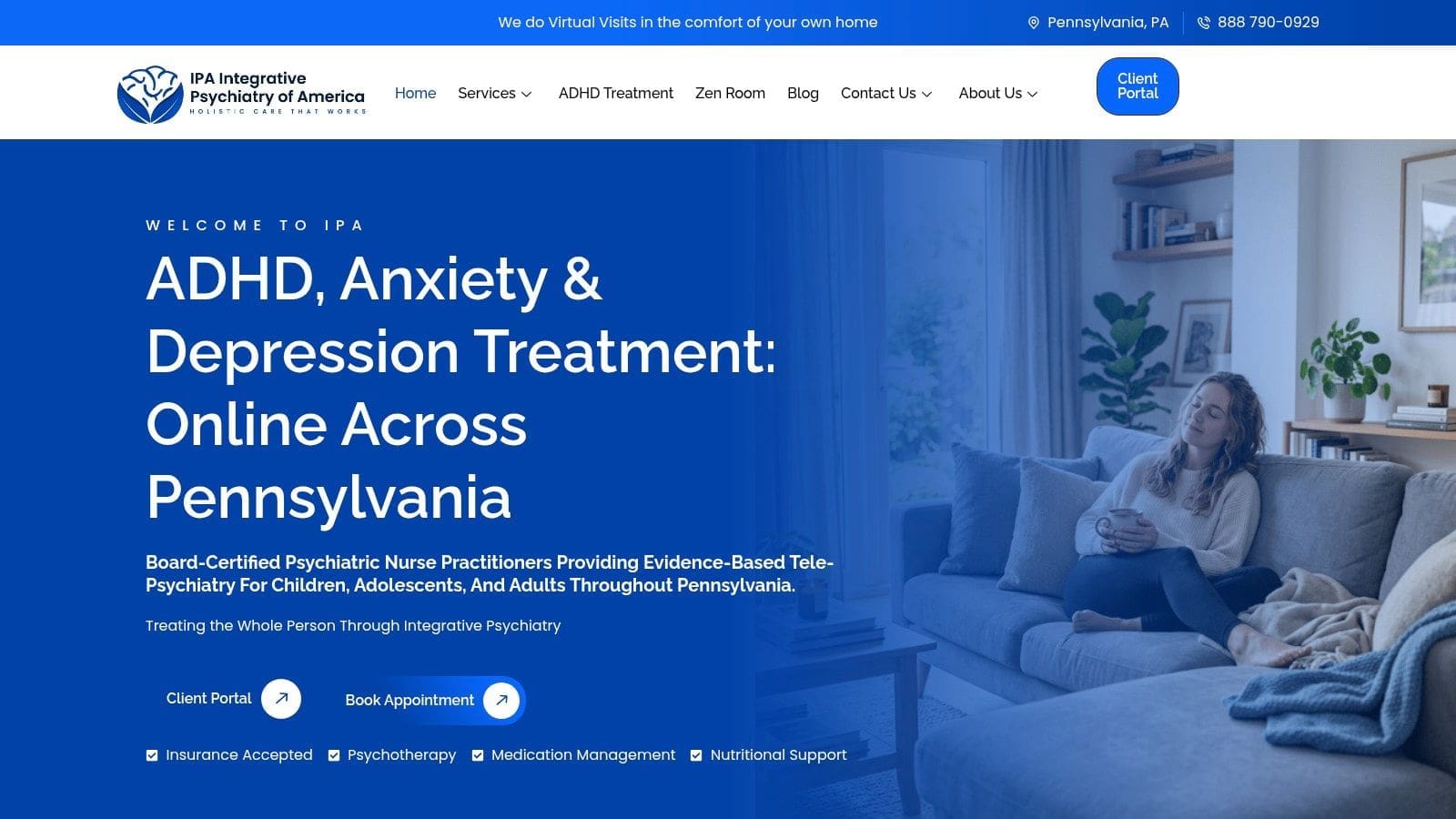
If depression has been affecting daily life, Integrative Psychiatry of America offers online psychiatric care across Pennsylvania, including Philadelphia, with evaluation, medication management, and integrative treatment options delivered through secure telehealth.