
A lot of adults in Pennsylvania arrive at online ADHD care at the same point. Work is slipping through the cracks, email is piling up, deadlines feel harder than they should, and home life takes more effort than anyone else seems to notice. Some already suspect ADHD. Others have spent years calling it stress, burnout, anxiety, or a motivation problem that never quite improves.
For many people in Philadelphia and across Pennsylvania, the next obstacle isn't recognizing the pattern. It's figuring out how to get evaluated and treated without adding another logistical burden. That's where ADHD medication management online has become a practical option. People often search for an online psychiatrist, but in many cases, ADHD care is also provided through licensed psychiatric nurse practitioners who evaluate, diagnose, prescribe when appropriate, and monitor treatment over time.
Table of Contents
- The Rise of Online ADHD Care in Pennsylvania
- Your First Steps Toward Online ADHD Treatment
- What to Expect in Your Initial Virtual Assessment
- Navigating Medication Selection and Titration
- Ongoing Management and Pennsylvania Refill Policies
- How Integrative Care Supports Your ADHD Treatment
The Rise of Online ADHD Care in Pennsylvania
Online ADHD care isn't a workaround anymore. It's become part of mainstream psychiatric treatment, especially for adults who need consistent follow-up but don't want another commute, another waiting room, or another half day off work.
That shift shows up in national data. A 2023 analysis estimated that 15.5 million adults in the United States, or 6.0%, had a current ADHD diagnosis, and among adults with current ADHD, 46.0% had used telehealth services for ADHD. Since March 2020, 30.5% used telehealth to obtain an ADHD prescription, which shows that remote prescribing and follow-up now function as a major access channel rather than a niche service (national ADHD telehealth analysis).
Why this matters in real life
In practice, online care helps solve two different problems at once.
First, it improves access. Pennsylvania patients often need care that fits around jobs, parenting, school schedules, and transportation limits. Second, it makes ongoing treatment easier to maintain. ADHD medication management usually works best when follow-up is structured and frequent enough to catch side effects, dose problems, or signs that the diagnosis needs another look.
Practical rule: Convenience helps only if the care model stays clinically thorough.
A rushed prescription visit may feel efficient, but it often creates problems later. Good telehealth ADHD care still requires careful assessment, follow-up planning, symptom tracking, and discussion of sleep, anxiety, mood, appetite, and day-to-day functioning.
What patients should expect from a legitimate online model
A responsible online ADHD treatment program should include several basics:
- A real diagnostic evaluation: The visit should go beyond a quick checklist.
- Medication decisions tied to clinical reasoning: Prescribing should match symptoms, history, and safety factors.
- Scheduled follow-up care: Treatment shouldn't stop after the first prescription.
- Attention to the whole person: ADHD often overlaps with anxiety, depression, sleep issues, or substance-use concerns.
Patients searching for adult ADHD treatment, telepsychiatry Pennsylvania, virtual ADHD diagnosis, or online mental health care usually want one thing above all else. They want clarity. The rest of the process gets much easier once they know what a good standard of care looks like.
Your First Steps Toward Online ADHD Treatment
Starting treatment tends to feel more manageable once the first few administrative steps are clear. Most of the anxiety before an appointment comes from uncertainty, not from the appointment itself.
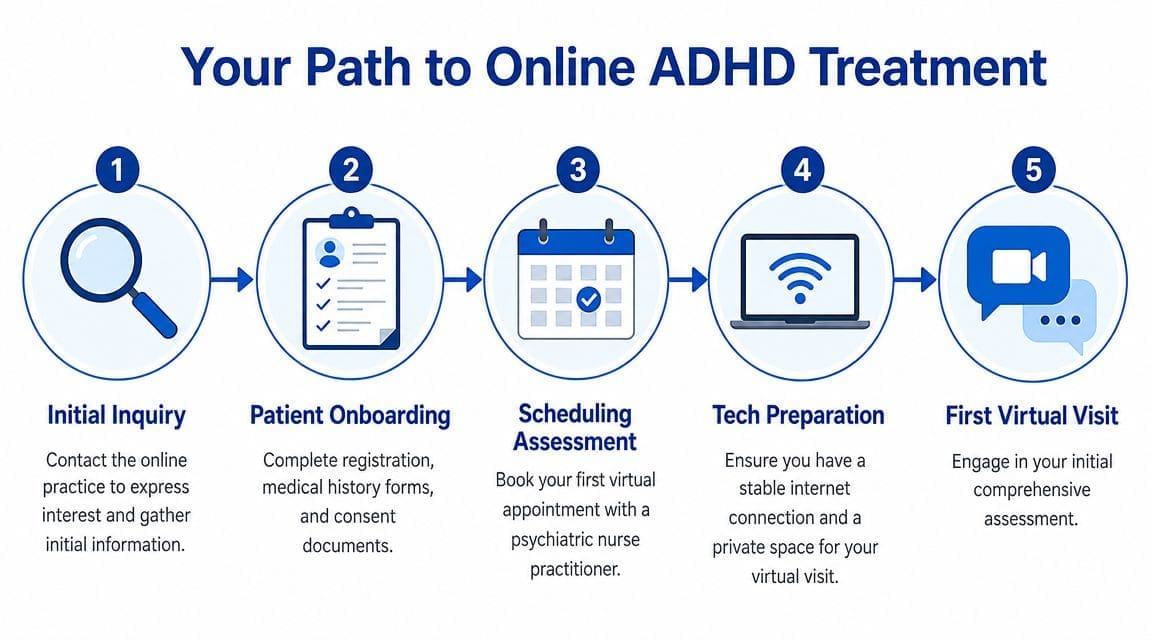
What to gather before scheduling
Before the first visit, it helps to collect the information a prescribing clinician will use.
- Past records: Old ADHD evaluations, prior medication lists, school testing, or therapy notes can add useful context.
- Current symptom examples: Write down what's happening now. Missed deadlines, chronic lateness, task switching, forgetfulness, impulsive spending, or difficulty listening in conversations are more helpful than a vague statement like “can't focus.”
- Medical and psychiatric history: Include anxiety, depression, trauma, sleep problems, blood pressure concerns, substance use history, and any family history that seems relevant.
- Current medications and supplements: This includes non-psychiatric medications, caffeine-heavy routines, and over-the-counter products.
People who want a structured starting point can review an online ADHD evaluation process before booking.
What to confirm before the visit
Patients often focus on whether a provider can prescribe. A better question is whether the practice has a system for evaluation, follow-up, and secure communication.
A useful checklist includes:
- Licensure in Pennsylvania: The clinician must be licensed to treat patients in the state.
- Secure technology: The platform should be HIPAA-compliant and designed for private medical visits.
- Insurance or self-pay clarity: Verify coverage, copays, or cash-pay details in advance.
- Patient portal access: Messaging, forms, refill requests, and appointment reminders are easier when everything sits in one secure portal.
- Pharmacy planning: Have a preferred pharmacy ready, especially if medication may be prescribed.
The smoother the onboarding process feels, the more likely the clinical visit can focus on symptoms and treatment instead of paperwork problems.
How to prepare your space and technology
The technical side matters more than is commonly expected. A dropped connection in the middle of a psychiatric intake can interrupt details that matter.
A few simple steps help:
- Choose privacy: A parked car, shared office, or busy kitchen usually isn't ideal.
- Test the device: Camera, microphone, and internet should be checked before the visit starts.
- Keep water and notes nearby: It's easier to stay engaged when the setup is simple.
- Log in early: Even a few extra minutes reduces avoidable stress.
Patients looking for ADHD treatment Philadelphia, online prescription management, behavioral health telemedicine, or Pennsylvania ADHD care often expect the hard part to be the medication discussion. Usually, the better move is to get organized first. That sets up a much more useful first appointment.
What to Expect in Your Initial Virtual Assessment
The first virtual ADHD assessment should feel like a clinical conversation, not a test to pass. A strong evaluation looks at patterns across time, not just whether someone feels distracted this month.

A typical adult patient may come in saying concentration has collapsed at work. By the middle of the visit, the more revealing details often show up elsewhere. Chronic disorganization since adolescence. Trouble finishing projects even when interest is high. Restlessness during meetings. A long history of being described as bright but inconsistent. Or the opposite pattern, where anxiety has masked ADHD by forcing constant overcompensation.
What a careful evaluator is looking for
A proper assessment doesn't stop at inattentive symptoms. It also looks for conditions that can mimic ADHD or sit alongside it.
A clinical review notes that a thorough ADHD evaluation should include screening for medical mimics such as thyroid problems, anemia, concussion, sleep or vision issues, plus baseline heart rate, blood pressure, height and weight, symptom rating scales, psychiatric comorbidity screening, and prescription-monitoring checks (clinical review of ADHD evaluation and monitoring).
That's one of the clearest differences between quality care and a pill-mill model. Safe telehealth care still requires the same baseline thinking as in-person psychiatry.
Topics that often come up in the first visit
Some questions feel highly personal, but they serve a real purpose.
| Focus area | Why it matters |
|---|---|
| Childhood symptoms | ADHD usually has a developmental pattern, even if it wasn't diagnosed early |
| Work and school functioning | Impairment matters as much as symptom count |
| Anxiety and depression | These can overlap with ADHD or sometimes explain the symptoms better |
| Sleep and substance use | Both can affect concentration and prescribing safety |
| Medical history | Medication choice depends on more than attention symptoms |
When diagnostic clarity is still uncertain, additional psychological testing for ADHD may be part of the discussion.
A good assessment doesn't try to force a diagnosis quickly. It tries to make the right diagnosis.
Patients also benefit from hearing how these visits work before they schedule. This brief overview gives a practical sense of the virtual format and expectations:
What honesty helps the clinician do
Many adults worry that saying the wrong thing will block treatment. In reality, honest detail usually improves care.
If a patient says a past stimulant caused insomnia, that matters. If appetite drops under stress, that matters. If a person struggles more with emotional regulation than classic distractibility, that matters too. The first visit works best when the patient and clinician are trying to build an accurate picture together, not rushing toward a specific prescription.
Navigating Medication Selection and Titration
Medication choice for ADHD is a clinical fit decision. For a Pennsylvania patient using telehealth, that decision has to match symptoms, work or school hours, sleep pattern, anxiety level, medical history, and the practical question of what can be prescribed and monitored safely online.
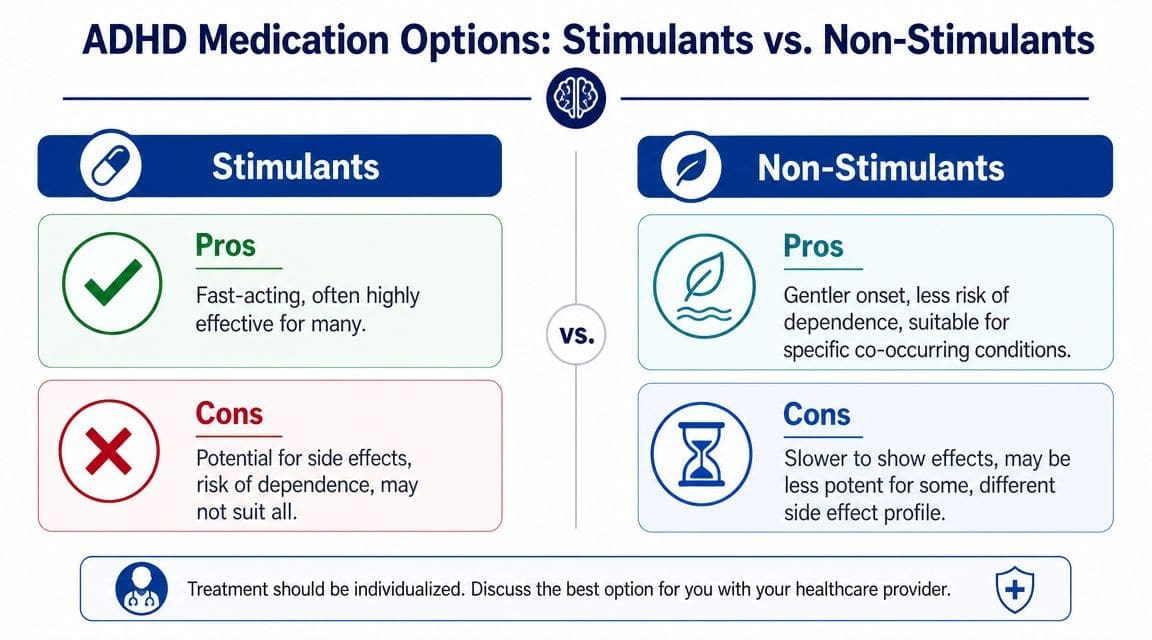
Stimulants and non-stimulants serve different roles
Stimulants are still the medications adults ask about most often because they can improve focus, task initiation, and follow-through relatively quickly. Non-stimulants fill an important role when stimulant side effects become limiting, when there is concern about misuse, or when a patient has a psychiatric or medical profile that calls for a different approach.
The American Academy of Family Physicians notes that stimulants and atomoxetine are common first-line options for adults with ADHD, while antidepressants can be considered in selected cases, especially when the broader symptom picture points that way (AAFP adult ADHD treatment review). In practice, the medication class matters less than the match. A strong plan considers how long coverage is needed during the day, whether appetite suppression is already a problem, and whether insomnia, blood pressure concerns, or mood instability are likely to get worse.
For Pennsylvania telehealth patients, logistics matter too. A non-stimulant may be simpler from a refill standpoint. A stimulant may offer faster symptom relief but usually requires tighter monitoring and clearer refill planning.
What proper titration looks like
A lot of patients expect the first prescription to settle the issue. It usually does not.
Titration means starting cautiously, increasing methodically when needed, and checking whether the benefit is real enough to justify the side effects. The National Institute for Health and Care Excellence recommends recording baseline symptoms and adverse effects, then measuring response and side effects after each dose change (NICE ADHD guideline). That structure matters online as much as it does in person.
Early follow-up is part of good care. If a stimulant helps concentration but causes a sharp drop in appetite or sleep, the answer may be a dose adjustment, a timing change, or a different formulation. If atomoxetine is tolerated but the effect is still modest early on, patience may be appropriate because non-stimulants often build more gradually.
I often explain this to patients at Integrative Psychiatry of America in simple terms. The first prescription is a trial based on the evaluation. The next few check-ins tell us whether that trial is improving daily life.
Common trade-offs patients should understand
A better medication plan starts with realistic expectations about trade-offs, not with a promise that one option will do everything well.
- Speed vs patience: Stimulants often show benefit sooner. Non-stimulants usually require more time before the full effect is clear.
- Coverage vs side effects: Longer symptom coverage can help workdays and evening responsibilities, but it may also increase appetite or sleep problems in some patients.
- Convenience vs control: Non-stimulants are often easier to manage administratively. Controlled stimulants involve stricter prescribing procedures and closer follow-up.
- Effectiveness vs consistency: A medication may seem weak when the underlying issue is missed doses, irregular timing, or taking it too late in the day.
Patients who want a plain-language overview can review this advice for navigating ADHD medication alongside clinician guidance.
Some patients also prefer to read about ADHD medication options for adults before the prescribing discussion. That can help them ask better questions about onset, duration, side effects, and whether medication should be paired with therapy, nutrition support, or lab review.
That last point matters. Medication can reduce friction, but sustainable ADHD treatment often requires more than symptom suppression. If sleep is poor, meals are inconsistent, anxiety is untreated, or another medical issue is affecting focus, dose increases alone will not solve the whole problem.
Ongoing Management and Pennsylvania Refill Policies
The maintenance phase is where good care becomes visible. Once a medication is started, follow-up visits should answer two questions. Is the patient functioning better, and is the treatment still safe and appropriate?
What follow-up should actually cover
Strong medication management visits aren't limited to “Do you need a refill?” They usually review:
- Symptom response: attention, initiation, task completion, restlessness, emotional control
- Side effects: appetite suppression, insomnia, irritability, cardiovascular concerns, rebound symptoms
- Adherence: whether the medication is being taken as prescribed
- Functioning: work performance, academic demands, relationships, and home routines
- Risk changes: new anxiety, mood shifts, substance use concerns, or medical changes
CHADD notes that effective ADHD medication management requires more than prescribing and recommends reviewing the need for continued medication at least once a year, including function, side effects, missed-dose effects, and nonpharmacologic support (CHADD medication management guidance).
Pennsylvania refill realities
Pennsylvania patients should expect tighter refill procedures when the medication is a controlled substance. In practical terms, refill timing, pharmacy coordination, identity verification, and follow-up appointments matter more than many first-time patients realize.
For stimulant prescriptions, clinicians typically need regular follow-up and clear documentation. Pharmacies may also have their own workflow requirements, stock limitations, or timing restrictions that affect when a prescription can be processed. That doesn't mean treatment is difficult. It means the process needs planning.
A few habits make ongoing care smoother:
- Request follow-up before running out: Last-minute refill messages create avoidable stress.
- Use one pharmacy when possible: Consistency reduces confusion.
- Report side effects early: Don't wait for the next routine visit if sleep or appetite changes become significant.
- Keep appointments even when things are going well: Stability still needs monitoring.
Patients seeking ADD meds online in Pennsylvania should expect that legitimate care includes recurring review, not automatic renewals.
Regular monitoring protects the patient and improves the odds that treatment stays effective over time.
How Integrative Care Supports Your ADHD Treatment
A common Pennsylvania telehealth pattern looks like this. A patient gets the right ADHD prescription, notices some improvement, then still struggles with sleep, missed meals, stress, irritability, or follow-through. The medication is helping, but the day-to-day system around it is still working against them.
That is why ADHD treatment works best as an ongoing care plan, not just a prescription decision. In practice, I often see symptoms stay active because several factors are interacting at once. Executive dysfunction can affect routines. Poor sleep can worsen focus and mood. Anxiety, burnout, and inconsistent nutrition can blur the picture and make it harder to tell whether a medication dose is right.
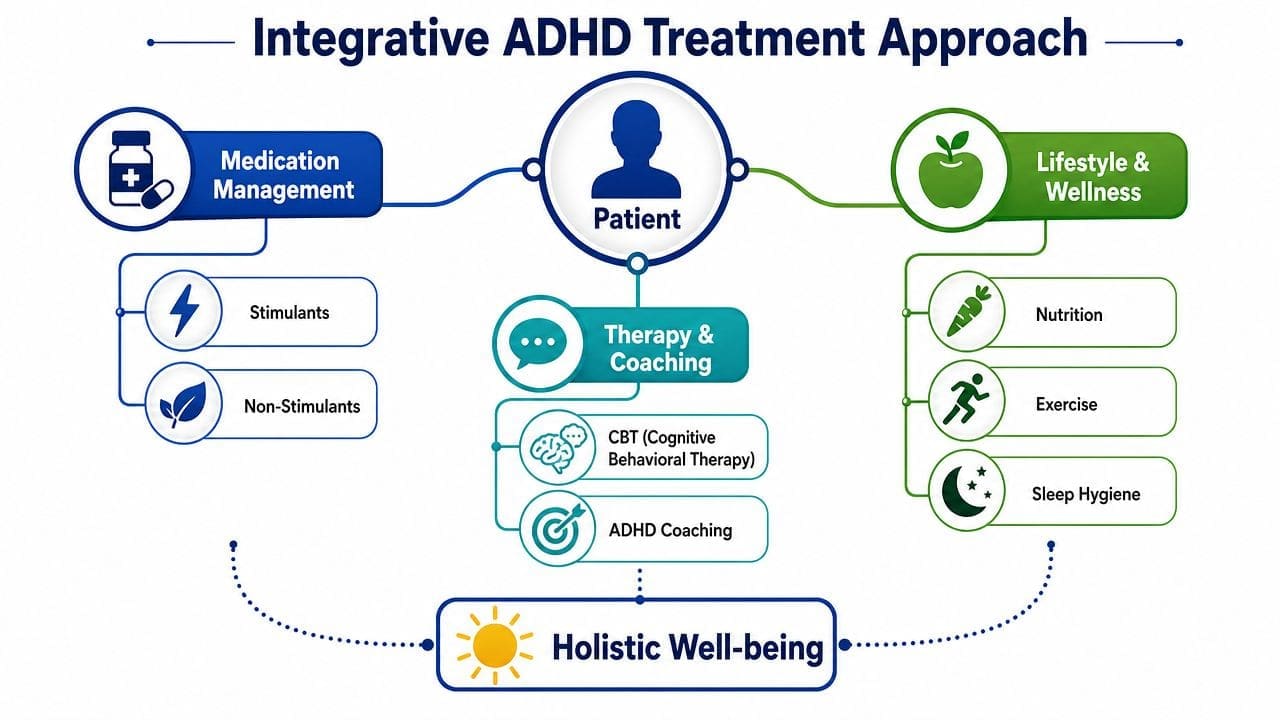
What a broader treatment plan can include
A stronger ADHD plan often includes several supports working together:
- Therapy: Cognitive behavioral strategies can improve procrastination, self-criticism, planning, and emotional regulation.
- Coaching and structure building: Calendar systems, reminders, task breakdown, and changes to the home or work environment often improve follow-through.
- Nutrition and daily routines: Skipped meals, high caffeine intake, and poor sleep can intensify ADHD symptoms or mimic medication side effects.
- Medical and lab review: When clinically appropriate, labs and other screening can help identify contributors such as fatigue, brain fog, or mood changes.
This integrative model is the foundation of some Pennsylvania telehealth mental health practices. At Integrative Psychiatry of America, ADHD care can include medication management along with therapy, exercise guidance, mindfulness, nutrition education, and lab-based support when indicated. Patients who want help with food patterns, energy, and symptom stability can learn more about nutrition support for ADHD, depression, and anxiety care.
Why this matters for sustainable results
The goal is not to add services for the sake of adding services. The goal is to make treatment more accurate and more sustainable.
For example, if a patient reports that their stimulant wears off too fast, the next step is not always a higher dose. Sometimes the underlying issue is poor sleep, inconsistent meals, rising anxiety, or a daily schedule that keeps the brain in a constant state of overload. Addressing those factors can make the current medication work better and can prevent unnecessary medication changes.
Over time, patients usually do better when they build skills alongside symptom relief. That may mean protecting sleep, setting up routines that reduce decision fatigue, recognizing overstimulation earlier, or getting treatment for coexisting anxiety or depression. Medication remains important. It works better when the rest of the care plan supports attention, mood, energy, and consistency.
If ADHD symptoms are affecting work, relationships, motivation, or daily functioning, Integrative Psychiatry of America offers online psychiatric care for Pennsylvania patients through secure telehealth. Adults looking for a thorough evaluation, ongoing medication management, and a treatment plan that also considers therapy, nutrition, labs, and whole-person mental health can review the practice and schedule a next step online.