
Typing “Adderall prescription near me” often happens at a frustrating moment. Work is piling up, deadlines are slipping, sleep may already be off, and the search results make everything look either too easy or impossibly complicated.
For adults in Pennsylvania, the process is manageable. It just isn't supposed to be instant. A safe ADHD evaluation asks better questions than a quick prescription service does. It looks at whether symptoms have been persistent, whether they impair daily life, whether another condition could be driving the problem, and whether a stimulant is the right fit.
That difference matters. A fast appointment is convenient. A real assessment is what protects health, safety, and long-term treatment success.
Table of Contents
- Your Search for an Adderall Prescription in Pennsylvania
- Understanding the Rules for Getting ADHD Medication Online
- How to Find a Reputable Telehealth Provider in PA
- The Initial ADHD Evaluation What to Expect
- Your Treatment Plan Prescriptions and Holistic Options
- Frequently Asked Questions About Online ADHD Treatment
- Can someone get an Adderall prescription on the first visit
- What if there is already an ADHD diagnosis from another provider
- How are refills handled with telehealth
- What should a patient do if the local pharmacy is out of stock
- Is a fast online ADHD clinic ever a good idea
- Are non-stimulant plans ever better than Adderall
Your Search for an Adderall Prescription in Pennsylvania
For many Pennsylvania residents, “near me” no longer means a short drive. It often means licensed telehealth care that can evaluate ADHD properly and send treatment to a local pharmacy when appropriate. That's useful, especially for adults balancing work, parenting, school, or privacy concerns.
The harder part is knowing which search result is legitimate. Some platforms market speed first and medicine second. That's risky with a controlled substance. A better search starts with a provider who's licensed in Pennsylvania, comfortable ruling out look-alike conditions, and structured enough to monitor treatment after the first visit.
Location still shapes access more than is often understood. A major U.S. study found that stimulant dispensing rates ranged from 1.0 per 100 people in Hawaii to 13.6 per 100 in Alabama in 2019, showing how much prescribing patterns vary by geography according to this national stimulant dispensing analysis. For someone searching for an Adderall prescription near me, that means local availability, prescribing culture, and pharmacy experience can all differ.
What a Pennsylvania resident should look for
A practical search usually includes these checkpoints:
- Pennsylvania licensure: The clinician should be authorized to treat patients in PA.
- Adult ADHD experience: ADHD in adults can overlap with anxiety, trauma, sleep problems, and depression.
- Medication follow-up: Safe prescribing includes ongoing review, not a one-time visit.
- Clear process: Intake forms, history, risk screening, and treatment planning should all be part of care.
The useful question isn't only who can prescribe nearby. It's who can evaluate carefully enough to decide whether prescribing makes sense at all.
Adults comparing options can start with this guide to ADHD doctors near me in Pennsylvania, then narrow the field based on credentials, state compliance, and follow-up structure.
Understanding the Rules for Getting ADHD Medication Online
Adderall is a Schedule II controlled substance. In daily practice, that means the medication is regulated closely, prescriptions require a legitimate medical purpose, and responsible clinicians don't treat it like a routine convenience item.
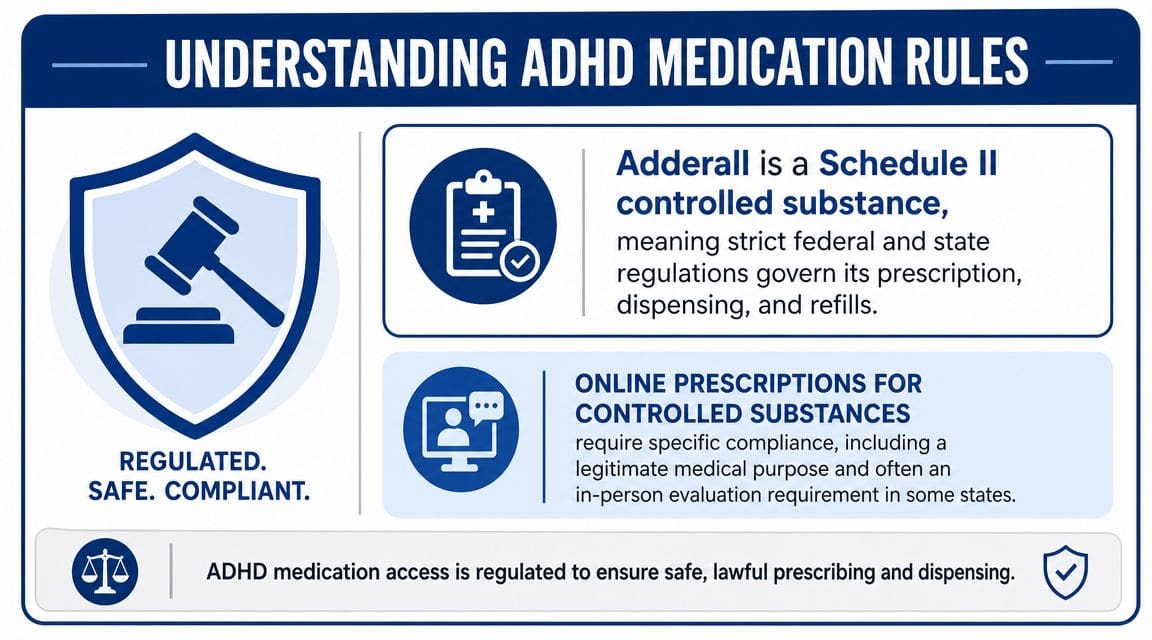
That level of oversight exists for a reason. In 2023, amphetamine/dextroamphetamine, which includes Adderall, accounted for 49% of stimulant prescriptions, making it the most prescribed stimulant in findings summarized by the CDC stimulant prescribing report. When a medication is this common and has misuse potential, regulators and clinicians are going to expect a careful process.
What these rules mean in real life
For a Pennsylvania adult using telehealth, a legitimate online ADHD medication process usually includes:
Identity and medical intake
The clinic gathers history, symptoms, current medications, and risk information before prescribing decisions are made.A real clinical visit
The appointment should assess ADHD symptoms and also screen for sleep issues, anxiety, substance-use concerns, and medical factors that could change the plan.Electronic prescribing when appropriate
If medication is clinically indicated, the prescription is typically sent electronically to a pharmacy.Ongoing monitoring
Follow-up matters. A stimulant plan should include review of benefit, side effects, timing, and refill procedures.
What doesn't fit safe practice
A few patterns should raise concern right away:
| Situation | Why it's a problem |
|---|---|
| A service promises an Adderall prescription before evaluation | The decision should come after assessment, not before it |
| The visit is brief and skips symptom history | ADHD diagnosis requires context, not just a checklist |
| No follow-up is discussed | Controlled-substance care needs monitoring |
| The provider seems vague about state rules | Telehealth prescribing depends on compliance |
People exploring virtual care can review how ADHD medication online is typically handled in a structured telepsychiatry setting. The extra steps can feel slow when someone wants fast relief, but they're part of safe care, not red tape for its own sake.
How to Find a Reputable Telehealth Provider in PA
The easiest provider to book isn't always the safest provider to trust. That's the central problem behind many searches for an Adderall prescription near me.
Authoritative patient guidance puts the focus on a real ADHD evaluation, misuse-risk monitoring, and supervised care rather than convenience alone, as described in this WebMD patient guide on Adderall and safe use. That's the right lens for choosing a telehealth clinic in Pennsylvania.
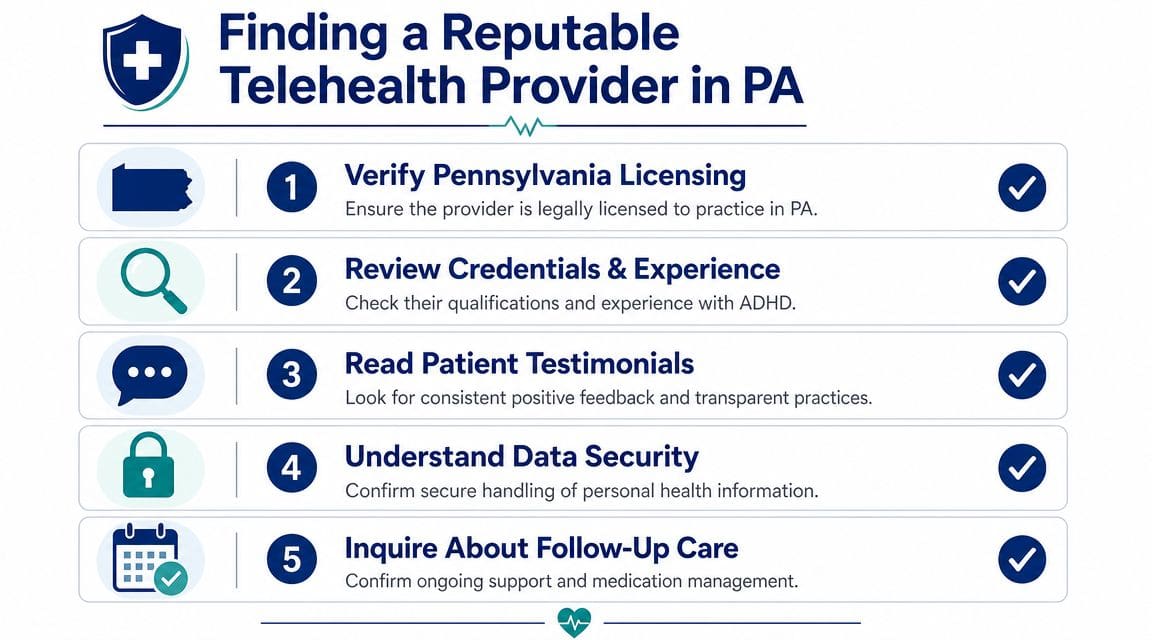
A quick vetting checklist
Use this before booking:
- Check licensure first: The clinician should be licensed to see patients in Pennsylvania.
- Read credentials carefully: A psychiatric nurse practitioner, physician, or other qualified prescriber should be clearly identified.
- Look for full evaluations: If the website sounds built around same-day stimulants, that's a warning sign.
- Confirm follow-up care: Ask how refills, side effects, and dose adjustments are handled.
- Review privacy practices: Secure patient portals and HIPAA-compliant visits matter.
A local or state-focused telepsychiatry practice often has an advantage here. The clinicians are more likely to understand Pennsylvania workflows, pharmacy issues, and the practical obstacles patients run into after the appointment.
Signals of a stronger clinic
This video gives a useful overview of what thoughtful psychiatric care should feel like:
The strongest telehealth ADHD providers usually do a few things consistently:
- They ask for records or background detail instead of relying only on a short self-report.
- They screen for anxiety, insomnia, trauma, and substance-use concerns because those can affect diagnosis and prescribing.
- They discuss non-medication strategies instead of treating medication as the only endpoint.
- They set expectations about monitoring, refill timing, and side effects.
Practical rule: If a clinic sells certainty before it gathers history, the process is backwards.
For Pennsylvania residents comparing options, Philadelphia mental health providers offering telepsychiatry can be one starting point. What matters most is not the size of the platform. It's whether the clinical process is thorough enough to be trusted.
The Initial ADHD Evaluation What to Expect
A proper ADHD evaluation should feel detailed, not rushed. That's true whether the visit happens in Philadelphia, Pittsburgh, a smaller Pennsylvania town, or entirely by telehealth.
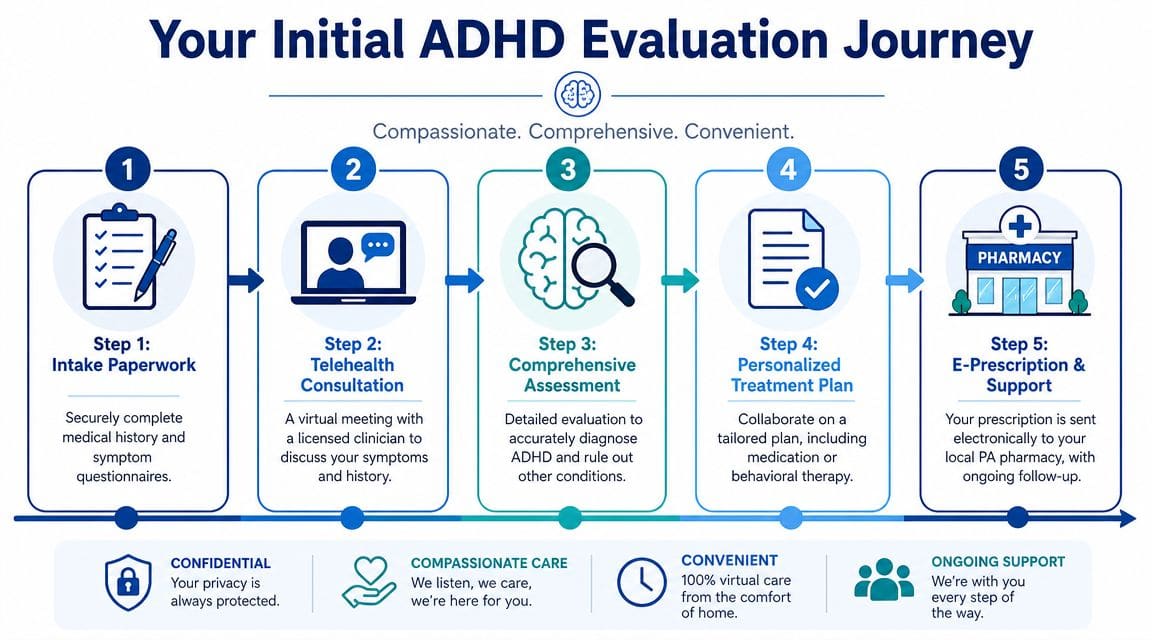
The standard workflow for a possible Adderall prescription involves a thorough evaluation to confirm that five or more persistent ADHD symptoms impair daily life in adults, followed by treatment planning and e-prescribing if medication is appropriate, according to this clinical overview of the ADHD assessment process. Skipping that process is a red flag.
Before the appointment
Most legitimate clinics start with paperwork. That usually includes symptom questionnaires, medical history, current medications, and consent forms. Some patients also bring school records, past testing, work performance concerns, or notes from a prior provider.
That preparation matters because ADHD isn't diagnosed by one complaint such as “can't focus.” A clinician needs the broader pattern. Did symptoms start earlier in life. Are they affecting work, school, finances, relationships, or daily organization. Have sleep loss, panic, depression, or substance use made concentration worse.
During the telehealth visit
The appointment itself should be conversational, but structured. A psychiatric clinician will usually ask about attention, distractibility, procrastination, impulsivity, restlessness, deadlines, forgetfulness, and follow-through. The clinician should also ask what's happening around those symptoms.
A careful evaluation usually includes:
- History of symptoms: Not just whether symptoms exist, but how long they've been present and where they show up.
- Functional impact: Problems at work, in school, at home, or in relationships carry more diagnostic weight than occasional distraction.
- Medical and psychiatric review: Anxiety, depression, trauma, sleep disorders, and substance-use risk can all complicate the picture.
- Medication history: Prior stimulant use, side effects, and response patterns help guide treatment decisions.
Some adults expect the visit to focus only on attention. A better evaluation also asks about sleep, mood, stress, and safety.
After the assessment
Not every evaluation ends with an Adderall prescription. That often surprises people, but it's appropriate. Some adults meet criteria for ADHD and may benefit from stimulant treatment. Others may need further clarification, a different medication, therapy, sleep treatment, or a broader care plan.
A sound next step could include:
| Possible outcome | What it means |
|---|---|
| ADHD diagnosis with medication discussion | A stimulant or another medication may be considered |
| ADHD diagnosis without immediate stimulant prescribing | More risk review, records, or follow-up may be needed |
| Alternative diagnosis or mixed picture | Anxiety, depression, trauma, or sleep problems may need treatment first |
| Referral for additional testing | More diagnostic detail may help in complex cases |
Adults preparing for this process can review how to get an ADHD diagnosis as an adult to understand the paperwork, symptom review, and treatment planning involved.
Your Treatment Plan Prescriptions and Holistic Options
Once a diagnosis is made, treatment becomes a management process, not a one-click refill system. If Adderall is appropriate, the prescription is usually sent electronically to a local Pennsylvania pharmacy. After that, follow-up visits help determine whether the dose, timing, and response support daily functioning.

For some adults, Adderall is not the best long-term fit. Independent medical guidance notes that alternatives may be worth discussing when side effects, shortages, or co-occurring concerns are present, including non-stimulants such as Strattera and other medication options in this discussion of ADHD medication alternatives and management. That matters when a patient has insomnia, anxiety, appetite loss, palpitations, or a history that makes stimulant treatment more complicated.
What ongoing medication management actually includes
A responsible treatment plan usually covers more than the prescription itself:
- Response tracking: Is focus better in a way that helps work, school, or home life.
- Side-effect review: Appetite, sleep, nervousness, and physical symptoms need regular attention.
- Pharmacy planning: Local stock issues can affect timing and may require coordination.
- Alternative pathways: If Adderall isn't ideal, the plan should include other medication or non-medication options.
One practical part of ADHD care is building external structure around the medication plan. Tools such as calendars, alerts, visual prompts, and device-based routines can reduce missed tasks and mental overload. This overview of Apple devices for ADHD focus is a useful example of how digital reminders can support day-to-day functioning between visits.
Medication is one part of treatment
Good ADHD care also looks at sleep, exercise, nutrition, routines, therapy, and environmental supports. Medication can improve attention. It usually doesn't fix disorganization, burnout, poor sleep habits, or a chaotic work setup by itself.
One option Pennsylvania residents may consider is online ADHD medication management, which combines evaluation, prescribing when appropriate, and follow-up through telepsychiatry. The key point is that medication should sit inside a broader treatment plan, not replace one.
The most effective plan is often the one a patient can realistically sustain, monitor, and adjust over time.
Frequently Asked Questions About Online ADHD Treatment
Can someone get an Adderall prescription on the first visit
Sometimes, but it shouldn't be assumed. The visit has to establish that ADHD is the right diagnosis, that symptoms are impairing, and that a stimulant is appropriate and safe. If the history is incomplete or another issue needs to be ruled out, a clinician may delay prescribing.
What if there is already an ADHD diagnosis from another provider
That history can help, especially if there are prior records, medication history, or documentation of earlier treatment. It still doesn't replace a current clinical review. A new telehealth prescriber is still responsible for confirming diagnosis, safety, and the current treatment plan.
How are refills handled with telehealth
Controlled-substance prescribing usually requires ongoing follow-up and active monitoring. Patients should expect a refill process tied to scheduled care, symptom review, and pharmacy coordination rather than open-ended renewals.
What should a patient do if the local pharmacy is out of stock
The first step is to contact the prescribing clinician early, not after medication has already run out. Sometimes the plan may involve checking another local pharmacy, adjusting the prescription logistics, or discussing an alternative medication strategy if availability remains difficult.
Is a fast online ADHD clinic ever a good idea
Speed alone isn't a quality marker. If a clinic markets convenience but avoids detailed evaluation, risk screening, or follow-up, the patient takes on more risk. Thoroughness protects both diagnosis and treatment.
Are non-stimulant plans ever better than Adderall
Yes. Some adults do better with a different medication approach because of side effects, co-occurring anxiety, sleep problems, cardiovascular concerns, or stimulant misuse risk. A strong treatment relationship leaves room for adjustment instead of forcing one medication to fit every situation.
Adults in Pennsylvania who want a careful, telehealth-based ADHD evaluation can explore Integrative Psychiatry of America for structured psychiatric assessment, medication management when appropriate, and broader support that looks beyond a quick prescription.