
Holistic depression treatment is a care philosophy that looks at you as a whole person, not just a list of symptoms. It combines evidence-based medication with powerful supportive therapies—like nutrition, psychotherapy, and lifestyle changes—to address the root causes of depression and build true, lasting wellness. This integrative health approach is a cornerstone of modern mental wellness, focusing on sustainable recovery rather than just symptom suppression.
Rethinking Depression Care Beyond Just Medication
For a long time, depression treatment often focused on just one piece of the puzzle: managing symptoms with medication. While helpful, this approach can feel incomplete. What if the imbalance is also tied to poor nutrition, chronic stress, or long-standing lifestyle patterns? This is where a more complete picture becomes essential. An integrated health model considers these factors as vital components of a comprehensive care plan.
Holistic depression treatment moves beyond this narrow view. It's built on the understanding that your mind, body, and daily life are all deeply connected. Instead of only targeting symptoms, this philosophy digs deeper to explore the underlying factors contributing to your depression. It’s a key part of the future of mental healthcare.
This approach views you as a whole person, not just a diagnosis. It’s a collaborative partnership where we explore all the interconnected roots of depression to build a solid foundation for your recovery.
A New Model for Wellness
This integrative framework, led by our expert psychiatric nurse practitioners, combines the best of conventional medicine with evidence-based wellness strategies. The goal is always to create a personalized plan that supports your entire being. This often includes:
- Mindful Medication Management: Using prescriptions thoughtfully as one tool among many, not as the only solution for mental wellness.
- Targeted Psychotherapy: Building coping skills and resilience through modalities like Cognitive Behavioral Therapy (CBT).
- Body-Mind Nutrition: Understanding how the food you eat directly impacts your brain chemistry and mood, a core tenet of integrated health.
- Lifestyle Integration: Incorporating practices like exercise and mindfulness to help regulate your nervous system.
Let's look at how these two models compare side-by-side.
Traditional vs. Holistic Depression Treatment at a Glance
The table below highlights the key differences between a conventional, medication-first model and the comprehensive, whole-person approach we use at Integrative Psychiatry of America.
| Aspect | Traditional Approach | Holistic Approach |
|---|---|---|
| Primary Focus | Symptom management and reduction. | Identifying and addressing the root causes of symptoms. |
| Core Method | Medication is often the first and primary treatment. | Medication is one part of a larger, personalized plan. |
| Scope of Care | Primarily targets brain chemistry. | Considers mind, body, lifestyle, and environment. |
| Patient Role | Often passive; receives a prescription. | Active and collaborative; participates in building the treatment plan. |
| Treatment Tools | Primarily pharmaceuticals. | Medication, psychotherapy, nutrition, exercise, supplements, and lab testing. |
| Long-Term Goal | To control symptoms and prevent relapse. | To build resilience, restore balance, and create sustainable, long-term wellness. |
As you can see, the holistic model doesn't reject conventional tools but integrates them into a much broader and more empowering framework for healing.
The need for this wider approach is clear. Evidence now strongly supports an integrative framework that combines medication with lifestyle changes for better, more sustainable outcomes, especially when traditional strategies fall short. You can discover more insights about these global findings and the call for more effective interventions.
At Integrative Psychiatry of America, we believe this is the future of mental healthcare. By looking at the full picture, we help you move from simply coping with symptoms to truly thriving. This method is about empowering you with the tools and knowledge to take control of your mental health for the long term. You can learn more about revolutionizing mental health with the integrative psychiatry approach in our detailed guide. It's a journey from feeling managed to feeling whole again.
The Four Pillars of an Integrative Treatment Plan
A truly effective holistic plan isn't built on a single solution. Instead, it rests on four interconnected pillars that work together to restore your sense of balance and well-being. Think of it like building a sturdy house—each pillar is essential. If one is weak, the entire structure can feel unstable. This comprehensive approach is central to effective, long-term mental wellness.
Here, we'll break down these four core components, showing how they fit together to create a complete strategy for recovery.
This infographic shows the difference between a traditional, single-focus model and the more comprehensive, multi-faceted holistic framework.
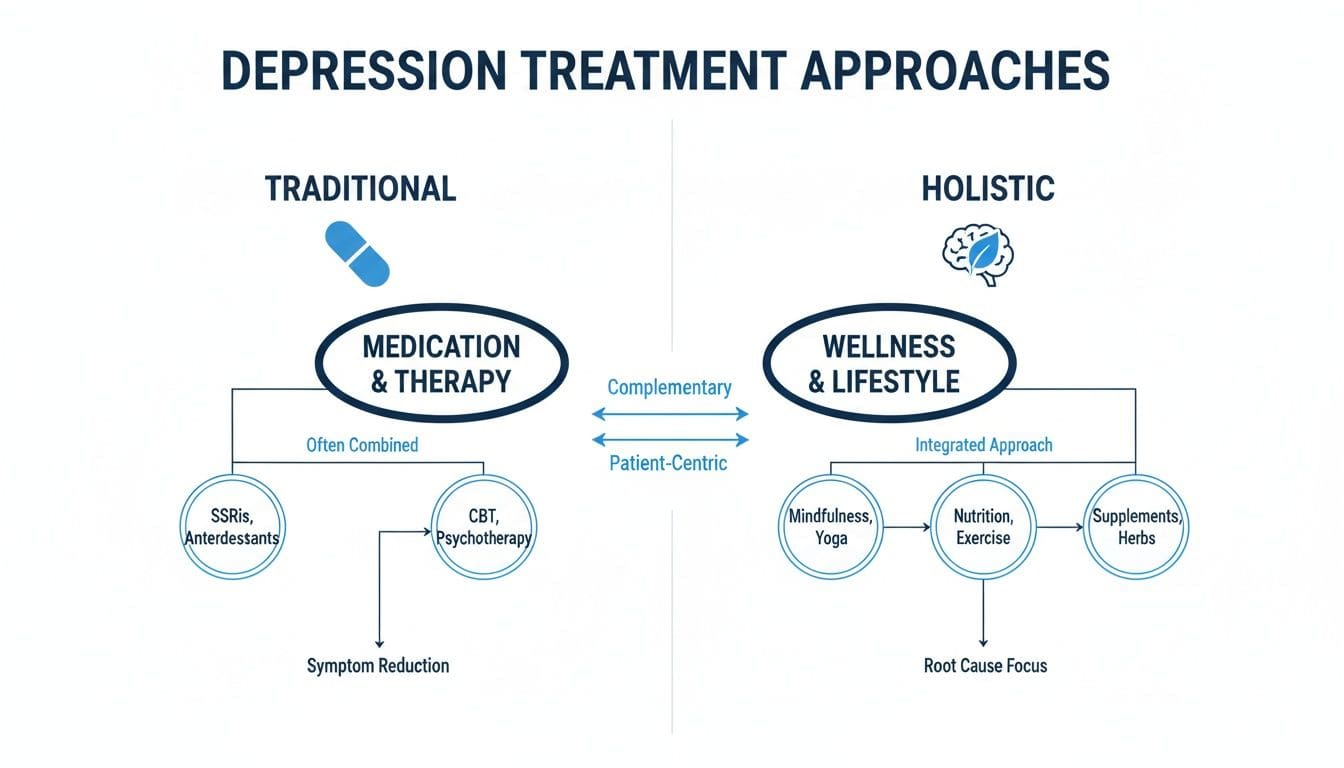
As you can see, a holistic approach expands treatment from just medication to include therapy, lifestyle, and wellness, offering a more complete and supportive path forward.
Pillar 1: Mindful Medication Management
The first pillar is Mindful Medication Management. In a holistic plan, medication isn't viewed as a quick fix or a cure-all. It's a strategic tool we use to help stabilize your brain chemistry, giving you the relief needed to fully engage with other therapies. The key is using this tool as part of a broader integrated health strategy.
Our goal is always to find the right medication at the lowest effective dose to keep side effects to a minimum.
Your psychiatric nurse practitioner works directly with you, carefully weighing your symptoms, history, and even genetic factors to guide the decision. This isn't just about writing a prescription; it's about creating enough breathing room so you can become an active participant in your own healing.
Medication can be like a sturdy pair of boots for a difficult hike. It doesn't walk the path for you, but it makes the journey manageable, protecting you from the roughest terrain so you can keep moving forward.
Pillar 2: Therapeutic Partnership
The second pillar is the Therapeutic Partnership, which centers on evidence-based psychotherapy. This is where the real skill-building happens. You learn to understand your thought patterns, manage your emotions, and develop healthier ways to cope with life's challenges.
It’s an active, collaborative process between you and your provider.
Two of the most effective and well-researched therapies for depression include:
- Cognitive Behavioral Therapy (CBT): This approach helps you identify, challenge, and reframe the negative thought cycles that so often fuel depression. Research shows CBT is highly effective, with response rates between 61% and 87%, and its benefits tend to last long after treatment ends.
- Dialectical Behavior Therapy (DBT): DBT is especially helpful for individuals who struggle with intense, overwhelming emotions. It teaches practical skills in mindfulness, distress tolerance, emotion regulation, and interpersonal effectiveness.
This therapeutic relationship is foundational. It empowers you with tools that can last a lifetime, giving you a sense of control and resilience.
Pillar 3: Body-Mind Nutrition
Our third pillar, Body-Mind Nutrition, is built on the powerful and direct link between your gut and your brain. What you eat has a profound effect on your mood, energy, and even your ability to think clearly. This connection is a fundamental part of comprehensive depression therapy.
Things like chronic inflammation, nutrient deficiencies, and unstable blood sugar can all mimic or worsen the symptoms of depression.
For example, we know that diets high in processed foods and sugar are linked to a higher risk of depression. On the other hand, diets rich in whole foods give your brain the raw materials it needs to produce key neurotransmitters like serotonin and dopamine.
Key nutritional factors in a holistic plan include:
- Omega-3 Fatty Acids: Found in fatty fish like salmon, these are critical for brain health and function.
- B Vitamins: Deficiencies in vitamins like B12 and folate are consistently linked to depressive symptoms.
- Probiotics and Prebiotics: A healthy gut microbiome directly supports the production of mood-regulating neurotransmitters.
Our team at IPA helps you understand these connections and make small, sustainable dietary changes that support your mental wellness. To go deeper, you can learn more about how nutrition affects mental health in our detailed guide.
Pillar 4: Lifestyle Integration
Finally, the fourth pillar is Lifestyle Integration. This involves weaving daily habits into your routine that directly improve your brain chemistry and overall resilience. It’s about making conscious, simple choices that promote a sense of balance and well-being.
Regular physical activity, for instance, has been proven to be as effective as some antidepressants for mild to moderate depression. It works by boosting endorphins and a protein called BDNF (brain-derived neurotrophic factor), which actually helps new neurons grow.
Other vital lifestyle practices include mindfulness and consistent sleep. Mindfulness exercises help you step out of punishing cycles of rumination. At the same time, healthy sleep is absolutely critical, as poor sleep and depression are tightly connected—up to 90% of patients with depression also experience sleep disturbances.
By weaving these four pillars together, your psychiatric nurse practitioner creates a personalized and robust plan. It's designed not just to treat symptoms, but to help you build a solid foundation for lasting health.
Personalizing Your Path with Advanced Health Insights
A true holistic depression treatment plan goes far beyond just talking about symptoms. It’s about digging deeper to understand your unique biology. At Integrative Psychiatry of America, our psychiatric nurse practitioners use advanced health data to see what’s happening "under the hood" and create a roadmap for recovery that’s built just for you. This commitment to personalized care is a hallmark of effective depression therapy.
This isn’t about guesswork or following a generic template. Instead of just managing symptoms, we investigate the biological factors that might be driving them. This empowers you with a clearer understanding of your own body and makes your entire treatment plan more effective.

Unlocking Clues with Genetic Screenings
Have you ever wondered why an antidepressant that worked for a friend didn't do anything for you? The answer could be written in your DNA. Pharmacogenomic testing, or genetic screening, helps us understand how your specific genetic makeup influences your response to medications.
Think of your DNA as a personal instruction manual for your body. This testing reads key chapters of that manual, giving us clues about which antidepressants are most likely to work well and which could cause side effects. This helps your provider make a much more informed decision from the start, often cutting down the frustrating trial-and-error process.
You can learn more about how we use genetic testing for mental health to fine-tune treatment plans.
This level of detail is a lifeline for people who haven't found relief with standard medications. In fact, treatment-resistant depression affects roughly 30% of people with major depressive disorder. By using genetic insights, we can identify better options right away.
Revealing Imbalances with Targeted Lab Work
Sometimes, depression isn't just a brain chemistry issue—it's a sign that something else is out of balance in your body. Targeted lab work lets us search for hidden problems that can mimic or worsen depression, giving us concrete data to complete your health picture.
Lab testing gives us objective information, turning "I feel tired and sad" into a clear, actionable insight like, "Your vitamin D levels are low, which is strongly linked to fatigue and low mood." This moves us from symptom to solution.
Our psychiatric nurse practitioners may recommend specific lab tests to check for things like:
- Nutritional Deficiencies: Low levels of Vitamin D, B12, or iron are common culprits that can have a huge impact on your mood and energy.
- Thyroid Function: An underactive thyroid (hypothyroidism) can cause symptoms almost identical to depression, including fatigue, low mood, and weight gain.
- Inflammatory Markers: We now understand that chronic inflammation throughout the body can be a major contributor to depressive symptoms.
Finding and fixing these underlying issues can be a total game-changer. For many, it provides significant relief on its own and makes all other treatments work better.
The Role of Hormonal Health and TRT
Hormones are powerful chemical messengers that control everything from your energy levels to your mood. When they’re out of balance, the effect on your mental health can be dramatic. This is especially true for testosterone, a critical hormone for both men and women.
Low testosterone can cause symptoms that look a lot like depression: persistent fatigue, irritability, a lack of motivation, and a general loss of well-being. That's why a comprehensive holistic depression treatment plan includes an evaluation of hormonal health when it’s clinically appropriate.
For some people, especially men with clinically low levels, Testosterone Replacement Therapy (TRT) can be a vital part of their recovery. By restoring testosterone to a healthy range under careful medical supervision, TRT can help lift these overlapping symptoms, boost energy, and build a stronger foundation for mental wellness. It's one more way that looking at the whole person leads to more complete and lasting results.
Accessing Holistic Care Through Telehealth in Pennsylvania
Finding the right mental healthcare shouldn't be another source of stress. For many, taking time off work, dealing with traffic, or traveling for in-person appointments is a major hurdle. This is where telehealth changes the game, bringing expert care directly to you, no matter where you are in Pennsylvania. Access to online mental health services is crucial for modern wellness.

The demand for accessible mental health services is clear. In 2019, the World Health Organization reported that 970 million people worldwide were living with a mental disorder, with anxiety and depression leading the way. These numbers highlight the need for treatment that fits into modern life. For adults in Pennsylvania, practices like Integrative Psychiatry of America offer personalized holistic depression treatment through secure and convenient online platforms. You can find more of these global mental health statistics directly from the WHO.
Your Journey Begins With a Simple Click
Starting your treatment online with Integrative Psychiatry of America is designed to be as straightforward and stress-free as possible. We’ve removed the typical barriers to getting started.
Here’s how easy it is to begin:
- Schedule Your Appointment: Visit our website and find an appointment time that fits your schedule.
- Verify Your Insurance: Our online system lets you quickly check your insurance coverage, so there are no surprises.
- Meet Your Provider: Connect with one of our board-certified psychiatric nurse practitioners from the comfort and privacy of your own home.
Our entire process runs on a secure, HIPAA-compliant telehealth platform, ensuring your privacy is protected while making expert care accessible.
Building a Strong Therapeutic Relationship Remotely
One of the most common questions about telehealth is whether you can truly connect with a provider you only meet on a screen. The answer is absolutely yes. Our psychiatric nurse practitioners are skilled at creating a warm, collaborative, and trusting environment during video sessions.
We believe that a strong therapeutic alliance is the cornerstone of successful treatment, whether in-person or online. Our telehealth platform is designed to facilitate open communication, genuine connection, and a feeling of partnership in your care.
Our easy-to-use patient portal is key to this relationship. It allows you to:
- Securely message your provider with questions or updates.
- Request prescription refills in just a few clicks.
- Manage your appointments and review your care plan.
This continuous and convenient connection strengthens the provider-patient relationship and ensures you feel supported throughout your treatment. You can see how we serve local communities by exploring our approach to online psychiatry for depression in Philadelphia.
Culturally Competent Care for All Pennsylvanians
At Integrative Psychiatry of America, we are dedicated to providing care that understands and respects your unique background, identity, and life experiences. We offer specialized, culturally competent support for diverse communities across Pennsylvania, including first responders and LGBTQ+ individuals. Our commitment to inclusive care is a core part of our mission.
Our goal is to make sure every person who comes to us for help feels seen, heard, and valued. Through telehealth, we make this high-quality, whole-person care a convenient reality for everyone.
Is a Holistic Approach Right for You?
Choosing a path for mental health treatment is a significant decision. If you are exploring your options, you might wonder if an integrative strategy is the right fit. A holistic depression treatment is not for everyone, but for many, it provides the comprehensive support needed for sustainable recovery.
This approach is often powerful for individuals who feel their current treatment plan has plateaued. You might be taking medication but still find yourself dealing with low energy, poor sleep, or a persistent feeling of being “stuck.” This is where a holistic treatment plan can make a difference.
Who Benefits Most from Integrative Care
A holistic model works best for people who are ready to become active partners in their own health. It’s about more than just symptom management; it’s about building a strong foundation for wellness from the ground up.
You may find this approach is a perfect fit if you:
- Feel stuck with conventional treatment. If you have tried several medications without seeing the results you hoped for, you could be experiencing what is known as treatment-resistant depression. A holistic approach expands the toolkit, examining factors like nutrition, hormones, and lifestyle that medication alone cannot fix.
- Want to address root causes. Are you tired of only treating symptoms? Integrative care is for those who are curious about why they feel the way they do and want to correct the underlying imbalances in their mind and body.
- Desire a collaborative partnership. This model is built on teamwork. It is ideal for individuals who want to work closely with their provider, participate in decision-making, and build a wellness plan that feels authentic and right for them.
- Are interested in a whole-person strategy. If you already believe that your mental health is tied to your physical health, diet, and daily habits, then you are already thinking holistically. This approach validates and builds on that intuition.
Comprehensive Support for Co-Occurring Conditions
Depression rarely exists in a vacuum. Many people also face co-occurring conditions like anxiety, ADHD, or chronic stress. A holistic framework is uniquely designed to manage this complexity because it does not just isolate one diagnosis.
Instead, we look at the entire system. For example, the same nutritional gaps or lifestyle patterns that contribute to depression can also worsen anxiety. By addressing these shared root causes, we can create a single plan that delivers relief on multiple fronts.
This integrated model offers more comprehensive support. Instead of treating depression and anxiety as two separate problems, we treat one person with an interconnected system, leading to more efficient and synergistic results.
For someone with both depression and ADHD, a treatment plan might combine medication for focus with nutritional guidance to stabilize energy levels. It could also include mindfulness practices to reduce impulsivity and an exercise routine to boost mood. It is a multi-layered strategy for a multi-layered person.
Ultimately, choosing a holistic path means you are ready to take a more proactive role in your mental wellness journey. It is for those who want to feel empowered with knowledge and build resilience that lasts far longer than a prescription. If this sounds like you, an integrative approach could be the supportive, comprehensive solution you've been looking for.
Begin Your Wellness Journey with Integrative Psychiatry of America
We’ve covered a lot of ground together, exploring what holistic depression treatment really means—from its core principles to the personalized details that shape your path to feeling better. Now, it’s time to take the next step. We invite you to experience a new standard in mental healthcare, one built on a genuine partnership and a deep commitment to your whole-person wellness.
At Integrative Psychiatry of America, our entire approach is built around you. We look past the diagnosis to truly understand the connections between your mind, your body, and your life. All our care is proudly led by board-certified psychiatric nurse practitioners who specialize in this integrative model.
Your Partner in Health
Our team is here to build a results-driven wellness plan that actually feels right for you. We blend the best of evidence-based medicine with supportive, whole-body strategies, helping you achieve not just relief from symptoms, but lasting resilience. Think of this as a partnership where you are an active, informed participant in your own healing.
We offer a wide range of services designed to address depression from every angle:
- Mindful Medication Management: Using prescriptions thoughtfully and strategically when they are the right fit.
- Advanced Diagnostics: Using genetic and lab testing to get a clearer picture of your biology for more precise care.
- Hormonal Health Assessments: This includes evaluations for TRT when it’s clinically appropriate and could make a difference.
- Lifestyle & Nutritional Guidance: Empowering you with the practical tools you need for daily wellness.
This comprehensive model ensures we're treating you as a whole person, not just a collection of symptoms. It's a real commitment to helping you find a sense of balance that lasts.
Your journey toward feeling better is unique. We are here to listen, to understand your story, and to build a roadmap to wellness that honors your individual needs and goals.
Seamless Care for All Pennsylvanians
We firmly believe that getting high-quality mental healthcare should be simple and stress-free. Our secure telehealth platform brings expert care straight to you, no matter where you are in Pennsylvania. You can connect with your provider from the comfort and privacy of your own home, completely eliminating the old barriers of travel, traffic, and time.
Ready to take that first step? We’ve made the process as easy as possible.
- Explore Your Options: You can quickly verify your insurance right on our site or look into our affordable payment plans and membership options. We believe great care must be accessible.
- Schedule Your Consultation: Find a time that works for your schedule and book your initial online consultation in just a few clicks. It’s that simple.
- Start Your Journey: Meet with one of our compassionate psychiatric nurse practitioners and begin creating your personalized path toward lasting relief.
If you have any questions or just need a little help getting started, please don't hesitate to reach out. You can exploring our contact and scheduling options today to learn more.
You deserve to feel hopeful and informed. High-quality, holistic mental healthcare is within reach, and we are here to help you get it. Your journey to feeling whole again starts now.
Frequently Asked Questions About Holistic Depression Treatment
Starting a new path for your mental health naturally brings up questions. Here are straightforward answers to the most common ones we hear about our holistic depression treatment plans.
Does Holistic Mean I Will Not Be Prescribed Medication?
No, not at all. A holistic approach is integrative, which means we combine the best of all proven, evidence-based treatments. Medication is a powerful tool for many and is often a central part of a successful plan.
We use medication to help stabilize your brain chemistry. This creates the foundation you need to fully benefit from other therapies. The goal is a plan where medication, psychotherapy, nutrition, and lifestyle changes all support each other, which can often lead to lower doses and fewer side effects over time.
How Is Care From a Psychiatric Nurse Practitioner Different?
Board-certified psychiatric-mental health nurse practitioners (PMHNPs) are advanced practice nurses who specialize in mental healthcare. Our training is built on a patient-centered, whole-person model that aligns perfectly with a holistic philosophy.
At Integrative Psychiatry of America, our PMHNPs handle all aspects of your care, including diagnosis, therapy, and medication management. We prioritize building a strong therapeutic partnership, giving you the knowledge you need, and working with you as an active partner in your recovery.
The core of our practice is partnership. Your psychiatric nurse practitioner works with you, not just for you, ensuring your voice is central to every decision made about your care.
Is Telehealth as Effective as In-Person Visits?
Yes. A large body of research shows that telehealth is just as effective as in-person care for depression and most other mental health conditions. It also adds major benefits like convenience, privacy, and better access to specialized care.
This is a game-changer for people in rural parts of Pennsylvania or anyone with a demanding schedule. Our secure, HIPAA-compliant platform keeps your sessions confidential and effective, so you can get the help you need from the comfort of your own home.
How Long Does Holistic Treatment Take to Show Results?
Recovery is a personal journey, and the timeline looks different for everyone. Some people start to feel more energy and an improved mood within a few weeks, especially after making targeted nutritional and lifestyle changes.
Other core treatments, like medication and psychotherapy, typically take about 4 to 8 weeks to reach their full effect. Holistic treatment is designed to build sustainable, long-term wellness—it’s not a temporary quick fix. Your psychiatric nurse practitioner will work with you to set realistic goals and track your progress every step of the way.
Ready to experience a more complete and personalized approach to mental wellness? At Integrative Psychiatry of America, our board-certified psychiatric nurse practitioners are ready to help you build a plan that works for your whole self. Schedule your online appointment today and start your journey toward lasting relief.