
A professional in Philadelphia finishes the workday with a racing heart, tight chest, and the familiar thought that something is wrong. A college student in Pittsburgh notices the same pattern during classes, then again at night, even on days with no obvious trigger. Breathing exercises help a little. Cutting back on caffeine helps a little. The anxiety still keeps showing up.
That's often the moment people start asking a smart question. Is this only anxiety, or could a physical issue be making it worse?
That question matters. Anxiety is real, and it can come from many places at once. Stress, trauma, sleep disruption, hormones, medication effects, and medical conditions can all shape how the nervous system reacts. Nutrient deficiencies belong on that list too. When the brain doesn't have the raw materials it needs, mood regulation can get harder, stress tolerance can drop, and symptoms can feel louder than they should.
For many people across Pennsylvania, from Harrisburg to Erie, getting answers starts with looking at both mind and body instead of treating them like separate systems. That's especially important when anxiety feels persistent, confusing, or only partly responsive to the usual self-help tools. For readers who want a broader overview of anxiety presentations and related conditions, this DeTalks anxiety guide offers useful background in plain language.
Table of Contents
- Is It Just Anxiety or Something More
- The Brain-Body Connection How Nutrients Affect Anxiety
- Key Vitamin Deficiencies Linked to Anxiety Symptoms
- Essential Minerals That Can Impact Your Mood
- Getting Answers A Guide to Diagnosis and Lab Testing
- Integrative Treatment Strategies for Nutrient-Related Anxiety
- Get Expert Anxiety Care Anywhere in Pennsylvania
Is It Just Anxiety or Something More
Anxiety rarely arrives with a label that says exactly why it's happening. It can look like overthinking, but it can also show up as fatigue, irritability, poor concentration, dizziness, restlessness, or a sense that the body is stuck in high alert. Many adults in Pennsylvania describe feeling “off” long before they can explain what changed.
That's one reason vitamin deficiency and anxiety get missed together. A person may assume the problem is only emotional when the body is also struggling. Another person may focus only on nutrition and miss a panic disorder, obsessive worry pattern, or depression that needs direct mental health treatment. Both mistakes can delay relief.
Clues that something physical may be contributing
Certain patterns make a physical contributor more likely.
- Symptoms changed without a clear life event: Anxiety started or worsened even though work, school, or relationships didn't shift much.
- Stress tools help only partially: Sleep hygiene, journaling, meditation, and therapy techniques reduce symptoms but don't fully settle them.
- Fatigue sits in the background: The person feels mentally keyed up but physically depleted.
- Seasonal changes stand out: Mood and anxiety get harder in winter, especially with low sunlight exposure.
- Other body symptoms show up: Brain fog, tingling, muscle weakness, palpitations, or feeling cold can point toward a broader medical picture.
Anxiety symptoms should never be dismissed as “just stress” when the story doesn't add up.
Why this question matters
Physical and mental health constantly affect each other. A nutrient deficiency won't explain every case of anxiety, but it can worsen an already sensitive nervous system. It can also mimic anxiety closely enough that people spend months trying to calm the mind while the body still lacks what it needs.
That's why a careful evaluation matters more than guesswork. The goal isn't to reduce anxiety to a lab result. The goal is to identify what's driving symptoms, what's maintaining them, and what treatment path makes the most sense.
The Brain-Body Connection How Nutrients Affect Anxiety
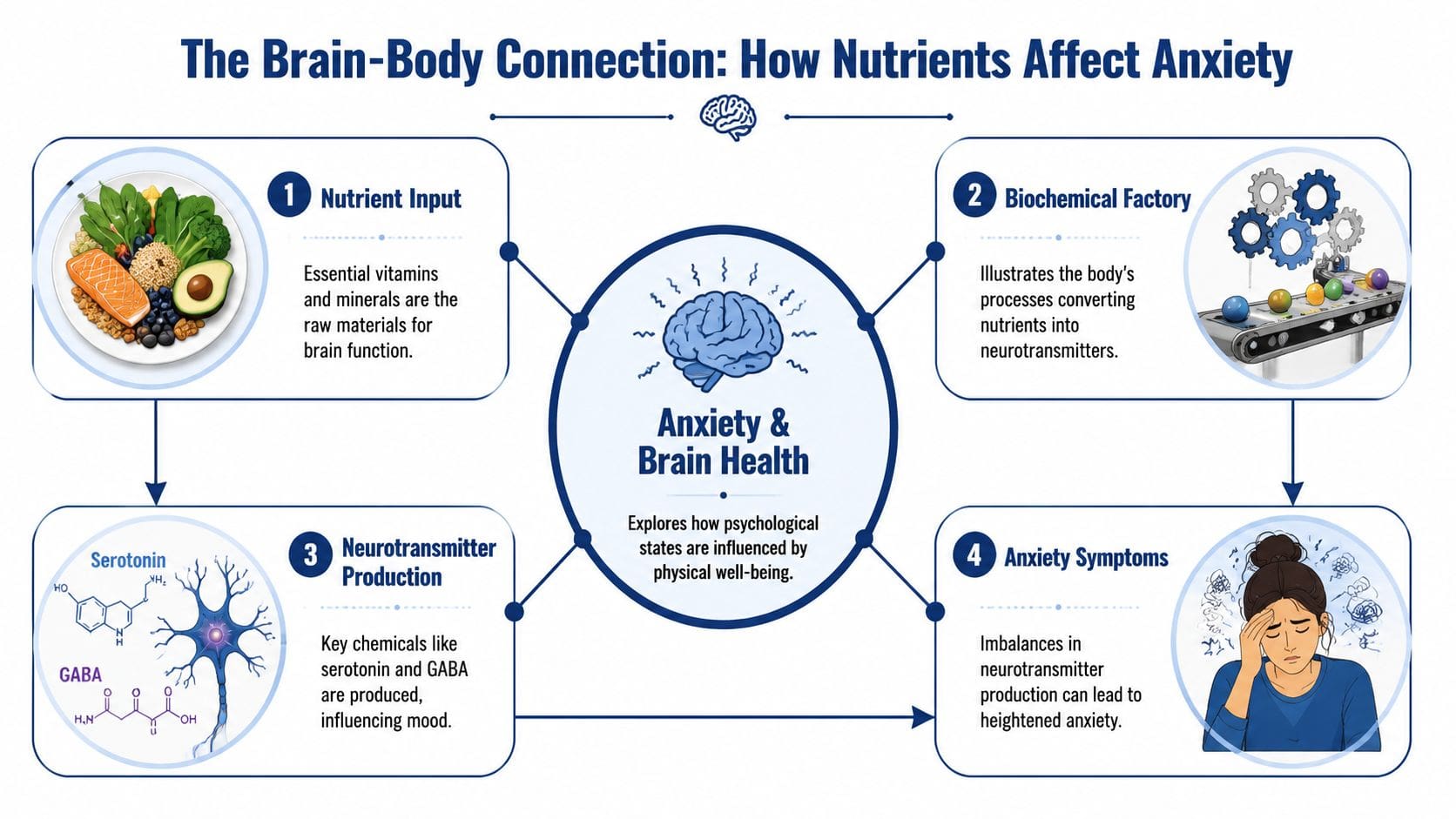
The simplest way to understand vitamin deficiency and anxiety is to think about the brain like a factory. The final products are neurotransmitters and stable stress signaling. The factory can't run well if key materials are missing.
Vitamin and mineral deficiencies don't create the same symptoms in every person. Still, the pattern is consistent. When nutrients are low, the brain may have more trouble producing and regulating the chemicals that support calm mood, focus, and emotional stability.
Neurotransmitters need raw materials
Serotonin and dopamine don't appear out of nowhere. The body has to build them. Some nutrients act like essential tools in that process.
Vitamin B6 helps with neurotransmitter synthesis. Iron also plays a direct role in serotonin production. When those nutrients are low, the system may not make enough of what it needs for steady mood regulation. For readers who want a broader psychiatric overview of this relationship, this article on how nutrition affects mental health adds useful context.
Vitamin D affects stress regulation
Vitamin D matters for much more than bone health. Low levels of Vitamin D have been consistently linked to depressed mood, irritability, fatigue, and increased anxiety because Vitamin D enhances serotonin synthesis and regulates the hypothalamic-pituitary-adrenal axis, which manages cortisol levels that are increased in chronic stress and directly correlate with anxiety development according to Northpoint Integrative's review of vitamin and nutrient deficiencies in anxiety and depression.
The hypothalamic-pituitary-adrenal axis, often shortened to the HPA axis, is the body's central stress response system. When it's dysregulated, a person may feel stuck in vigilance mode. Small problems feel big. Recovery after stress takes longer. Sleep often gets lighter and less refreshing.
Why this matters clinically
A patient doesn't need to understand every biochemical step to benefit from this information. The key point is practical. Anxiety can have a biological component that deserves testing and treatment, not just reassurance.
Practical rule: When anxiety and fatigue travel together, it's worth checking whether the body is low on key nutrients instead of assuming the problem is purely psychological.
Key Vitamin Deficiencies Linked to Anxiety Symptoms
Some vitamin issues show up often enough in mental health care that they deserve close attention. The most relevant ones in day-to-day practice are vitamin D, vitamin B12, and vitamin B6. Folate often enters the conversation too, especially when methylation or medication response is part of the picture.
Pennsylvania residents can be especially alert to vitamin D concerns during darker months, when sunlight exposure tends to drop and routines move indoors. A symptom pattern that worsens in winter doesn't prove deficiency, but it's a clue worth taking seriously.
Vitamin D and stress regulation
The strongest data in this article belongs here. In a study of U.S. adults published in 2024, serum vitamin D levels showed a significant negative correlation with anxiety, and individuals in the highest vitamin D quartile had an odds ratio of 0.774 for anxiety compared with lower quartiles, supporting a protective association according to Frontiers in Nutrition.
That doesn't mean vitamin D is a stand-alone cure for anxiety. It does mean low levels can matter. Common signs that may overlap with low vitamin D include low mood, reduced energy, irritability, and a lower stress threshold.
B vitamins and brain chemistry
Vitamin B12 is essential for healthy nervous system function and neurotransmitter balance. According to the Annals of Clinical Nutrition and Metabolism review on B12 and depression, vitamin B12 deficiency impairs the synthesis of critical neurotransmitters such as serotonin and dopamine, and low serum concentrations are associated with depressive symptoms. In real life, B12 problems can also come with fatigue, brain fog, numbness, tingling, and memory complaints.
Vitamin B6 has a more direct anxiety connection through serotonin synthesis. When B6 runs low, emotional regulation can become harder. People may feel more reactive, more physically keyed up, or more prone to panic-like sensations.
For readers exploring folate-related treatment questions, especially around methylation, this overview of methylfolate for MTHFR is a useful next read. A quick self-check can help organize symptoms before an appointment, and the Anxiety Symptom Checker can make that process easier.
If someone wants a non-technical primer on broader body warning signs, this review of common signs of nutrient gaps can help connect scattered symptoms.
Common nutrient deficiencies and anxiety
| Nutrient | Role in Anxiety Regulation | Common Deficiency Signs | Rich Food Sources |
|---|---|---|---|
| Vitamin D | Supports serotonin-related pathways and stress response regulation | Low mood, fatigue, irritability, increased anxiety | Fatty fish, fortified dairy or alternatives, egg yolks |
| Vitamin B12 | Supports neurotransmitter function and nervous system health | Brain fog, fatigue, numbness, tingling, low mood | Meat, fish, eggs, dairy, fortified foods |
| Vitamin B6 | Helps synthesize serotonin and other brain chemicals | Irritability, low stress tolerance, anxiety symptoms | Poultry, bananas, fortified cereals |
| Folate | Supports methylation and brain function | Low mood, fatigue, cognitive slowing | Leafy greens, legumes, fortified grains |
When a person has anxiety plus fatigue, brain fog, or sensory symptoms, checking nutrient status can be more useful than adding another wellness product.
Essential Minerals That Can Impact Your Mood
Vitamins get most of the attention, but minerals often shape the day-to-day experience of anxiety just as much. Some people feel wired because the nervous system is overstimulated. Others feel anxious because the body is underpowered, short of breath, or struggling to keep up. Minerals can influence both patterns.
Iron and magnesium in real life
Iron deficiency deserves more attention than it usually gets in anxiety conversations. Vitamin B6 and iron deficiencies are directly linked to disrupted serotonin synthesis. Without sufficient B6 and iron, the body cannot produce enough of this key neurotransmitter, leading to decreased emotional regulation and increased vulnerability to anxiety and panic attacks according to My Neuro Balance's review of nutrient deficiencies and anxiety.
In practice, low iron may feel like anxiety even when the underlying problem is broader. A person may notice exhaustion, weakness, dizziness, poor concentration, palpitations, or shortness of breath. Those sensations can trigger fear and spiraling thoughts, especially if they happen suddenly.
Magnesium is different. It's often discussed because it supports nervous system regulation and muscle relaxation. The evidence summarized in the anxiety literature points toward a protective role for magnesium, which helps explain why some people feel more tense, restless, or sleep-disrupted when levels or intake are poor. Readers interested in how this overlaps with compulsive symptoms can review this article on magnesium and OCD.
What mineral problems can feel like
A mineral issue usually doesn't announce itself clearly. It shows up through patterns.
- Iron-related patterns: fatigue, exercise intolerance, feeling breathless, heart pounding, trouble focusing
- Magnesium-related patterns: muscle tension, poor sleep, stress sensitivity, physical restlessness
- Zinc-related patterns: lower resilience, poor appetite, slower recovery, flattened mood in some cases
People who train hard, sweat heavily, restrict food groups, or skip meals often need a wider nutritional look. Athletes sometimes think about performance nutrition before they think about mental health, so a practical resource like this complete guide to runner multivitamins can help them see how training stress and nutrient demands overlap.
Physical symptoms don't cancel out anxiety. They often help explain why anxiety feels stronger than expected.
A mineral deficiency also doesn't mean someone should start taking several supplements at once. Iron, in particular, should be guided by labs because low iron and excess iron are very different problems.
Getting Answers A Guide to Diagnosis and Lab Testing
The most useful next step is usually simple. Ask for a medical evaluation that treats anxiety as both a mental health symptom and a possible sign of an underlying physical issue. That approach saves time and reduces the temptation to self-diagnose based on social media or supplement marketing.
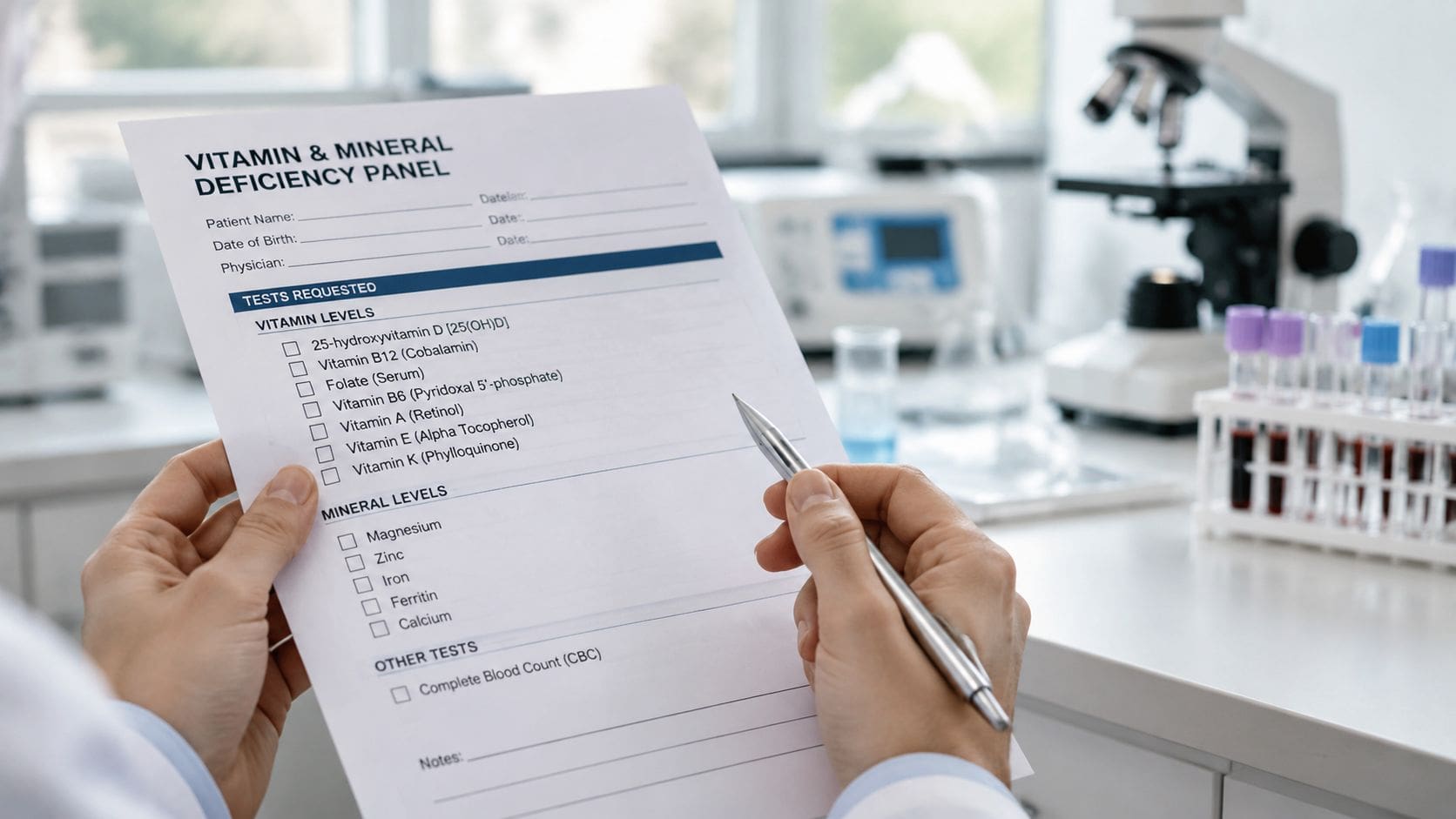
For adults in Pennsylvania, this process is often easier than expected. A telehealth psychiatric or medical visit can start the evaluation from home, whether the patient lives in Philadelphia, Pittsburgh, Harrisburg, Scranton, Lancaster, Reading, Allentown, or Erie. The clinician can review symptoms, medications, diet patterns, and medical history, then coordinate labs locally.
Lab tests worth asking about
A focused conversation with a provider might include these labs:
- 25-hydroxyvitamin D: This is the standard screening test for vitamin D status.
- Complete blood count: Helpful when iron deficiency or anemia is a concern.
- Iron studies: Often discussed when fatigue, palpitations, or restless symptoms are present.
- Serum B12 and folate: Useful when brain fog, low mood, neuropathy symptoms, or restrictive eating patterns are part of the story.
Vitamin D is especially practical to discuss because there's treatment evidence tied to testing. A News-Medical summary of a 2020 meta-analysis reported that vitamin D supplementation at 800 IU per day or more significantly reduced anxiety scores, and that normalizing levels to 30 to 50 ng/mL can reverse symptoms, which supports using the 25-hydroxyvitamin D test as a benchmark in anxiety management.
Patients who also struggle with attention, low ferritin concerns, or executive dysfunction may find this article on ADHD and iron deficiency helpful before a visit.
How to bring it up in an appointment
Patients don't need perfect wording. Clear is enough.
- State the pattern: “My anxiety has been persistent, and I'm also dealing with fatigue, brain fog, or physical symptoms.”
- Ask directly: “Could a vitamin or mineral deficiency be contributing?”
- Request targeted labs: “Would it make sense to check vitamin D, B12, folate, a CBC, and iron studies?”
- Mention seasonality or diet: “Symptoms seem worse in winter,” or “I don't eat much meat,” or “I work indoors all day.”
This short video offers additional context on the medical side of deficiency-related symptoms.
A good evaluation doesn't assume every symptom comes from a deficiency. It also doesn't ignore the possibility.
Integrative Treatment Strategies for Nutrient-Related Anxiety
Random supplement use is one of the most common mistakes in this area. It feels proactive, but it often creates confusion. If several products start at once, nobody knows what helped, what caused side effects, or what interacted with existing medication.
Food first, then targeted support
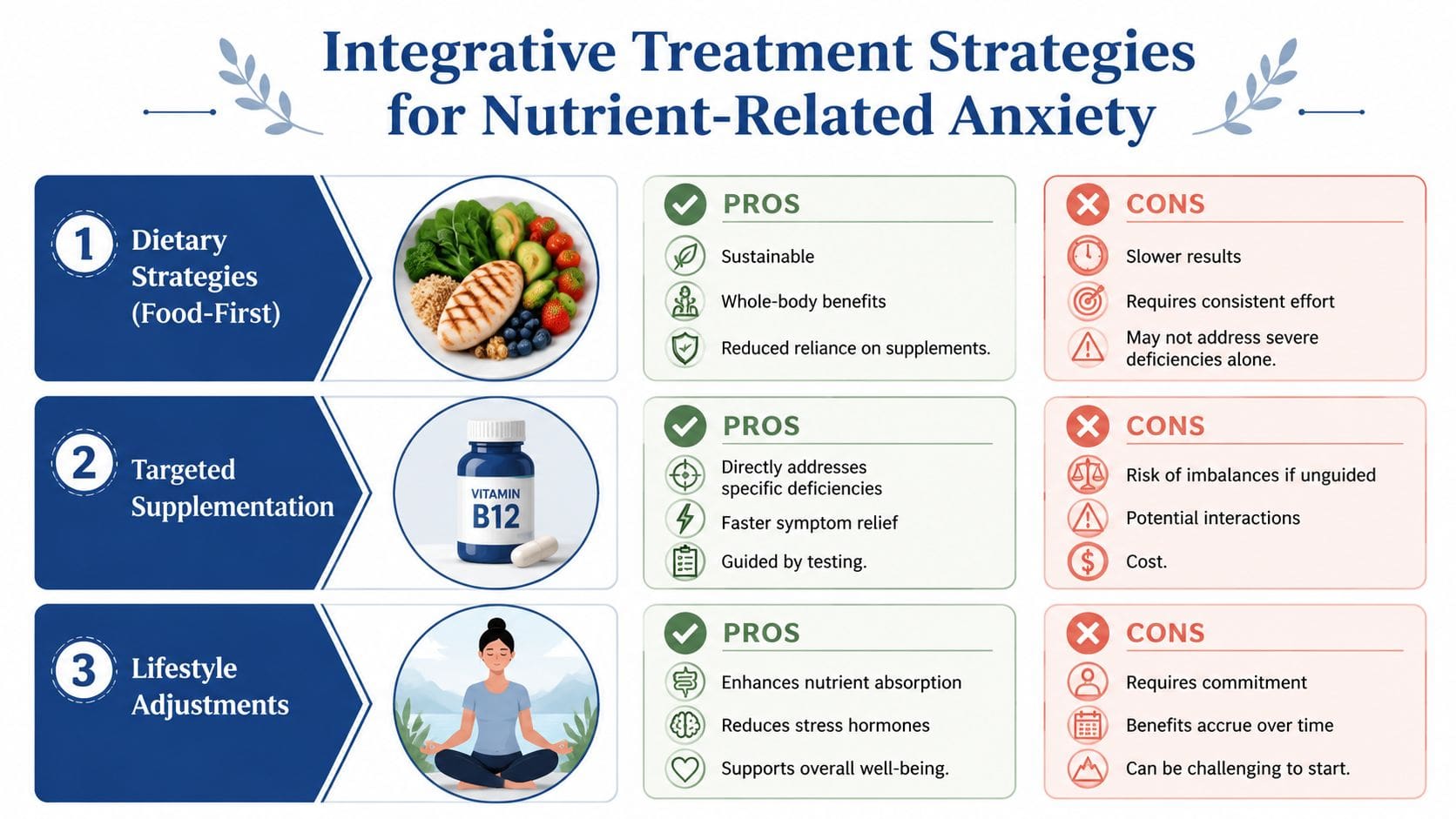
A strong plan usually starts with food and testing, then adds supplements only when there's a reason.
One reason this matters is that nutrient support isn't all-or-nothing. The evidence base suggests protective roles for several micronutrients. In a review of genetic evidence and related analysis, vitamin C, magnesium, and selenium showed causal protective effects against anxiety disorders, and 500 mg of vitamin C for 14 days significantly reduced anxiety levels in clinical studies according to this PMC article on micronutrients and anxiety.
That doesn't mean every patient should start vitamin C, magnesium, and selenium together. It means targeted support can be useful when chosen carefully.
A practical treatment plan may include:
- Dietary support: regular meals, more iron-rich foods, B6-rich foods, and vitamin D sources
- Targeted supplementation: based on labs, symptoms, and medication review
- Lifestyle measures: sunlight exposure when appropriate, better sleep timing, and movement that supports stress regulation
For patients looking at broader nutritional support for mood, this article on omega-3 for depression and fish oil fits well alongside this conversation. Structured movement can help too, and tools like the Exercise Routine Generator can make that step easier to start.
What usually doesn't work
Some approaches sound appealing but tend to backfire.
- Buying a large supplement stack at once: This makes side effects and benefits hard to sort out.
- Using iron without testing: Iron should be individualized.
- Assuming natural means risk-free: Supplements can still cause problems or interact with treatment.
- Stopping anxiety medication abruptly because a deficiency was found: A deficiency may be one contributor, not the whole diagnosis.
Treat the deficiency when it's present. Treat the anxiety disorder when it's present. Many patients need both approaches, not one or the other.
Get Expert Anxiety Care Anywhere in Pennsylvania
Vitamin deficiency and anxiety can overlap in ways that are easy to miss. The symptoms are real. The causes can be layered. A person may need nutrition support, better sleep, medication management, therapy tools, or all of the above.
The safest next step is a professional evaluation instead of self-diagnosis. That's especially true when anxiety is affecting work, school, relationships, sleep, or concentration. Telepsychiatry makes that process much easier across Pennsylvania, including Philadelphia, Pittsburgh, Harrisburg, Scranton, Allentown, Lancaster, Reading, and Erie. A virtual visit can help clarify whether the picture points toward panic, generalized anxiety, depression, ADHD, OCD, trauma-related symptoms, a nutrient issue, or a combination.
For immediate symptom support while waiting for care, practical tools can still help. The 5-4-3-2-1 Grounding Tool is a good example because it gives the nervous system something concrete to do during an anxious spike.
Integrative Psychiatry of America offers virtual psychiatric evaluations, medication management, and evidence-informed mental health treatment throughout Pennsylvania. Adults looking for help with anxiety, depression, ADHD, OCD, PTSD, or integrative treatment planning can learn more at Integrative Psychiatry of America, verify insurance coverage, schedule an appointment, or explore free tools like the Adult ADHD Assessment, Anxiety Symptom Checker, Daily Agenda Planner, Feeling Journal, Exercise Routine Generator, and 5-4-3-2-1 Grounding Tool.