
A common pattern shows up in telehealth visits. A man has cleaned up his diet, added walks or strength training, cut back on late-night snacking, and still feels stuck. The scale barely moves. Energy stays low. Motivation drops. Belly fat seems unusually stubborn.
That combination often gets blamed on age, stress, poor discipline, or “just metabolism.” Sometimes those factors matter. Sometimes the missing variable is low testosterone.
For men dealing with fatigue, reduced drive, mood changes, slower recovery, and changes in body composition, testosterone replacement therapy weight loss becomes a practical medical question, not a vanity topic. Testosterone affects lean mass, fat distribution, insulin sensitivity, and the ability to sustain healthy habits. It also overlaps with symptoms seen in depression, burnout, chronic stress, and poor sleep, which is why a psychiatric nurse practitioner can play a useful role in sorting out the full picture.
At a telehealth practice serving adults across Pennsylvania, this issue is rarely just about one lab value. Weight resistance can sit alongside low mood, emotional eating, disrupted sleep, attention problems, medication side effects, or low follow-through caused by exhaustion. Whole-person care matters because body composition, motivation, and mental health often move together.
Lifestyle still matters. It always will. For readers refining habits while exploring medical causes, practical resources on smarter weight loss techniques can help frame what’s sustainable. But when persistent symptoms point toward hormonal dysfunction, more effort alone usually isn’t the answer. A careful evaluation is.
Table of Contents
- Introduction When Diet and Exercise Aren't Enough
- The Unseen Link Between Testosterone and Body Weight
- Clinical Evidence for TRT and Weight Management
- Determining If TRT Is Right for You Evaluation and Safety
- Your TRT Journey with IPA Telehealth Monitoring and Outcomes
- Beyond Hormones An Integrative Approach to Sustainable Weight Loss
- Conclusion Reclaiming Your Health with Whole-Person Care
- Frequently Asked Questions About TRT for Weight Loss
Introduction When Diet and Exercise Aren't Enough
Weight loss advice is often simple on paper. Eat less. Move more. Sleep better. Stay consistent.
Those basics still matter, but they don't explain every stalled result. Some men do the right things for months and still feel weaker, softer through the midsection, mentally flat, and unusually tired. When that happens, the question isn't whether they're trying hard enough. The better question is whether the body is getting the hormonal support it needs.
Why this issue gets missed
Low testosterone doesn't announce itself with one obvious sign. It can show up as:
- Fatigue that lingers: Energy stays low even after a full night of sleep.
- Loss of drive: Workouts feel harder to start and harder to finish.
- Body composition changes: Muscle drops more easily while abdominal fat becomes harder to reduce.
- Mood symptoms: Irritability, low mood, poor confidence, and brain fog can become part of the picture.
Many of those complaints overlap with anxiety, depression, chronic stress, and sleep disruption. That overlap matters in psychiatric care. A psychiatric nurse practitioner doesn't just ask about body weight. The evaluation also has to examine mood, motivation, stress patterns, medications, and daily function.
Clinical reality: A man can be told to “try harder” for months when the more appropriate next step is hormone testing, sleep assessment, and a review of mental health symptoms.
Why telehealth can still work well
A telehealth model can handle much of this process effectively when it includes structured history-taking, lab ordering, follow-up reviews, and ongoing medication management. For adults in Pennsylvania, that means care can happen from home without losing the clinical depth required for safe treatment.
Testosterone replacement therapy isn't a shortcut and it isn't a stand-alone weight loss drug. It's a medical treatment for confirmed deficiency. When the diagnosis is correct, it can remove a major obstacle that keeps nutrition and exercise efforts from translating into better body composition.
That distinction matters. The goal isn't just a lower number on the scale. The goal is to improve the underlying physiology that affects fat loss, muscle preservation, energy, and follow-through.
The Unseen Link Between Testosterone and Body Weight
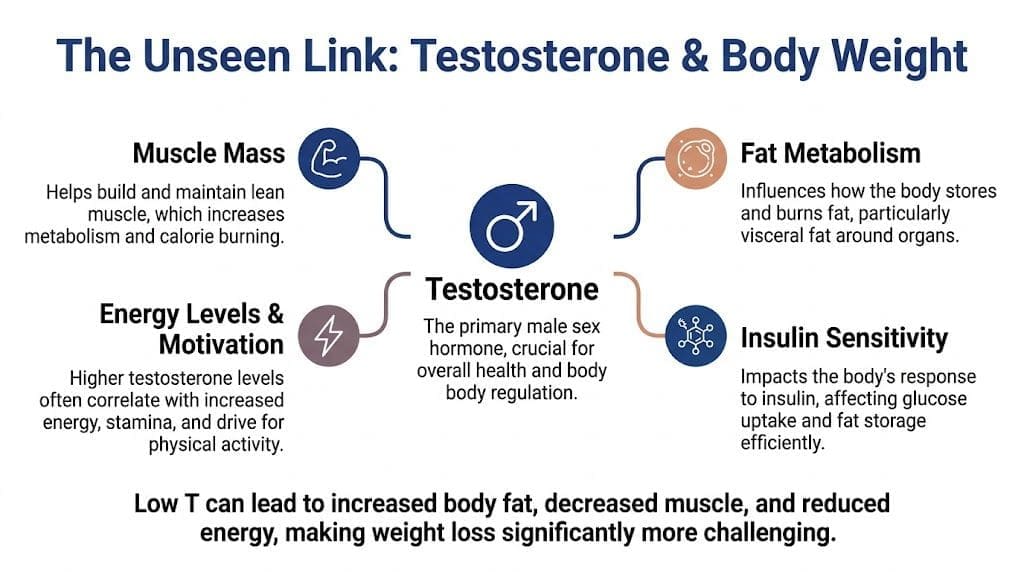
Testosterone is often reduced to sex drive and gym performance. Clinically, it's much broader than that. It functions more like a regulator of body composition, helping determine how the body stores fat, maintains muscle, and uses energy.
Testosterone as the body's operating system for body composition
A useful way to think about testosterone is as part of the body's operating system for metabolic function. When levels are healthy, several things tend to work better together.
Muscle tissue is easier to maintain. That matters because lean mass supports day-to-day energy use and physical function. Testosterone also influences fat metabolism and seems to support a more favorable balance between fat loss and muscle retention.
In a randomized controlled trial of obese men on a very low-calorie diet, men who received testosterone treatment lost 2.9 kg more fat mass and preserved lean body mass, while the placebo group lost 3.5 kg of lean muscle (trial details here). That finding is clinically important because two people can lose similar total weight while ending up with very different bodies and metabolic outcomes.
For readers looking deeper into that connection, IPA has also discussed low testosterone and weight gain in more detail.
What low testosterone changes in daily life
Low testosterone shifts more than appearance. It can change how a person functions across the day.
Some men notice that resistance training stops producing the same return. Others say they feel mentally dull, less competitive, less willing to exercise, or less physically capable of recovering from effort. Those changes can feed weight gain indirectly, even before lab work confirms what's happening hormonally.
Common patterns include:
- More visceral fat accumulation: Weight gathers around the abdomen rather than distributing evenly.
- Lower training tolerance: Strength work feels disproportionately draining.
- Reduced momentum: Men who were once active start avoiding activity because they feel flat, not lazy.
- Harder calorie use: The body becomes less favorable at maintaining lean mass while dieting.
Low testosterone can create a cycle where reduced energy lowers activity, reduced activity lowers muscle stimulus, and lower muscle mass makes body recomposition harder.
Testosterone replacement therapy weight loss should be framed carefully. Testosterone doesn't melt fat off on its own. What it may do, in the right patient, is restore a physiologic environment where exercise, nutrition, and consistent routines finally produce the results they should have been producing all along.
Clinical Evidence for TRT and Weight Management
The biologic rationale for TRT is useful, but patients usually want a harder question answered. Does it change outcomes over time?
The strongest practical reason this therapy stays in the conversation is that research hasn't only looked at short bursts of improvement. There is also long-term follow-up showing sustained changes in body weight and waist size in hypogonadal men receiving treatment.
What long-term data shows
A 10-year longitudinal study found that hypogonadal men on TRT achieved an average weight loss of 20.3%, equal to 22.9 kg (50.5 lbs), along with a 12.5 cm reduction in waist circumference. The untreated control group gained weight instead (study summary here).
Those numbers matter because central weight gain isn't just cosmetic. A growing waistline usually reflects worsening metabolic health, reduced physical comfort, and a higher burden from abdominal fat.
The same long-term dataset is more persuasive than a quick “before and after” claim for another reason. The follow-up extended across years, not a brief motivational window. Weight management often fails because early progress doesn't last. This study is relevant because it speaks to durability.
Why the evidence matters clinically
The best way to interpret this evidence is not “TRT causes effortless weight loss.” That's not what responsible practice should promise.
A better interpretation is this:
| Clinical question | Practical answer |
|---|---|
| Does TRT help every man lose weight? | No. It helps men with confirmed low testosterone when that deficiency is part of the problem. |
| Is the effect only about the scale? | No. Body composition and waist reduction matter more than scale weight alone. |
| Does supervision matter? | Yes. The useful results in the evidence come from medically managed treatment, not self-directed hormone use. |
Research supports a real role for TRT in metabolic improvement for the right population. It also supports restraint. Men without a clear deficiency, men with untreated contraindications, or men expecting treatment to replace nutrition and training are likely to be disappointed.
Key distinction: Effective TRT is replacement therapy, not enhancement. The clinical target is restoration to an appropriate range with monitoring, not chasing extreme levels.
That mindset protects patients from one of the most common mistakes in online hormone conversations. More testosterone isn't the goal. Better function, safer treatment, and sustainable body composition are the goal.
Determining If TRT Is Right for You Evaluation and Safety
Not every man with extra abdominal fat or low energy needs testosterone treatment. Some need sleep apnea care. Some need depression treatment. Some need medication adjustments, better nutrition, or a structured exercise plan. Some do have hypogonadism. The evaluation has to sort that out before any prescription is discussed.
Symptoms that deserve a real workup
Low testosterone often presents as a cluster rather than a single complaint. Weight resistance becomes more suspicious when it appears alongside other changes in function.
Symptoms that commonly raise concern include:
- Persistent fatigue
- Reduced motivation
- Low libido
- Erectile changes
- Depressed mood or irritability
- Brain fog
- Loss of strength or recovery
- Increasing abdominal fat despite effort
Those symptoms overlap heavily with conditions often managed in mental health settings. That's one reason a broad review matters. A psychiatric nurse practitioner can examine whether the patient is dealing with hormonal deficiency, mood disorder, chronic stress, poor sleep, substance use, medication side effects, or several issues at once.
What a safe telehealth evaluation includes
A responsible telehealth process isn't casual. It should include a full symptom review, medical history, medication review, and lab work before treatment starts.
At minimum, the clinical discussion usually needs to cover:
- Pattern of symptoms: When did fatigue, weight changes, or low motivation begin?
- Sleep quality: Snoring, nonrestorative sleep, and daytime sleepiness can change the picture significantly.
- Psychiatric context: Depression, anxiety, trauma symptoms, and attention problems can affect energy and adherence.
- Medical history: Past clotting issues, endocrine conditions, prostate history, and cardiovascular concerns need review.
- Current goals: Some men want fat loss. Others are more concerned with stamina, libido, mood, or preserving muscle while dieting.
Patients who want a fuller view of the behavioral and psychiatric side of this topic can review this discussion of testosterone replacement therapy and an integrative psychiatry approach to men's mental health.
When TRT may not be appropriate
Safety screening isn't optional. Testosterone therapy may not fit every patient.
Situations that call for caution or may rule treatment out include:
- Active prostate cancer concerns
- Severe untreated sleep apnea
- High red blood cell counts
- Unexplained symptoms without lab confirmation
- Use goals centered on enhancement rather than treatment
A careful prescriber also has to discuss side effects, follow-up labs, symptom changes, and what happens if benefits don't materialize. Good care includes the possibility that TRT isn't the right answer.
Some men feel relieved when testosterone explains the problem. Others feel just as relieved when testing points somewhere else and gives them a more accurate treatment path.
That is the value of a measured evaluation. It protects patients from guesswork.
Your TRT Journey with IPA Telehealth Monitoring and Outcomes
Once a patient is confirmed to be an appropriate candidate, treatment becomes a process of adjustment and monitoring, not a one-time prescription.

Virtual care works well here because the therapy depends on regular check-ins, symptom tracking, and lab review more than in-office procedures. Patients across Pennsylvania can complete visits through a secure platform, review plans from home, and continue follow-up without commuting into Philadelphia. One example of that model is IPA’s all virtual care approach, which combines telepsychiatry, medication management, and integrative wellness services.
What treatment often looks like
The mechanics of TRT differ by person. Some patients use injections. Others may use gels. The right format depends on preference, consistency, response, and tolerability.
The early phase of treatment typically includes:
- Prescription selection: A clinician chooses the formulation that best fits the patient's goals and practical routine.
- Baseline planning: The patient reviews expected benefits, possible side effects, and the schedule for labs.
- Follow-up visits: Early appointments focus on symptom response, adherence, sleep, mood, and physical changes.
Patients often expect dramatic scale changes first. In reality, many notice shifts in energy, drive, workout tolerance, and recovery before their body composition visibly changes.
Expected Timeline of TRT Benefits
| Timeframe | Potential Outcomes |
|---|---|
| Early treatment | Some men notice improved energy, drive, and mental clarity before visible body changes. |
| Ongoing follow-up | Training consistency and recovery may improve, making nutrition and exercise plans easier to maintain. |
| Later body composition phase | Changes in waistline, muscle retention, and fat loss may become more noticeable with sustained adherence and monitoring. |
A helpful overview of the treatment experience appears below.
Why monitoring matters
TRT should feel structured. If a patient gets a prescription with no ongoing lab review, no side-effect discussion, and no symptom reassessment, that's not strong care.
Monitoring usually focuses on whether the patient is:
- Feeling better in a meaningful way
- Staying within a safe therapeutic range
- Developing side effects that need attention
- Progressing toward the original treatment goals
Weight loss may be one outcome, but it shouldn't be the only one measured. Mood, motivation, sexual function, energy, sleep quality, and training capacity all help determine whether the therapy is working for that specific patient.
Beyond Hormones An Integrative Approach to Sustainable Weight Loss
Hormones influence body composition, but hormones don't shop for groceries, build meal structure, improve coping skills, or make resistance training happen three times a week. Sustainable change comes from a wider plan.

TRT works better when the plan is bigger than TRT
The men who do best with testosterone replacement therapy weight loss usually aren't relying on the prescription alone. They pair treatment with a realistic food strategy, progressive exercise, and support for the mental barriers that derail consistency.
That broader framework often includes:
- Protein-focused eating: Preserving lean mass matters during fat loss. Patients often need practical guidance, not just calorie advice.
- Resistance training: Testosterone and strength work make sense together because the treatment supports muscle maintenance while training gives the body a reason to keep that muscle.
- Behavior support: Stress eating, poor sleep habits, low follow-through, and rigid all-or-nothing thinking can ruin an otherwise sound plan.
- Mood treatment when needed: Depression and anxiety can flatten motivation long before they fully disrupt daily functioning.
For readers tightening up the nutrition side, this guide to understanding calorie deficits can help clarify what drives fat loss and why quality of weight loss still matters.
A psychiatric nurse practitioner is well positioned to integrate these pieces because many stalled weight cases aren't purely endocrine. They involve attention, impulse control, emotional regulation, medication effects, and belief patterns around food and exercise.
Patients exploring that connection can also review how nutrition affects mental health, since food quality, mood stability, and adherence are tightly linked.
Practical rule: If a treatment improves hormone status but the patient still sleeps poorly, eats chaotically, and avoids strength training, results will usually stay partial.
The GLP-1 and TRT conversation needs more nuance
One of the more important modern weight-management questions involves men using GLP-1 medications such as semaglutide. These medications can be effective for weight reduction, but there is a trade-off clinicians should take seriously.
A 2024 narrative review noted that 20% to 40% of total weight lost with GLP-1 agonists can be lean muscle mass, and for men with low testosterone, combining TRT with a GLP-1 regimen may help mitigate that muscle loss and support longer-term metabolic function (review discussed here).
That matters because losing muscle during rapid weight loss can leave a patient lighter on the scale but weaker, less metabolically resilient, and more vulnerable to rebound weight gain.
Integrated care offers a more complete approach than a single prescription. A patient on semaglutide who also has confirmed low testosterone may need:
| Priority | Why it matters |
|---|---|
| Muscle-preserving exercise | Resistance work gives the body a reason to keep lean tissue. |
| Adequate nutrition | Under-eating protein while appetite is suppressed can worsen muscle loss. |
| Hormone evaluation | Low testosterone may make lean-mass loss more pronounced. |
| Ongoing mental health review | Rapid body changes can affect mood, identity, and adherence in unexpected ways. |
That combination isn't appropriate for everyone. It does, however, address a real gap in common weight-loss conversations. The goal isn't just to lose weight fast. The goal is to lose the right tissue, preserve function, and keep the result.
Conclusion Reclaiming Your Health with Whole-Person Care
When diet and exercise stop working the way they used to, the answer isn't always more restriction. In some men, low testosterone is a real medical barrier to fat loss, muscle retention, energy, and motivation.
The evidence supports a role for TRT in appropriately selected men with confirmed deficiency. The practical lesson is even more important. The best outcomes usually come when hormone treatment is part of a larger plan that also addresses sleep, nutrition, exercise, mood, and long-term habits.
That whole-person lens matters in psychiatry. Weight gain, low drive, brain fog, stress eating, low mood, and hormonal symptoms often overlap. Treating only one piece can leave the patient spinning in place.
Adults in Philadelphia and throughout Pennsylvania don't have to sort through this alone. A confidential telehealth evaluation can help determine whether testosterone is relevant, whether another condition is getting missed, and what a safer, more sustainable treatment plan should look like. The right next step is a structured assessment, not more guesswork.
Frequently Asked Questions About TRT for Weight Loss
Is TRT a weight loss drug
No. TRT is a medical treatment for men with confirmed low testosterone. Weight change may follow when low testosterone was contributing to poor body composition, low energy, and reduced muscle maintenance.
How fast does TRT work for weight changes
Visible weight or waist changes usually aren't the first thing men notice. Early benefits may show up in energy, recovery, motivation, and workout consistency. Body composition tends to change more gradually with adherence.
Can telehealth safely manage TRT
It can, if the process includes a real medical history, lab review, follow-up appointments, and ongoing monitoring. Convenience should never replace proper screening.
What if the problem is actually a GLP-1 medication or another health issue
That's exactly why a broader evaluation matters. Men taking weight loss medications, dealing with poor sleep, or struggling with depression may need a plan that goes beyond hormones alone. This discussion of GLP-1 weight loss medications and metabolic health is useful for patients considering that side of treatment.
Are side effects possible
Yes. TRT requires monitoring because risks and tolerability vary by person. A safe plan includes discussion of side effects, expected benefits, contraindications, and what follow-up labs are needed.
Who should consider an evaluation
Men with stubborn abdominal weight gain plus fatigue, low libido, low motivation, mood changes, reduced strength, or poor recovery should consider a professional assessment rather than self-diagnosing from social media.
If low energy, stubborn weight gain, low motivation, or possible hormone imbalance sounds familiar, IPA Integrative Psychiatry of America offers confidential telehealth care for adults across Pennsylvania. Patients can verify insurance, request an appointment online, and explore a treatment plan that looks at mental health, metabolic health, and lifestyle together.