
A lot of people searching for depression therapy philadelphia are doing it late at night, from the couch, after another hard day of pushing through work, family demands, or basic errands while feeling flat, overwhelmed, or disconnected. In a city this busy, depression can still make daily life feel very small. It can also make the process of getting help feel heavier than it should.
That weight is real. So is the frustration of trying to find a provider, figure out insurance, wait for a callback, and decide whether treatment will help. For many adults in Philadelphia, the barrier isn’t only recognizing depression. It’s finding a way to start care that feels private, practical, and manageable from home.
Table of Contents
- The Search for Depression Therapy in Philadelphia
- Understanding Your Core Treatment Options
- The Power of an Integrative and Holistic Approach
- What to Expect From Your Telepsychiatry Visits
- Navigating Costs Insurance and Choosing a Provider
- Your Next Steps to Begin Healing Today
The Search for Depression Therapy in Philadelphia
A common pattern looks like this. Someone knows something is off, but keeps explaining it away as burnout, stress, grief, low motivation, or a rough season. Weeks pass. Sleep gets messy, concentration drops, irritability grows, and even simple tasks start feeling harder than they should.
For many adults, the next hurdle is practical. Finding depression counseling Philadelphia, online depression treatment, or a mental health provider in Philadelphia can quickly turn into a long list of tabs, mixed messages, and uncertainty about who treats depression in a structured way.

Philadelphia’s need is substantial. Approximately 20% of adults in Philadelphia, or 1 in 5, have been diagnosed with depression, with more than 94,000 adult depression cases recorded in Philadelphia County in 2023. Cost also remains a major barrier, with 32.7% of Pennsylvanians citing cost as the main reason they didn’t obtain needed counseling, according to Philadelphia depression statistics compiled here.
That context matters because it tells people something important. Struggling with depression in Philadelphia isn’t unusual, and difficulty accessing care isn’t a personal failure. It’s a system problem as much as an individual one.
Why telehealth changes the starting point
Telepsychiatry works well for adults who want confidential depression care, medication management online, and treatment that fits around work, parenting, commuting, or low energy. Instead of adding travel, waiting rooms, and missed time from the day, care happens at home through secure video.
That shift can lower several barriers at once:
- Privacy concerns: Some people are more honest when they’re speaking from their own space.
- Energy limits: Depression often reduces follow-through. Removing travel can make starting care easier.
- Scheduling friction: Virtual visits are easier to fit around real life.
- Access to integrative care: Patients can look beyond the closest office and consider practices that combine medication, therapy, and lifestyle support.
Depression often tells people to wait until things get worse. Treatment works better when care starts before life narrows even further.
For adults looking for telepsychiatry Philadelphia, one practical option is online integrative psychiatry in Philadelphia, where care is delivered remotely and structured around both psychiatric treatment and whole-person support.
Understanding Your Core Treatment Options
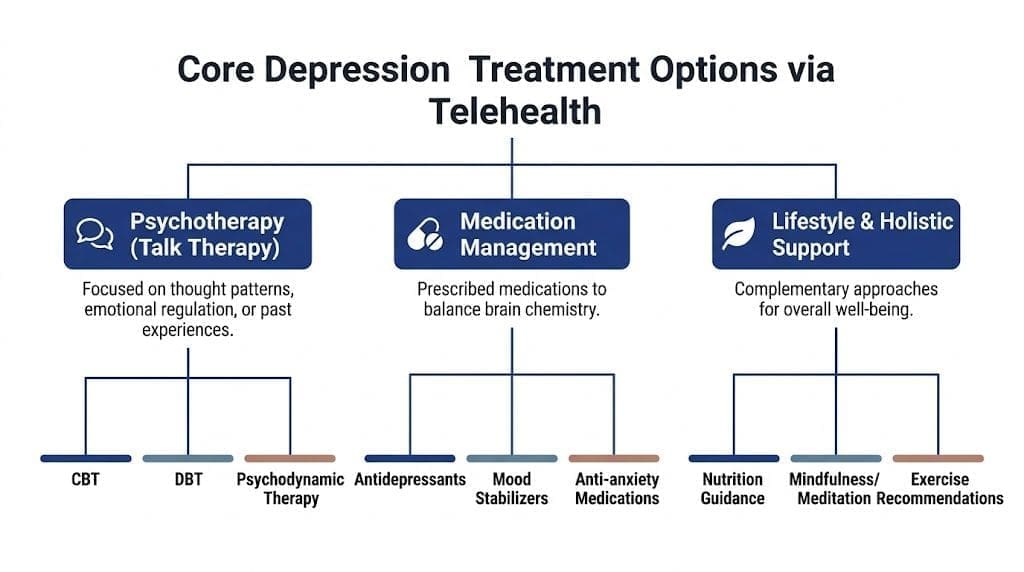
Effective depression treatment usually draws from two categories of care. One targets patterns in thinking, behavior, relationships, and coping. The other targets symptoms such as low mood, poor sleep, appetite changes, slowed thinking, agitation, and loss of motivation. Depending on severity, history, and patient preference, that may mean psychotherapy, medication management, or a combination of both.
For many adults, the main question is not which option is "better." It is which starting point fits the current level of suffering and functioning. If someone is still getting through work and daily responsibilities, therapy may be a reasonable first step. If depression is disrupting sleep, concentration, appetite, or the ability to get out of bed, medication evaluation often deserves serious consideration.
Psychotherapy helps people change the patterns that keep depression going
Psychotherapy works best when it is active and structured. Patients learn to identify patterns that maintain depression, such as withdrawal, harsh self-criticism, perfectionism, avoidance, hopeless predictions, or relationship conflict that stays unresolved. That kind of work can be done effectively by telehealth, which matters for Philadelphia adults who want consistent care without adding a commute and waiting room to an already difficult week.
Common evidence-based approaches include:
- CBT for depression: Focuses on thoughts, behaviors, and routines that reinforce low mood.
- DBT skills: Helps with emotional regulation, distress tolerance, mindfulness, and relationships.
- Psychodynamic therapy: Explores deeper emotional patterns, losses, and long-standing relational themes.
For some patients, DBT therapy Philadelphia is a strong fit when depression comes with intense self-criticism, emotional reactivity, or chronic stress. DBT uses a structured format that combines individual therapy with skills training in mindfulness and emotional regulation, as described in this overview of DBT treatment architecture and multimodal depression care.
Medication management addresses the biological side of depression
Medication management should be thoughtful. A good psychiatric evaluation reviews current symptoms, past treatment response, sleep, energy, anxiety, trauma history, substance use, medical factors, and side effect sensitivity. That process helps determine whether medication is likely to help, which option fits best, and what risks need close monitoring.
A psychiatric nurse practitioner can assess, diagnose, prescribe, track response, and adjust treatment over time. In telepsychiatry, that often gives patients faster access to follow-up care, which is one reason virtual treatment can reduce common Philadelphia barriers such as long waits, travel time, and concerns about being seen entering a mental health office.
Here’s what medication management often helps with:
| Goal | How it helps |
|---|---|
| Reduce symptom intensity | May lessen sadness, irritability, anxiety, or emotional numbness |
| Support daily functioning | Can make it easier to return to work, family responsibilities, and routines |
| Improve readiness for therapy | Often reduces the symptom load enough for therapy to be more productive |
A practical rule applies here. If depression is significantly interfering with day-to-day life, a medication evaluation is reasonable, even if the long-term plan also includes therapy and lifestyle changes.
Combined care is often the most effective path
Some adults improve with therapy alone. Some need medication first because symptoms are too heavy for therapy to gain traction. Many do best with both, especially when treatment is delivered in a coordinated way rather than as disconnected appointments with no shared plan.
That is where modern telepsychiatry can help. It gives patients access to online psychiatry for depression in Philadelphia that can combine psychiatric evaluation, medication management, and therapy recommendations from home. In practice, that model often lowers friction, improves follow-through, and makes it easier to build care around the whole person rather than only the diagnosis.
The Power of an Integrative and Holistic Approach
A common Philadelphia pattern looks like this. Someone knows they need help for depression, but getting across town for appointments feels exhausting, missing work costs money, and the idea of sitting in a waiting room still carries stigma. Care from home changes that equation, but the treatment plan still has to fit the person, not just the diagnosis.
Depression rarely affects one part of life. It can disrupt sleep, appetite, concentration, energy, stress tolerance, and physical functioning all at once. A whole-person approach addresses those overlapping problems so treatment is more practical and more sustainable.

Nutrition exercise and mindfulness all affect mood
Medication and therapy are often central parts of care. They also work better when daily patterns support recovery. If someone is sleeping at inconsistent hours, skipping meals, barely moving, and staying in a constant stress state, progress is often slower and symptoms can remain sticky even with the right prescription.
In practice, three areas deserve close attention:
- Nutrition support: Irregular eating can worsen fatigue, irritability, and brain fog. Simple nutrition changes can steady energy and make it easier to stay consistent with treatment.
- Exercise counseling: Depression often shuts down momentum. A realistic movement plan, sometimes starting with a short daily walk, can improve activation without setting an impossible standard.
- Mindfulness and meditation: These tools can reduce rumination and help patients catch stress spirals earlier.
Mind-body care is not theoretical. A study of Mindfulness-Based Stress Reduction in inner-city Philadelphia found improvements in stress and quality of life, which supports including mindfulness-based strategies when they fit the patient.
Advanced screening can clarify the picture
Some patients need more than symptom tracking and medication trial and error. Lab work or genetic screening can be useful when the clinical picture is unclear, side effects have been a problem, or symptoms such as fatigue, low motivation, and poor concentration may overlap with medical issues.
I usually frame this as a judgment call, not a routine add-on. Extra testing can help refine treatment, but it should answer a real clinical question.
Patients who often benefit from this closer look include those who:
- have had several medication side effects
- have not improved with multiple standard treatments
- report symptoms that may overlap with thyroid, hormonal, or other medical concerns
- want a more individualized discussion about medication options
TRT belongs in a careful conversation
Some adults ask whether testosterone is the missing answer. Sometimes it is relevant. Often it is not.
TRT is not standard depression treatment, and online claims about it often outrun the evidence. If hormonal factors seem relevant, they should be assessed in the context of mood symptoms, medical history, current medications, sleep, and overall functioning. Good psychiatric care stays grounded in that full picture.
The strongest plans usually combine evidence-based medicine with lifestyle support and targeted medical screening when appropriate. For adults considering this broader model, whole-person depression treatment that includes medication, therapy, and lifestyle support can offer a more realistic path to recovery from home.
What to Expect From Your Telepsychiatry Visits
People often feel less anxious about treatment once they know what happens during a visit. Telepsychiatry is still psychiatric care. The difference is the setting, not the seriousness.
A secure video appointment for depression treatment online usually begins with a thorough psychiatric evaluation. That first visit is more in-depth than many people expect, because good treatment depends on getting the diagnosis right and understanding the full picture.
The first visit is a full assessment
The initial evaluation commonly covers current symptoms, when they started, how they affect work and relationships, past medications, prior therapy, trauma exposure, sleep, appetite, concentration, medical history, and substance use. The goal isn’t speed. It’s accuracy.
A strong first appointment also leaves room for practical questions such as:
- What kind of depression symptoms are present right now?
- Is anxiety, trauma, or burnout complicating the picture?
- Would therapy, medication, or both make sense first?
- Are there lifestyle factors that need attention right away?
Follow-up visits are focused and practical
Follow-ups for medication management Philadelphia tend to be shorter and more targeted. These visits review response, side effects, sleep, energy, mood changes, and whether the treatment plan still fits. Medication adjustments happen when needed, not automatically.
Psychotherapy visits over telehealth usually feel similar to in-person sessions once the technology fades into the background. Patients log in, speak privately with the clinician, and work through the same therapeutic material they would address in an office.
A useful telehealth setup is simple. A private room, headphones if needed, a steady internet connection, and a few minutes before the visit to settle in.
Telepsychiatry removes logistical drag
Virtual care becomes especially valuable because telepsychiatry addresses long waitlists and difficulty finding specialized care in Philadelphia, and some virtual programs can initiate treatment within 24 hours, according to this overview of depression care access barriers and telepsychiatry options.
For many adults, the advantage isn’t novelty. It’s reduced friction. No commute. No parking. No sitting in a waiting room while already emotionally exhausted. That convenience can improve consistency, and consistency matters in depression treatment.
Patients considering remote care can review online depression treatment at Integrative Psychiatry of America for an example of how secure telehealth visits, messaging, scheduling, and refill requests are organized in one place.
Navigating Costs Insurance and Choosing a Provider
Cost worries stop many people before treatment even starts. That hesitation makes sense. Mental health care can feel confusing when a patient is trying to compare insurance coverage, out-of-pocket costs, provider credentials, and treatment styles all at once.

The access gap is real. In Pennsylvania, 39.8% of adults report symptoms of anxiety or depression, yet 25.7% are unable to access needed counseling. Nationally, only about 40% of individuals with depression receive any form of therapy, according to this review of depression treatment access in Pennsylvania and Philadelphia.
What to check before booking
The first financial step is simple. Verify whether the provider accepts the patient’s plan, whether telehealth is covered, and whether there are separate costs for evaluations, follow-ups, therapy visits, or memberships.
This checklist helps:
- Insurance fit: Confirm whether the practice is in-network, out-of-network, or cash pay.
- Visit types: Ask how initial evaluations differ from routine follow-ups.
- Refill process: Make sure medication refill policies are clear.
- Communication tools: Check whether the patient portal allows scheduling and secure messaging.
- Cancellation policies: Understand them before the first appointment.
For people comparing plan options more broadly, this guide on how to choose health insurance coverage can help frame what to look for in benefits, networks, and out-of-pocket responsibilities.
How to choose the right depression provider
Credentials matter, but fit matters too. A patient looking for depression therapy philadelphia, virtual mental health care, or online medication management should look beyond marketing language and ask practical questions.
A good provider choice usually includes:
| What to evaluate | What to look for |
|---|---|
| Clinical training | A board-certified psychiatric nurse practitioner or other licensed mental health clinician with depression treatment experience |
| Treatment model | Care that offers medication management, psychotherapy, or coordinated referrals when needed |
| Approach | A style that matches the patient’s goals, whether conventional, integrative, or more skills-based |
| Inclusivity | Respectful care for LGBTQ+ adults and diverse communities |
| Convenience | Secure telehealth, refill support, scheduling access, and clear communication |
A short educational overview may help patients think through those questions before they book:
One available option for Pennsylvania adults is pricing for telepsychiatry and related services, where patients can review practical payment information before deciding whether the model fits their needs.
Your Next Steps to Begin Healing Today
Starting treatment is usually less complicated than depression makes it seem. The key is to reduce the process to a few manageable actions and avoid getting stuck in research mode for weeks.
Step one is to book the appointment
Choose a provider and schedule the first visit. That single action changes the process from rumination to treatment. It also creates a real date on the calendar, which matters when depression keeps telling people to put things off.
Step two is to sort out payment before the visit
Check insurance, ask about self-pay if needed, and review any membership or portal details ahead of time. Handling those logistics early makes the first session calmer and more focused.
Step three is to prepare for a private honest conversation
Patients don’t need a polished explanation of what’s wrong. They only need a private space, a working device, and a willingness to describe what daily life has been like lately. It helps to write down symptoms, previous medications, questions about side effects, and what improvement would look like.
If it has become hard to function, hard to feel like yourself, or hard to imagine things getting better, that’s enough reason to schedule an evaluation.
Adults ready to begin can use the contact page for scheduling and next steps. A clear starting point often makes the hardest part easier. Treatment doesn’t have to begin with a crisis. It can begin with one quiet decision to get support now, from home, in a way that fits real life.
Integrative care can make depression treatment feel more workable when standard barriers have made it hard to begin. Integrative Psychiatry of America provides secure online psychiatric care in Pennsylvania, including support for adults in Philadelphia who are looking for medication management, psychotherapy-informed treatment planning, and whole-person mental health care from home.