
Some women arrive at ADHD care after years of calling themselves scattered, lazy, too emotional, or bad at adult life. They're keeping calendars, rewriting lists, staying up late to catch up, apologizing for missed texts, and still feeling behind. On the outside, they may look capable. Underneath, daily life feels harder than it seems like it should.
That pattern is common in adult women seeking ADHD support in Pennsylvania. The symptoms often blend into work stress, parenting load, relationship strain, anxiety, or burnout. For many, the turning point comes when they start asking whether this is really anxiety alone, or whether attention and executive function have been part of the picture all along. A related question often comes up in that process, especially when symptoms overlap with worry and racing thoughts, and this guide on anxiety or ADD symptoms can help frame that distinction.
Table of Contents
- Recognizing Yourself in the ADHD Experience
- Why ADHD in Women Often Goes Unseen
- Navigating Diagnosis Hormones Masking and Comorbidity
- Your Treatment Foundation Medication and Psychotherapy
- Integrative Approaches for Whole-Person ADHD Management
- Practical Strategies and Finding Care in Pennsylvania
Recognizing Yourself in the ADHD Experience
A common presentation in women doesn't start with obvious hyperactivity. It starts with chronic overwhelm. A woman may miss deadlines she cares about, bounce between tabs for an hour, forget what she walked into the room for, and still push herself to meet everyone else's needs first.
She may also be the person others rely on. That's part of why ADHD can be missed. She's functioning, but at a high internal cost. She's using perfectionism, overpreparation, shame, and constant mental effort to hold things together.
When ADHD feels invisible
In adult women, ADHD often shows up as an uneven pattern rather than a single dramatic symptom. Some tasks get done only under panic. Some are avoided until they become urgent. Routine demands, like email, scheduling, paperwork, meal planning, and transitions between tasks, can feel strangely exhausting.
Common experiences include:
- Mental clutter: Too many open loops at once, with trouble deciding what to do first.
- Time blindness: Underestimating how long tasks take, then rushing or running late.
- Emotional spillover: Minor setbacks triggering outsized frustration, shame, or tears.
- Inconsistent performance: Doing excellent work one day and struggling to start simple tasks the next.
Many women don't need more criticism. They need a framework that makes their patterns make sense.
That's why ADHD treatment for women needs more than a checklist. It needs context. The question isn't only whether symptoms exist. The question is how attention, motivation, emotional regulation, and executive function have affected school, work, home life, and self-esteem over time.
For women in Pennsylvania, that often means looking beyond old stereotypes and getting assessed by a clinician who understands that ADHD can hide in plain sight.
Why ADHD in Women Often Goes Unseen
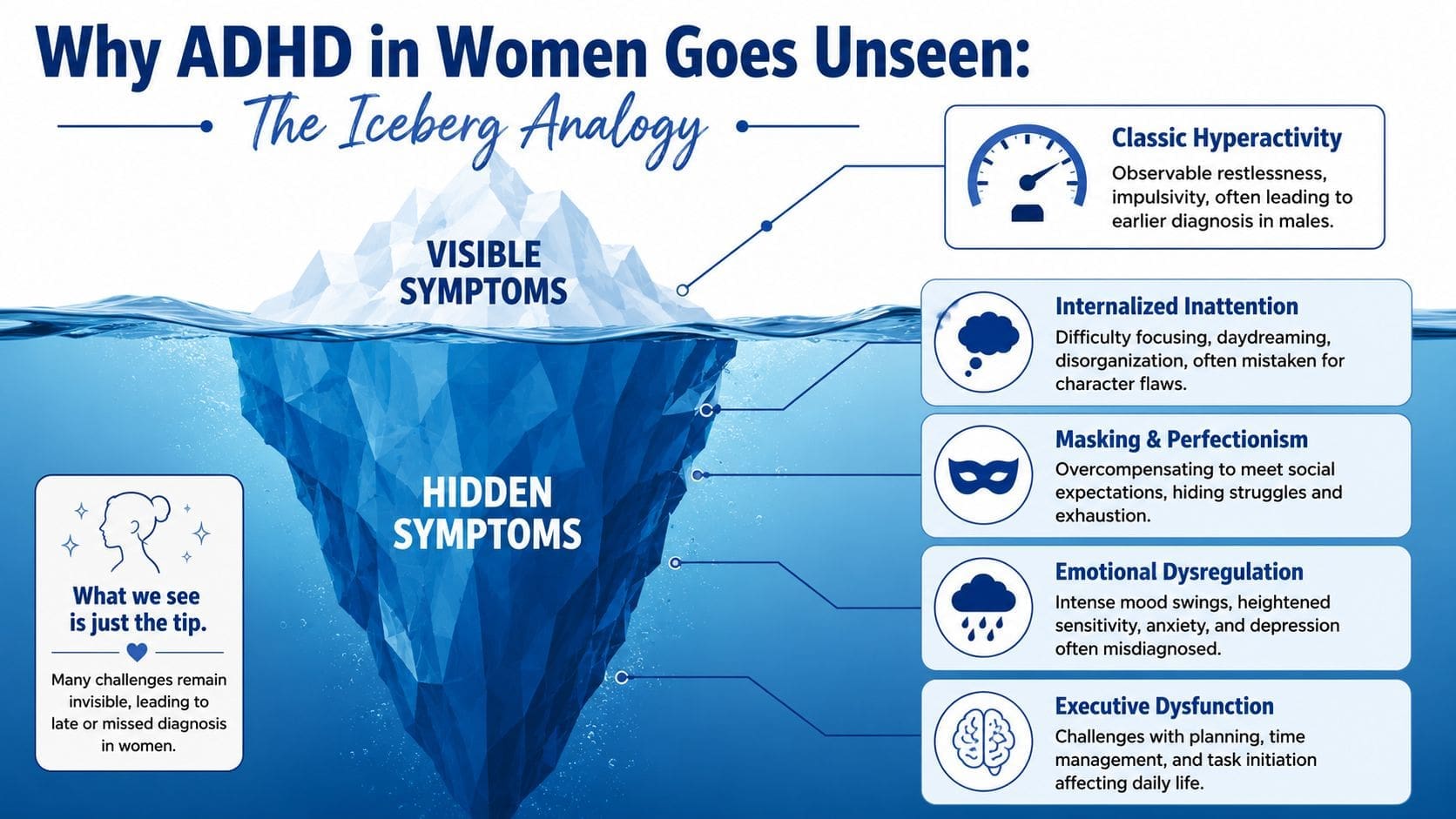
ADHD in women is often easier to understand with an iceberg image. The visible tip is what one is often taught to look for. Fidgeting, impulsivity, obvious disruption, and the classic “can't sit still” presentation. Below the surface is the larger, less visible burden many women carry. Inattention, internal restlessness, disorganization, masking, perfectionism, and emotional strain.
What the iceberg hides
A woman may not interrupt people constantly or climb the walls. Instead, she may lose hours to procrastination, reread the same paragraph repeatedly, forget appointments unless everything is alarmed, or feel flooded by competing demands.
The hidden part of the iceberg often includes:
| Hidden pattern | How it may look in daily life |
|---|---|
| Internalized inattention | Zoning out, missing details, losing track in conversations |
| Masking and perfectionism | Overcompensating, spending extra time to avoid mistakes |
| Emotional dysregulation | Fast frustration, sensitivity to criticism, shame spirals |
| Executive dysfunction | Trouble starting, sequencing, prioritizing, and finishing |
Why old stereotypes still affect diagnosis
A major reason this goes unseen is historical. ADHD was long studied and diagnosed mainly through a male, hyperactive presentation, and an expert consensus on females with ADHD urges clinicians to move away from viewing it only as a behavioral disorder because females often show subtler, more internalized symptoms across the lifespan, as described in this expert consensus on ADHD in females.
That shift matters. If the mental image of ADHD is still a disruptive boy in a classroom, many women won't recognize themselves. Neither will the people around them.
A broader public understanding of prevalence has grown over time, but recognition still lags where presentation is quieter and more internal. This overview of the growing concern around ADHD prevalence adds useful context for why more adults are reconsidering symptoms they've lived with for years.
Clinical takeaway: A woman can look organized, successful, and responsible, and still be struggling with ADHD every day.
Navigating Diagnosis Hormones Masking and Comorbidity
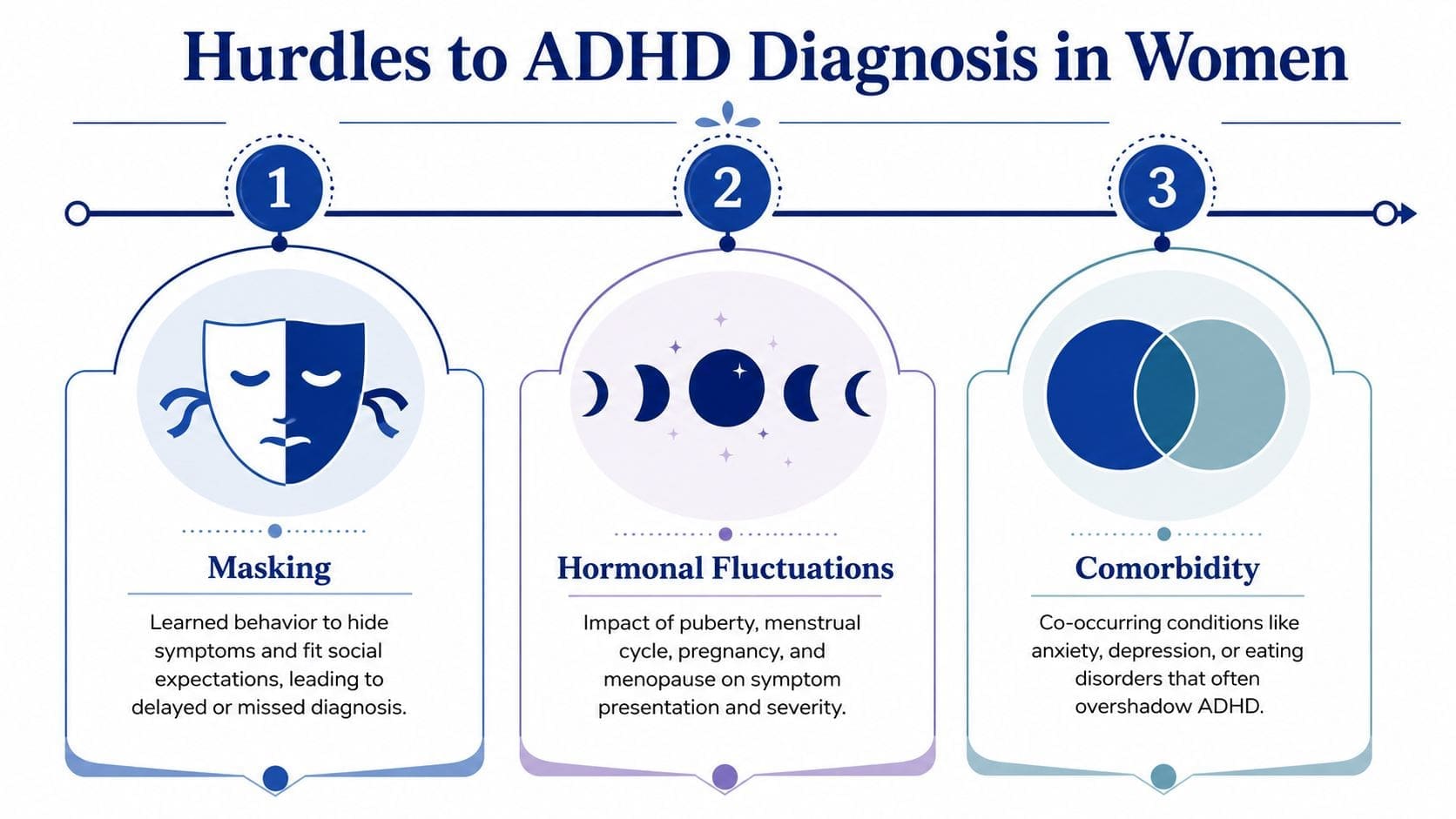
Diagnosis in women is often delayed not because symptoms are mild, but because the pattern is complicated. The struggle is filtered through social expectations, hormonal shifts, and overlapping mental health conditions.
Masking can look like competence
Many women learn early to compensate. They sit on their hands in class, overstudy, copy what organized people do, arrive early out of fear of being late, and apologize constantly. From the outside, that can look like motivation and maturity. Inside, it often feels fragile.
Masking delays diagnosis because it hides impairment. A woman may be meeting obligations while paying for it with exhaustion, dread, and self-criticism. She isn't symptom-free. She's working around symptoms.
A careful evaluation usually goes beyond a short symptom checklist. It looks at persistence over time, impairment across settings, developmental history, and collateral information when available. For people considering a formal assessment process, psychological testing for ADHD can help clarify what a structured workup may involve.
Later diagnosis is also common in adulthood. Duke Health's summary notes that a 2023 CDC report estimated 15.5 million U.S. adults had current ADHD, or 6.0%, with about one-half diagnosed in adulthood, and only about 50.4% had been prescribed ADHD medication in the prior 12 months, highlighting a meaningful treatment gap in adult care, as summarized by Duke Health on ADHD in girls and women.
Hormones can change the pattern
Hormonal shifts can make ADHD symptoms feel inconsistent. Concentration may worsen at some points of the menstrual cycle, emotional regulation may feel thinner, and routines that worked before may stop working during major life stages like postpartum or perimenopause.
That doesn't mean hormones cause ADHD. It means they can change how symptoms feel and how manageable they are. Tracking mood, focus, sleep, appetite, and cycle timing can be clinically useful because patterns often emerge when symptoms are recorded instead of estimated from memory.
Some women also want broader education around hormone health alongside psychiatric care. For a non-psychiatric perspective on that topic, this resource on functional medicine for women's hormones may be a useful starting point.
A brief visual overview can also help frame the barriers many women face during assessment:
Comorbidity complicates the picture
ADHD rarely arrives in a neat package. Anxiety, depression, insomnia, trauma symptoms, eating concerns, and irritability can overlap with it or develop because of years of unmanaged executive dysfunction.
That creates two common problems:
- ADHD gets mistaken for another condition. A woman is treated only for anxiety when disorganization and task paralysis are driving some of the distress.
- Another condition overshadows ADHD. Depression or panic becomes the focus, while longstanding attention problems stay unexplored.
The best diagnostic work asks not only “What symptoms are present?” but also “What has been happening underneath them for years?”
Your Treatment Foundation Medication and Psychotherapy
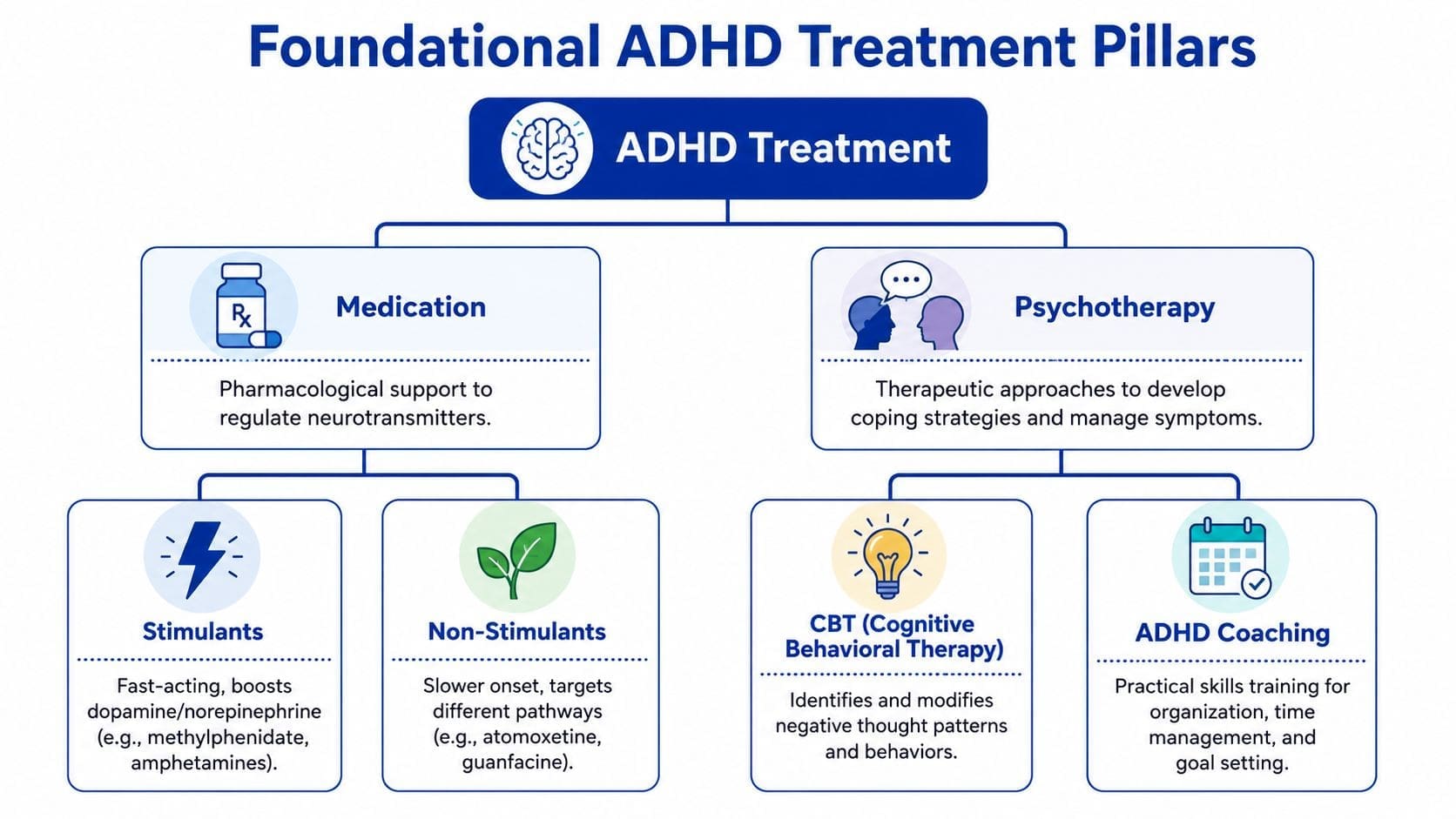
Effective care usually starts with a practical truth. ADHD treatment works best when it doesn't rely on one tool alone. For women, the most evidence-based approach is multimodal, combining medication with psychological treatment and tailoring support to life stage, impairment, and coexisting conditions, as outlined in CHADD's guidance on treatment for women and girls.
What medication can and cannot do
Medication can reduce friction. It may improve attention, task initiation, follow-through, or the ability to stay with a task long enough to complete it. The main categories are stimulants and non-stimulants, and the right choice depends on symptom profile, side effects, medical history, sleep, anxiety, and patient preference.
Medication doesn't build routines for someone. It doesn't clean up a calendar, repair burnout, or automatically fix procrastination habits that formed over years. It creates a better neurological starting point, which makes skills work more likely to stick.
A simple way to think about it:
| Tool | Best use |
|---|---|
| Stimulant medication | Often used when quicker symptom relief and stronger attentional support are needed |
| Non-stimulant medication | Considered when stimulants aren't tolerated, aren't preferred, or aren't the right fit |
| Ongoing monitoring | Adjusts timing, dose, side effects, and real-world usefulness over time |
For patients learning about options, ADHD medication information can help frame the basic treatment categories and common questions to bring into an appointment.
Why therapy matters even when medication helps
Psychotherapy is where insight turns into action. Cognitive Behavioral Therapy, in particular, is often useful for adults with ADHD because it addresses planning, avoidance, self-talk, emotional regulation, and problem-solving. Women who've spent years feeling “not good enough” often need treatment for the secondary impact of ADHD, not only the core symptoms.
Therapy can help with:
- Task initiation: Breaking overwhelming jobs into visible first steps.
- Cognitive patterns: Challenging shame-based beliefs like “If I were disciplined, this would be easy.”
- Relationship strain: Improving communication around forgetfulness, lateness, and uneven follow-through.
- Routine repair: Building systems that are realistic for the person's life, not idealized versions of it.
One practical consideration matters here. A prescribing clinician and a therapist don't do the same job. In telepsychiatry, a psychiatric nurse practitioner can evaluate ADHD, prescribe and adjust medication when appropriate, monitor benefit and side effects, and coordinate care with therapy rather than treating medication as a stand-alone answer.
Integrative Approaches for Whole-Person ADHD Management

Medication and therapy are the foundation, but they are not the whole structure. In practice, many women with ADHD improve more consistently when care also addresses sleep patterns, eating habits, stress load, movement, and sensory overwhelm. Those factors do not cause ADHD, but they can make symptoms feel much worse from one day to the next.
A common Pennsylvania telehealth scenario looks like this. A woman starts appropriate ADHD treatment, notices some benefit, then still struggles on days when she is under-slept, skipping meals, or carrying constant mental noise from work and family demands. That does not always mean the medication is wrong. It often means the treatment plan needs more support around daily regulation.
Daily regulation changes how treatment feels
Sleep, food, movement, and sensory input affect attention, frustration tolerance, working memory, and follow-through. When those areas are unstable, the nervous system has less margin. Women often blame themselves for that pattern, even when the problem is that the day is set up in a way that drains attention before the most important tasks even begin.
Useful supports often include:
- Consistent sleep timing: A repeatable sleep and wake schedule helps more than chasing perfect sleep.
- Regular meals: Eating earlier in the day and avoiding long gaps between meals can reduce irritability, shakiness, and mental drop-off.
- Realistic movement: Walking, yoga, stretching, or strength training can help regulate energy without requiring an all-or-nothing fitness plan.
- Lower decision load: Simple breakfast options, recurring grocery lists, and fewer daily choices protect mental bandwidth.
- Sensory adjustments: Noise reduction, visual order, and planned quiet time can improve focus for women who feel overstimulated by their environment.
Nutrition deserves a practical discussion. It is not a cure, and I do not present it that way to patients. It can still matter, especially for women who notice concentration worsens with inconsistent meals or medication feels harder to tolerate on an empty stomach. This overview of nutrition and integrative psychiatry for ADHD depression and anxiety shows how food can fit into psychiatric care without turning nutrition into another source of pressure.
Sorting useful adjuncts from extra noise
Women with ADHD often receive too much vague advice. Use a planner. Try meditation. Take supplements. Get more organized. Some of those ideas help. Some add one more layer of guilt when they do not fit real life.
A better question is whether a strategy reduces friction and supports the treatment plan already in place.
- Often helpful adjuncts: mindfulness practices, ADHD coaching, exercise, better sleep routines, and changes to the home or work environment
- Practical tools: timers, whiteboards, body doubling, visual cues, simplified storage, meal prep, and reminder systems
- Usually overpromised: supplement marketing, generic productivity systems, and rigid routines that collapse the first time life gets busy
Some patients read about cognitive performance supplements while considering integrative options. That material can help patients ask better questions, but supplements work best as optional adjuncts. They should not replace careful evaluation, medication management when appropriate, psychotherapy, or follow-up.
For women in Pennsylvania, telehealth can make this kind of care more realistic. A psychiatric nurse practitioner can prescribe, monitor response, adjust treatment over time, and also address the everyday factors that influence whether ADHD care works well in actual life. Integrative Psychiatry of America offers that type of online psychiatric care with attention to both standard treatment and day-to-day supports.
Practical Strategies and Finding Care in Pennsylvania
When specialist access is limited, daily strategies matter more, not less. One study found that only 26.4% of psychologists advertised treating adult ADHD, highlighting a real service gap in adult care, as summarized by the University of Washington Newsroom report on adult ADHD treatment access.
Small systems that reduce daily friction
Women often do better with external systems than with willpower-based advice. The goal isn't becoming perfectly organized. The goal is reducing avoidable friction.
A few strategies tend to work well in real life:
- Time blocking: Put tasks on the calendar instead of leaving them on a list.
- Body doubling: Work near another person, or stay on video or phone while starting a task.
- One capture system: Use one notes app, one planner, or one notebook instead of several.
- Visual reminders: Keep medications, keys, chargers, and work materials in visible, consistent spots.
- Task shrinking: Reduce “clean the house” to “clear the kitchen counter for five minutes.”
These tools don't cure ADHD. They make the day easier to manage while formal treatment is being built or adjusted.
How telehealth care can fit real life
For many adults in Pennsylvania, telehealth removes one major barrier. It cuts out commute time, waiting rooms, and the added executive load of fitting another appointment into an already crowded schedule. That convenience matters for women juggling work, caregiving, school, and household responsibilities.
Online care can also make follow-up easier, which is important in ADHD treatment because response, timing, side effects, sleep impact, and coexisting symptoms often need review over time. For women looking into remote support, online psychiatry in Pennsylvania for ADHD care shows what that process can look like.
ADHD in women is treatable. The hard part is often recognizing the pattern, getting the right assessment, and building a plan that fits a real life instead of an ideal one.
Women across Pennsylvania who are struggling with focus, overwhelm, disorganization, or late-recognized ADHD symptoms can explore care through Integrative Psychiatry of America. Secure telehealth visits make it possible to meet with a psychiatric nurse practitioner from home, discuss symptoms in depth, review medication and therapy options, and build a treatment plan that takes the whole person into account.