
Finding Your Anchor: A Pennsylvania Guide to PTSD Grounding
The feeling can strike anywhere in Pennsylvania. A crowded market in Philadelphia. A quiet street in Lancaster. A late-night shift in Pittsburgh. A sound, a smell, or a brief memory can send the heart racing until the past feels more real than the present.
For people living with PTSD, that experience isn't dramatic language. It's daily life. The search for PTSD grounding techniques is often a search for something immediate that helps the body and mind reconnect to right now.
Grounding is widely used as a present-moment intervention, but it isn't one single standardized method. A critical review published in SAGE Open notes that clinicians and researchers have used the term inconsistently, which helps explain why trauma resources teach grounding as a cluster of short strategies instead of one fixed protocol (critical review of grounding in trauma care). This guide stays practical. It focuses on tools that can be used quickly, explains when they help, and shows where they fit into a broader telehealth treatment plan available across Pennsylvania.
Table of Contents
- 1. 5-4-3-2-1 Sensory Grounding Technique
- 2. Grounding Through Progressive Muscle Relaxation
- 3. Box Breathing (Tactical Breathing)
- 4. Grounding Through Physical Movement and Exercise
- 5. Mindfulness and Present-Moment Awareness
- 6. Cold Water Immersion and Temperature-Based Grounding
- 7. Cognitive and Social Grounding (Values-Based Anchors & Supportive Connection)
- 7 PTSD Grounding Techniques Comparison
- Integrate Grounding into Your Pennsylvania PTSD Treatment Plan
1. 5-4-3-2-1 Sensory Grounding Technique
This is the version of grounding many people learn first because it's concrete. The exercise uses exactly 15 sensory observations: 5 things to see, 4 to touch, 3 to hear, 2 to smell, and 1 to taste, as described in Los Angeles County trauma-informed public health guidance (Los Angeles County grounding resource).
That count matters because distressed brains often need structure, not open-ended advice. A first responder sitting in a parked vehicle after a difficult call can move through the senses one by one. A shopper in a crowded grocery store can focus on the cart handle, the freezer hum, and the smell of produce instead of spiraling into panic.
When it works best
This technique helps most when attention is scattered and the person needs a script to follow. It can also help before a virtual therapy or medication visit, when someone feels activated and wants to arrive more centered.
Practical rule: Don't wait to try 5-4-3-2-1 for the first time in the middle of a flashback. Practice it when calm so the steps feel familiar.
A few adjustments make it work better in real life:
- Use specific descriptions: "Blue cereal box" works better than "something blue."
- Modify the senses: If smell or taste isn't practical, stay longer with sight, touch, and sound.
- Keep a prompt in the phone: A short written version helps when concentration drops.
- Pair it with treatment: Repeated episodes of dissociation, flashbacks, or panic usually need more than self-help alone. A broader PTSD treatment plan through telehealth can build grounding into ongoing care.
What doesn't work as well is rushing through the list mechanically. If the exercise becomes a speed test, it loses some of its value. The nervous system usually responds better when each observation is slow and concrete.
2. Grounding Through Progressive Muscle Relaxation
Some trauma symptoms live in the body before they reach words. Jaw tension, clenched fists, raised shoulders, a tight chest, restless legs. Progressive muscle relaxation, often shortened to PMR, gives that tension somewhere to go.
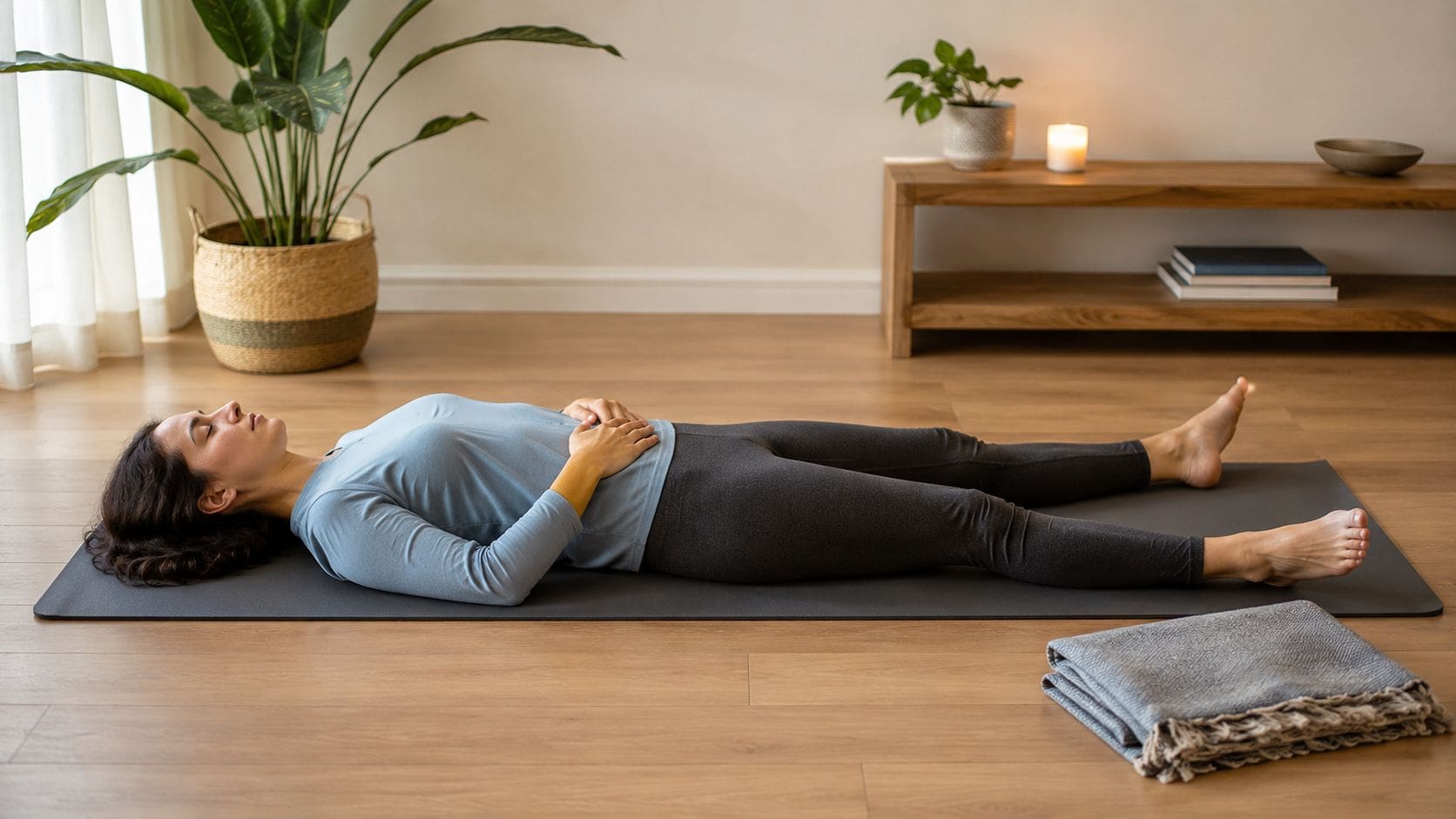
A common pattern is simple. Tense one muscle group briefly, then release and notice the contrast. Someone who feels hypervigilant at bedtime might start with the hands, forearms, shoulders, and legs. A healthcare worker or first responder on break might do an abbreviated version while seated, focusing only on the jaw, shoulders, and hands.
How to make PMR tolerable
PMR isn't ideal for everyone in every moment. For some trauma survivors, intense body focus can feel uncomfortable at first, especially if the body itself carries strong trauma associations. In those cases, shorter rounds and less force usually work better than a full, rigid routine.
- Start large, then go smaller: Legs, shoulders, and arms are often easier than facial muscles.
- Keep the effort moderate: Gentle tensing is usually enough. Pain isn't useful.
- Notice the release: The calming effect often comes from the contrast, not the squeeze.
- Use guided support: A clinician can help adapt PMR if body-based exercises feel activating.
Some people with PTSD don't need more intensity. They need a safe way to notice the difference between "tense" and "released."
A short guided practice can make this easier to follow at home or between appointments.
What tends not to work is forcing a long PMR session when the person is already flooded. During severe distress, a brief sensory anchor or a simple movement cue may be easier to access first.
3. Box Breathing (Tactical Breathing)
Breathing exercises are common in PTSD care because they're portable. Box breathing is one of the easiest to remember. Blue Knot Foundation promotes a 4-4-4-4 cadence, which means inhale, hold, exhale, and hold for the same count (Blue Knot grounding guidance).
A police officer waiting for the next call can trace an imaginary square on the steering wheel. A commuter in Harrisburg can use a quiet four-count cycle before walking into work. A patient logging into a telehealth visit can do a few rounds to reduce physical revving before talking.
When breathing helps and when it doesn't
Breath work can be excellent for hyperarousal. It can slow the pace of a stress response and create a sense of control when thoughts feel chaotic. It also fits well with a whole-person plan that includes sleep, exercise, and daily regulation habits, such as those covered in integrative health and wellness care.
But breathing isn't universally calming. Some people with panic, dissociation, or trauma linked to breathing and body sensations get more anxious when told to focus on the breath. Trauma-informed guidance has pointed out that people should choose what feels tolerable and skip breath-focused grounding if it increases distress (trauma-informed grounding guide from AFN).
If breath focus makes the body feel trapped, switch tools. Use feet on the floor, object naming, or touch instead.
Useful adjustments include keeping the eyes open, shortening the count, or pairing the breath with a physical anchor like pressing both feet into the floor. What usually fails is trying to "breathe perfectly." Rhythm matters more than perfection.
4. Grounding Through Physical Movement and Exercise
Some trauma responses don't settle with stillness alone. The body may feel charged, frozen, shaky, or trapped in adrenaline. In those moments, intentional movement can ground better than sitting still and trying to think calmer thoughts.
Walking is often the simplest place to start. A person in Scranton might take a brisk lap around the block after a trigger at work. A veteran in Erie might use heavy bag work or structured boxing drills to redirect tension safely. Someone in Reading who feels disconnected from the body may begin with stretching or a short yoga sequence instead of more intense exercise.
Good movement choices for trauma recovery
The best movement is usually the one that feels safe enough to repeat. Gentle options often work better at first for people who feel numb, shut down, or overwhelmed by body awareness.
- Choose predictable movement: Walking, stationary cycling, yoga, or resistance bands can feel more manageable than chaotic environments.
- Keep the focus present-tense: Notice foot pressure, muscle effort, or the swing of the arms.
- Use short bouts: A brief walk during a work break is often more realistic than waiting for a perfect workout.
- Build consistency: Structured support can help movement become part of treatment, not a separate task. Some patients explore this through exercise as part of integrative mental health care.
For people who want a simple home option, resistance bands can make movement more accessible without a gym. This resistance band exercise guide from MONFIT shows examples that can be adapted to energy level and space.
What doesn't usually help is choosing exercise that feels punishing. Grounding works better when movement restores orientation and control, not when it turns into another stressor.
5. Mindfulness and Present-Moment Awareness
Mindfulness gets oversimplified. In trauma care, it isn't about emptying the mind or forcing peace. It's the practice of noticing what's happening right now without immediately getting pulled into the past.

That can look formal, such as a short guided meditation, or informal, such as mindful walking from the parking lot to the office. A patient in Allentown might spend a few minutes noticing the feeling of shoes on the ground and air on the skin before starting the workday. Another person might use a guided body scan in the evening, then discuss what helped and what didn't during a telehealth session.
How to keep mindfulness from becoming frustrating
Mindfulness is often useful when the nervous system is activated but still reachable. It may be less effective in the middle of intense flashbacks or severe dissociation, when something more concrete like temperature, movement, or sensory counting may work faster.
A strong trauma-informed approach keeps mindfulness flexible:
- Start small: A few minutes can be enough.
- Anchor to something neutral: Sound, feet, or visual detail often feels safer than internal body sensations.
- Drop the self-criticism: Wandering attention isn't failure. Returning attention is the practice.
- Use supportive formats: Some people benefit from movement-based mindfulness such as yoga within integrative behavioral care.
Public trauma guidance often describes grounding as a way to restore present-moment awareness through distraction, self-talk, counting, somatosensory cues, and breathing, but it doesn't offer strong comparative data on which method works best for each symptom pattern (NCBI trauma guidance on grounding approaches). That means personalization matters. Mindfulness helps some people immediately. Others need a more active entry point.
6. Cold Water Immersion and Temperature-Based Grounding
Cold is one of the fastest ways to interrupt a spiraling moment. A splash of cool water on the face. Hands under running water. Holding ice briefly. These methods can cut through panic, dissociation, or emotional flooding by creating a strong present-moment sensation.
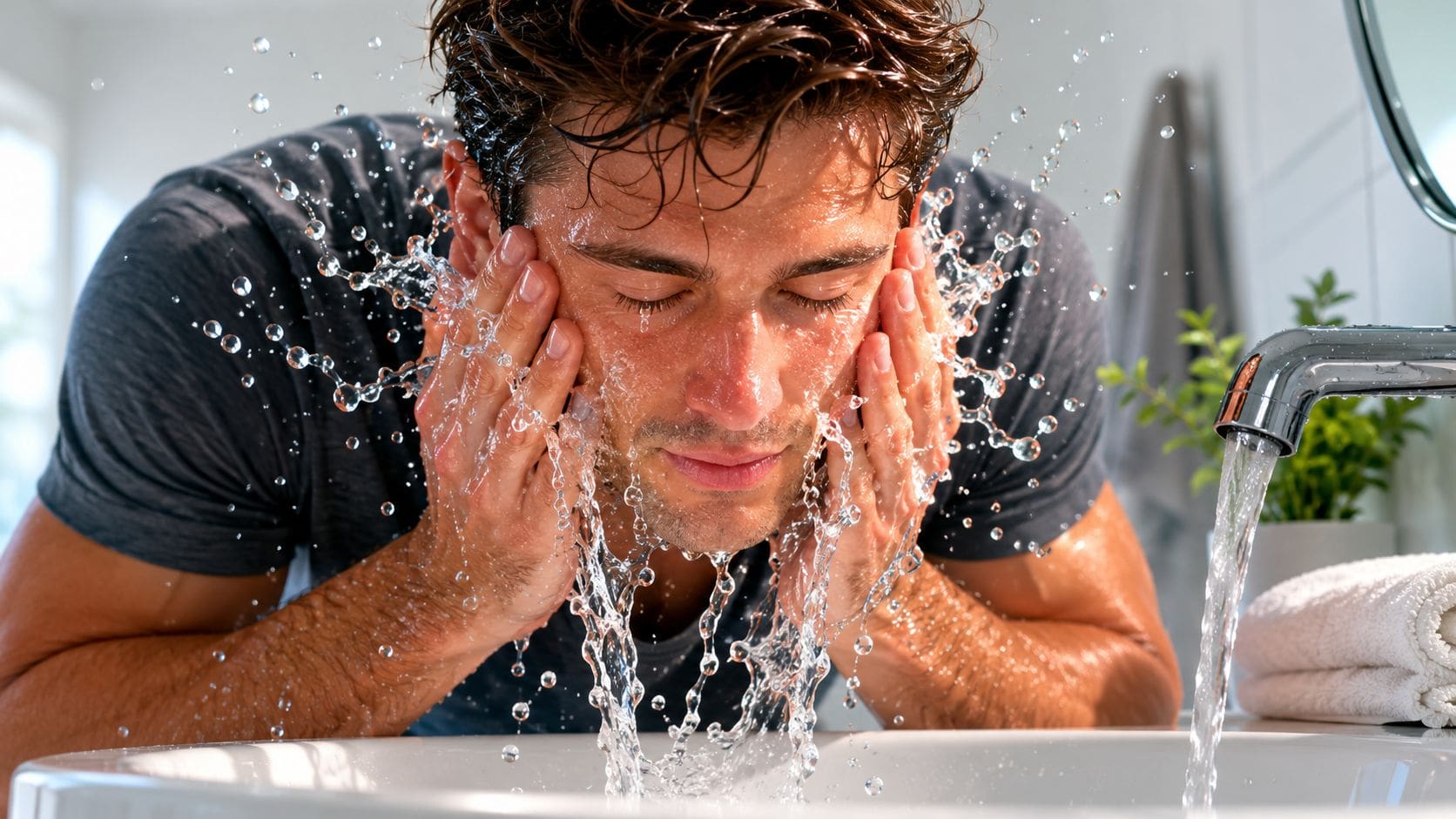
This works well for people who need a sharp sensory shift. A survivor dealing with an acute flashback may splash cold water on the face and then name five objects in the bathroom. Someone dissociating at home may hold an ice cube and describe its texture out loud to reconnect to the present.
Use cold as an interrupt, not a cure
Temperature-based grounding is simple, but it still needs judgment. It should feel tolerable, not punishing. Brief contact is usually enough to redirect attention.
Los Angeles County and Blue Knot public trauma materials both include sensory grounding methods such as cold-water or ice-based input as part of their practical grounding structure, alongside breathing and sensory exercises. That fits with how many clinicians use cold. As one tool in a larger kit, not the whole plan.
Cold can interrupt a trauma response quickly. It usually doesn't resolve the trigger by itself.
A few practical limits matter:
- Be cautious with intense cold: People with medical concerns should check with a healthcare provider before trying more aggressive cold exposure.
- Use what is available: Sink water or a cool washcloth is often enough.
- Combine it with orientation: Say the date, location, or current activity after the cold stimulus.
- Avoid turning it into endurance: A long ice bath isn't the point. If someone wants general fitness guidance, this article on how long to sit in an ice bath is separate from trauma grounding and shouldn't replace clinical guidance.
What fails most often is using cold in isolation without any follow-up grounding or support. After the nervous system slows a bit, another anchor should take over.
7. Cognitive and Social Grounding (Values-Based Anchors & Supportive Connection)
Not every grounding technique has to be sensory. Some people stabilize faster when they reconnect to identity, values, and safe human contact. That might mean saying, "This is a trauma response. The event isn't happening now." It might mean texting a trusted friend, calling a sibling, or hearing a familiar voice that helps the body settle.
This can be especially helpful when PTSD brings shame, isolation, or emotional disconnection. A first responder in Philadelphia might repeat a grounded statement tied to present reality, then call a colleague who understands trauma exposure. A survivor in Lancaster might keep a note in the phone with reminders about current age, address, goals, and reasons to keep going.
What strong cognitive grounding sounds like
Good cognitive grounding is concrete and believable. It doesn't ask the brain to accept exaggerated reassurance. It reminds the brain of facts that are true right now.
- Use present facts: Name the year, location, age, and immediate surroundings.
- Choose authentic statements: "I'm safe enough in this room" often works better than a vague positive slogan.
- Identify safe contacts ahead of time: Support works better when it isn't improvised in crisis.
- Build this into treatment: Trauma-focused therapy can help refine grounding statements and communication plans with trusted people. Many patients use that support through virtual PTSD therapists and trauma care.
Not every useful PTSD tool needs to be intense or highly technical. In fact, treatment engagement is a real challenge across PTSD care. A meta-analysis covering 181 articles and 124,092 clients found that dropout is a major implementation constraint across PTSD treatments in military populations (APA report on PTSD psychotherapy dropout). Simple, personal, repeatable grounding tools often fit better into daily life than high-burden routines.
When cognitive grounding doesn't work, it's often because the statement is too abstract or the support person isn't regulating. Safe connection should feel steady, not demanding.
7 PTSD Grounding Techniques Comparison
| Technique | Complexity 🔄 | Resources & Time ⚡ | Expected outcomes 📊 ⭐ | Ideal use cases | Key advantages 💡 |
|---|---|---|---|---|---|
| 5-4-3-2-1 Sensory Grounding Technique | Low, sequential, easy to learn | None; ~5–10 min; discreet | Immediate present anchoring; reduces acute anxiety; ⭐⭐⭐⭐ | Acute panic, public spaces, quick grounding between tasks | Multi-sensory interruption; portable; no equipment |
| Grounding Through Progressive Muscle Relaxation (PMR) | Medium, structured sequence, needs guidance | None; 15–20 min typical; can use recordings | Lowers muscle tension; activates parasympathetic system; sustained relaxation; ⭐⭐⭐⭐ | Evening routines, sleep improvement, baseline hyperarousal | Teaches bodily awareness; evidence-based; reduces physical stress |
| Box Breathing (Tactical Breathing) | Low, simple timing pattern to master | None; seconds–minutes; very portable | Rapid physiological calming and clarity; interrupts hyperventilation; ⭐⭐⭐⭐ | Acute stress, first responders, moments needing focus | Fast-acting; easy to teach; highly portable |
| Grounding Through Physical Movement and Exercise | Medium, variable planning and intensity | Space or simple equipment optional; 10+ min | Somatic discharge; mood and cardiovascular benefits; long-term resilience; ⭐⭐⭐⭐ | Ongoing regulation, mood management, group settings | Addresses somatic trauma; builds agency; improves physical health |
| Mindfulness and Present-Moment Awareness | Medium–High, skill develops with practice | Minimal; 5+ min daily recommended; apps available | Reduces rumination and intrusive thoughts; promotes neural change; ⭐⭐⭐⭐⭐ | Long-term therapy, reducing chronic PTSD symptoms, daily regulation | Strong research base; adaptable formal/informal practice |
| Cold Water Immersion and Temperature-Based Grounding | Low–Medium, simple to apply but safety needed | Cold water/ice; seconds–minutes; medical clearance if needed | Very rapid parasympathetic shift; interrupts dissociation/flashbacks; effects short-term; ⭐⭐⭐⭐ | Acute flashbacks, dissociation, emergency regulation (when safe) | Powerful sensory reset; minimal cognitive effort; quick onset |
| Cognitive and Social Grounding (Values & Connection) | High, requires cognitive resources and safe relationships | None equipment; time varies; needs trusted people or groups | Deep psychological grounding; builds resilience and meaning; long-term recovery; ⭐⭐⭐⭐⭐ | Rebuilding identity, therapy, post-traumatic growth, crisis support | Reinforces values/identity; co-regulation through relationships; reduces isolation |
Integrate Grounding into Your Pennsylvania PTSD Treatment Plan
Grounding can be powerful because it meets the moment. It gives the brain and body something specific to do when a trigger hits in Pittsburgh, Philadelphia, Harrisburg, Erie, Scranton, Allentown, Lancaster, or Reading. That matters when PTSD symptoms disrupt work, sleep, driving, parenting, relationships, or the ability to get through the day.
It also helps to keep expectations realistic. Grounding is a coping skill, not a cure for PTSD. It can reduce the intensity of flashbacks, panic, dissociation, or hyperarousal in the moment, but it doesn't replace a full clinical assessment or treatment plan. For many adults, the most effective approach is a combination of immediate coping tools and ongoing professional care.
That combination is increasingly practical through telehealth. A large BMJ trial found that guided internet-based trauma-focused CBT for PTSD was non-inferior to individual face-to-face CBT for mild to moderate PTSD tied to a single traumatic event, and the authors concluded it should be considered a first-line treatment in that context (BMJ trial on guided internet-based trauma-focused CBT). For Pennsylvanians, that means evidence-informed PTSD care doesn't always require commuting across the state or waiting for an in-person slot close to home.
Telehealth can also make grounding more usable. A clinician can help identify whether sensory, breathing, movement, or cognitive strategies fit the symptom pattern best. That matters because one person's best grounding tool may be another person's trigger. Breath work may calm one patient and increase anxiety for another. Body-focused work may help one patient and feel overwhelming to someone else. Personalization isn't a luxury in trauma care. It's part of safety.
Integrative Psychiatry of America provides virtual psychiatric evaluations, medication management, and evidence-informed mental health treatment throughout Pennsylvania. Patients can access care from home while building a practical plan that may include grounding skills, medication when appropriate, therapy referrals, and lifestyle support. For someone searching for PTSD grounding techniques right now, that next step can be simple. Learn about treatment options, verify insurance, or explore the free 5-4-3-2-1 Grounding Tool and start practicing a skill that can be used today.
If PTSD symptoms are disrupting daily life in Pennsylvania, Integrative Psychiatry of America offers secure telehealth appointments for psychiatric evaluation, medication management, and whole-person treatment planning. Adults across the state can learn more about care options, check insurance, and request an appointment from home.