
Depression can feel like an overwhelming fog, impacting every aspect of life from energy and sleep to your ability to find joy. While medication is a valid and often necessary tool, many people seek effective, science-backed ways to manage depression without medication, either as a primary approach or to complement other treatments. This guide explores an integrative framework for improving mental health, empowering you with actionable strategies to build resilience and reclaim your well-being.
At Integrative Psychiatry of America, our psychiatric nurse practitioners believe in a whole-person approach, combining evidence-based therapies with personalized lifestyle adjustments. This article will serve as your roadmap, detailing ten powerful strategies you can start implementing today. We will cover everything from structured psychotherapy techniques and behavioral activation to foundational changes in nutrition and sleep.
We’ll delve into the ‘how’ and ‘why’ behind each method, providing practical steps and the research that supports them. Whether you’re seeking depression treatment in Philadelphia, PA, or accessing care through telepsychiatry, these tools can help you build a sustainable path toward a brighter, more balanced life. The goal is to provide you with a clear, straightforward plan for taking an active role in your mental health journey, starting now.
1. Cognitive Behavioral Therapy (CBT)
Cognitive Behavioral Therapy (CBT) is a structured, goal-oriented form of psychotherapy that has strong evidence supporting its effectiveness. It is one of the most researched ways to manage depression without medication. The core idea behind CBT is that our thoughts, feelings, and behaviors are interconnected. By learning to identify and change destructive thought patterns and unhelpful behaviors, we can directly improve our mood and emotional state.
A psychiatric nurse practitioner trained in CBT will guide you through this process, typically over 12-20 sessions. The focus is on learning practical skills you can use in your daily life long after therapy concludes.
How CBT Works in Practice
CBT is not just talk therapy; it’s an active, collaborative process. A key technique is using a thought record. This involves documenting a situation that triggered a strong negative emotion, identifying the automatic thoughts you had, and then challenging those thoughts to find more balanced and realistic alternatives.
For example, if you make a mistake at work and your automatic thought is, “I’m a complete failure,” CBT helps you question that belief. You would examine the evidence: “I’ve succeeded on many other projects. This was one mistake.” You then create a more balanced thought: “I made a mistake on this task, but it doesn’t define my overall competence.”
CBT provides a structured framework for “fact-checking” the negative stories your depression tells you. It empowers you to become your own therapist by internalizing these skills.
Another powerful component is Behavioral Activation. Depression often drains motivation and makes enjoyable activities seem pointless. A therapist will help you schedule small, manageable activities, gradually reintroducing pleasure and a sense of accomplishment into your life, which directly counteracts withdrawal and anhedonia. Many people find that CBT is a helpful tool, and you can learn more about CBT and other treatments available through convenient telehealth services.
2. Regular Physical Exercise and Movement
Regular physical exercise is one of the most powerful and well-researched ways to manage depression without medication. It functions on multiple physiological levels, triggering the release of mood-boosting endorphins, reducing stress hormones like cortisol, and increasing brain-derived neurotrophic factor (BDNF), a protein vital for neuron growth and survival. Research, such as studies led by Dr. James Blumenthal, has shown that consistent, moderate-intensity exercise can be as effective as antidepressants for some people with mild to moderate depression.
Movement also directly combats the inertia and social withdrawal common in depression. It provides structure to the day, offers a tangible sense of accomplishment, and can improve sleep quality, all of which are crucial for mental well-being. A psychiatric nurse practitioner can help you create a realistic exercise plan as part of your overall treatment.
How Exercise Works in Practice
The key to using exercise for mental health is consistency, not necessarily intensity. You don’t need to run a marathon to feel the benefits. The goal is to make movement a regular part of your life in a way that feels sustainable and even enjoyable.
For example, studies show that simple 30-minute brisk walks five days a week can produce significant improvements in mood. If that feels too daunting, start smaller. A 10-minute walk is far better than no walk at all. As your motivation and energy increase, you can gradually extend the duration or try new activities. Resistance training can boost self-efficacy, while group fitness classes combine the benefits of physical activity with vital social connection.
Exercise is not just a distraction; it’s an active biological intervention. It changes your brain chemistry and structure in a way that directly counteracts the effects of depression.
Dr. Wendy Suzuki’s work on the neuroscience of exercise highlights how it can improve mood and cognitive function. To see these benefits for yourself, try tracking your mood before and after activity. This can create a powerful positive feedback loop, reinforcing the connection between movement and feeling better. You can discover more about using exercise as an integrative treatment for depression and how it fits into a complete care plan.
3. Mindfulness Meditation and Meditation Practices
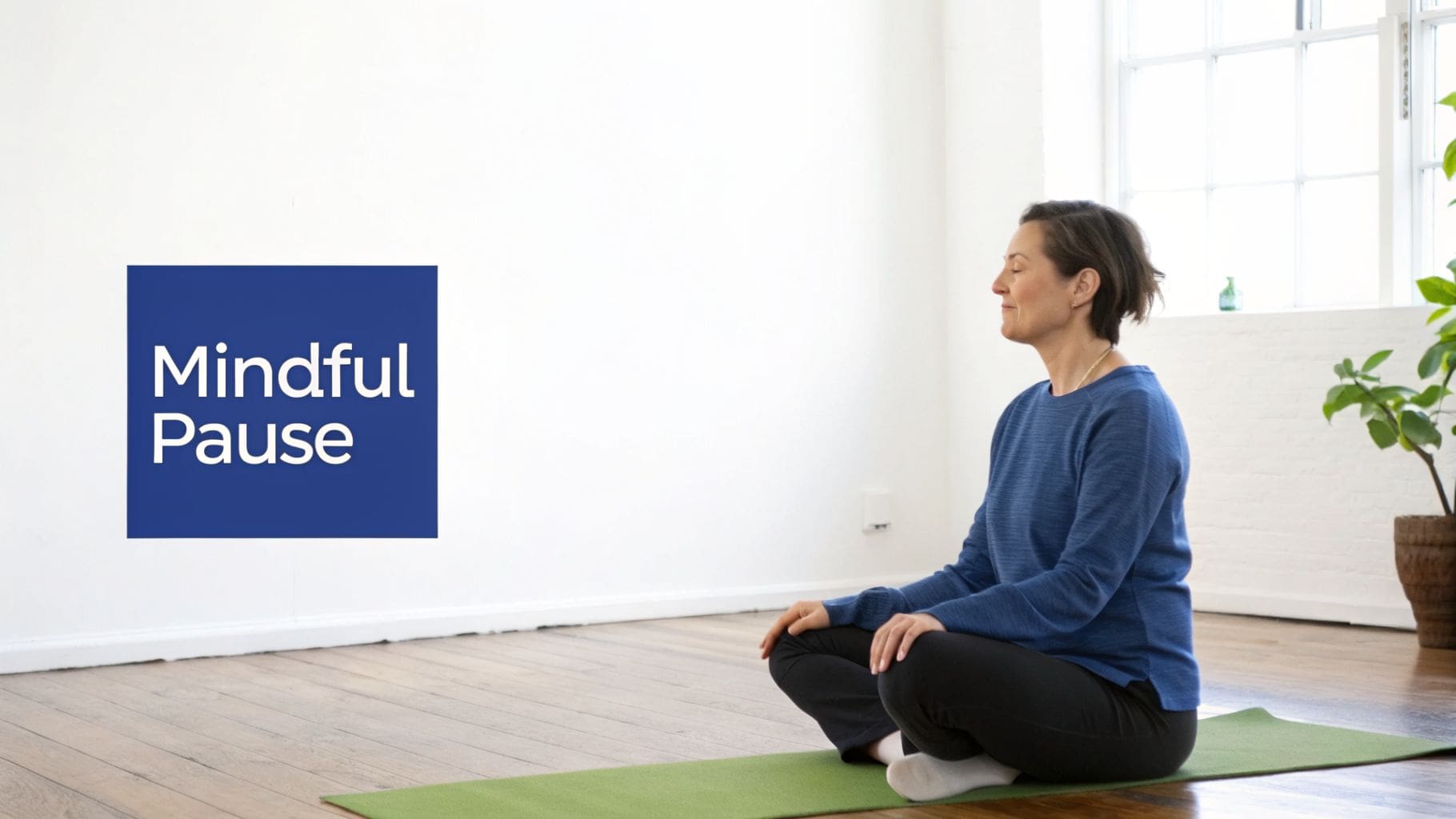
Mindfulness meditation is a practice centered on intentionally focusing your attention on the present moment without judgment. It is one of the well-regarded ways to manage depression without medication because it directly addresses rumination, a core symptom where the mind gets stuck in a loop of negative thoughts. By regularly practicing, you develop the ability to notice depressive thought patterns as they arise and observe them without getting entangled, much like watching clouds pass in the sky.

Mindfulness-Based Cognitive Therapy (MBCT), developed by Zindel Segal and colleagues, specifically combines these meditative principles with cognitive therapy to help prevent depression relapse. The practice cultivates self-acceptance, reduces mental chatter, and builds emotional resilience over time.
How Mindfulness Works in Practice
Mindfulness is an active skill, not a passive state. A fundamental technique is the body scan meditation. This involves mentally scanning your body from head to toe, noticing sensations like warmth, tingling, or tension without trying to change them. For instance, you might notice tightness in your shoulders and, by simply bringing awareness to it, consciously allow it to release.
Another powerful practice is mindful breathing. When you feel anxious or overwhelmed, you can ground yourself by focusing entirely on the sensation of your breath entering and leaving your body. This simple act anchors you in the present, interrupting the cycle of depressive thoughts.
Mindfulness teaches you that thoughts are just mental events, not absolute truths. This separation creates the space needed to choose your response instead of automatically reacting to negative feelings.
For a more structured approach, consider Mindfulness-Based Cognitive Therapy (MBCT). Often delivered in an 8-week group program, it teaches you skills to disengage from the automatic thought patterns that can trigger a depressive episode. You can also explore options for creating a calming environment and integrating mindfulness through services like The Zen Room for mental wellness, which complements a holistic treatment plan.
4. Nutritional Optimization and Dietary Changes
The food we eat has a direct and significant impact on our brain chemistry, mood regulation, and overall mental wellness. Nutritional optimization is one of the most powerful ways to manage depression without medication because it addresses foundational biological processes. Depression is often linked to chronic inflammation and deficiencies in key nutrients like omega-3 fatty acids, B vitamins, and magnesium, all of which are crucial for producing mood-regulating neurotransmitters like serotonin.

Making strategic dietary improvements can substantially improve depressive symptoms. This involves moving away from inflammatory processed foods and toward a nutrient-dense, whole-foods diet. An integrative psychiatric nurse practitioner can provide nutritional education tailored to your specific needs and biology, helping you make sustainable changes.
How Nutrition Works in Practice
Putting nutritional psychiatry into action means focusing on what you add to your diet, not just what you remove. A key approach is adopting an anti-inflammatory eating pattern, such as the Mediterranean diet. Research has shown this diet, rich in vegetables, fruits, olive oil, and fish, can reduce the risk of developing depression by over 30%.
For example, you could start by adding 2-3 servings of fatty fish like salmon or mackerel each week. The omega-3s in these foods can improve mood within several weeks. At the same time, reducing refined sugars and processed foods can help stabilize blood sugar, minimizing the mood swings and energy crashes that worsen depressive symptoms.
The connection between your gut and your brain is profound. A diet that supports a healthy gut microbiome with fiber and fermented foods can directly lower inflammation and improve mood.
Making small, consistent changes is more effective than a complete dietary overhaul. Start by including a source of protein with each meal for sustained energy or ensuring you eat regular meals to prevent blood sugar dips. Keeping a simple food and mood journal can help identify personal triggers and patterns. For a deeper dive into this topic, you can explore how nutrition affects mental health and how to build a supportive diet.
5. Sleep Optimization and Sleep Hygiene
Sleep and depression are deeply intertwined; poor sleep can worsen depressive symptoms, and depression often disrupts sleep patterns, creating a draining cycle. Optimizing sleep through consistent routines and behavioral changes is a foundational way to manage depression without medication. Quality rest is essential for brain function, emotional regulation, and physical health, making it a powerful tool for improving mood and resilience.
A psychiatric nurse practitioner can help you explore evidence-based techniques like Cognitive Behavioral Therapy for Insomnia (CBT-I). The goal is to develop a robust sleep routine that supports your brain’s natural ability to regulate mood.
How Sleep Hygiene Works in Practice
Improving sleep hygiene involves creating an environment and a set of habits that signal to your body that it’s time to rest. It’s about more than just going to bed; it’s a proactive approach to strengthening your body’s internal clock, or circadian rhythm. Consistency is a cornerstone of this strategy.
For instance, committing to a consistent bedtime of 10 PM and a wake time of 7 AM every day, even on weekends, can stabilize your circadian rhythm. This consistency makes it easier to fall asleep and wake up naturally, which directly improves mood stability. Another key behavior is creating a 30-60 minute “wind-down” routine. This could involve reading a book (not on a screen), gentle stretching, or listening to calm music to transition your mind away from the day’s stressors.
Good sleep hygiene doesn’t just treat a symptom of depression; it restores a fundamental biological process that underpins your overall mental health and ability to cope with stress.
Making your bedroom a sanctuary for sleep is also critical. Simple environmental changes can have a major impact.
- Keep it cool: Maintain a room temperature between 65-68°F.
- Keep it dark: Use blackout curtains or an eye mask to block out all light.
- Keep it quiet: Use earplugs or a white noise machine to prevent disruptions.
- No screens: Eliminate phones, tablets, and TVs from the bedroom at least one hour before sleep.
If you struggle with the connection between mood and rest, you can learn more about why depression causes insomnia and discuss your concerns with a provider.
6. Social Connection and Community Engagement
Social connection is a fundamental human need, and its absence is a powerful driver of depression. Isolation can be both a cause and a symptom, creating a difficult cycle where feeling depressed makes you withdraw, and that withdrawal worsens your depression. Re-engaging with others is one of the effective ways to manage depression without medication by building a support system and fostering a sense of belonging.
The goal isn’t to become a social butterfly overnight; it’s about finding quality interactions that feel meaningful to you. A psychiatric nurse practitioner can support you in exploring these avenues, using telehealth appointments as a reliable touchpoint while you build your external support network.
How Social Connection Works in Practice
Meaningful engagement combats depression by providing emotional support, reducing loneliness, and creating a sense of purpose and structure. It directly counters the feelings of worthlessness and isolation that depression often brings.
For example, volunteering for a cause you care about, like at an animal shelter, gives you a reason to get out of bed and provides a structured activity. It shifts focus from internal struggles to external contribution, which can significantly boost self-esteem. Joining a group fitness class combines the benefits of exercise with social interaction, creating a low-pressure environment to be around others.
Reconnecting with community reminds you that you are not alone in your struggles and that your presence matters to others. It breaks the echo chamber of negative self-talk.
Even small steps are effective. Consider starting with one of these activities:
- Join a support group. Organizations like NAMI offer free, peer-led groups where you can share experiences and strategies in a non-judgmental space.
- Find a hobby group. A book club, gaming night, or craft circle provides a built-in topic of conversation, easing social pressure.
- Reach out to one person. Commit to calling or meeting with one friend or family member each week.
- Volunteer. Find a local organization whose mission aligns with your values.
These actions help rebuild social skills and create positive feedback loops, making each subsequent interaction a little easier. For those seeking affirming spaces, many community and online groups cater to diverse populations, including LGBTQ+ individuals.
7. Behavioral Activation and Scheduling
Behavioral Activation (BA) is a powerful, evidence-based approach that stands as one of the key ways to manage depression without medication. It operates on a simple but profound principle: action precedes motivation. Depression often leads to a cycle of withdrawal and avoidance, draining energy and making once-enjoyable activities feel like overwhelming chores. BA systematically breaks this cycle by encouraging you to schedule and engage in activities, even when you don’t feel like it.
This method isn’t about waiting for inspiration to strike; it’s about creating it through deliberate action. A psychiatric nurse practitioner can help you build a personalized BA plan, focusing on reintroducing activities that provide pleasure or align with your core values, thereby creating positive feedback loops that combat depressive symptoms.
How Behavioral Activation Works in Practice
The core of BA is scheduling. Instead of having a vague intention like “I’ll clean up later,” you create a concrete plan: “From 10:00 to 10:15 AM, I will tidy my desk.” This specificity makes the task less daunting and more achievable. The goal is to gradually rebuild a routine filled with rewarding experiences.
An effective BA plan includes a mix of activities:
- Pleasure-based: Activities you do just for enjoyment, like listening to a favorite album or spending time on a hobby.
- Value-based: Actions that align with what is meaningful to you, such as calling a family member or volunteering.
- Mastery-based: Tasks that give you a sense of accomplishment, like finishing a load of laundry or organizing your emails.
Behavioral Activation is the practice of acting from your values, not your feelings. It helps you reclaim your life from depression one scheduled activity at a time.
For example, despite feeling withdrawn, you might schedule a 15-minute walk outside. Even if you don’t feel better immediately, you have broken the inertia. Over time, these small actions build momentum, increase positive reinforcement, and directly counteract the anhedonia and lethargy that depression fosters. Working with a provider through convenient telehealth services can provide the structure and accountability needed to make this strategy successful.
8. Nature Exposure and Outdoor Time
Spending time in nature is a powerful, science-backed strategy for managing depression without medication. Research shows that exposure to natural environments significantly reduces symptoms of depression, anxiety, and stress. The benefits stem from a combination of factors: decreased levels of the stress hormone cortisol, reduced inflammation, and a boost in mood from natural sunlight exposure.
This practice, sometimes called ecotherapy, helps restore mental clarity and provides a crucial sense of perspective that can interrupt cycles of rumination. A psychiatric nurse practitioner may recommend integrating nature exposure into your routine as part of a personalized mental wellness plan.
How Nature Exposure Works in Practice
The key is making intentional time for nature, even in small doses. Studies, like those popularized by Dr. Qing Li on “forest bathing” (shinrin-yoku), demonstrate that as little as 20 minutes spent in a natural setting can measurably lower stress and improve well-being. This isn’t about strenuous activity; it’s about sensory immersion.
For example, a simple 20-minute walk in a local park can reduce anxiety scores. The goal is to engage your senses: notice the sound of birds, the feeling of a breeze, and the different shades of green. This focus on the present moment acts as a form of mindfulness, pulling you away from depressive thought patterns.
Nature offers a quiet, restorative space away from the constant stimulation that can fuel anxiety and depression. It reminds us we are part of something larger, which can diminish the scale of our personal worries.
Even if you can’t get outside easily, there are ways to connect with nature. Caring for indoor plants provides a sense of responsibility and a daily connection to the natural world. Another simple but effective strategy is to ensure your workspace or living area has a window with a view of trees or a garden. The combination of nature exposure with other non-medication approaches is a cornerstone of our integrative approach to mental health.
9. Journaling and Expressive Writing
Journaling and expressive writing are accessible yet potent ways to manage depression without medication. This practice involves regularly writing down your thoughts, feelings, and experiences, which helps to externalize internal turmoil. Research pioneered by James Pennebaker shows that writing about emotionally significant events can lead to notable improvements in psychological well-being by facilitating emotional processing, cognitive reorganization, and a shift in perspective.
The act of translating feelings into words creates distance, making them feel less overwhelming. A psychiatric nurse practitioner can help integrate journaling into your treatment plan, using your written insights to guide therapy sessions and track progress over time.
How Journaling Works in Practice
It is a private, flexible tool that can be adapted to your specific needs. It’s not about perfect prose; it’s about honest expression. Different approaches serve distinct functions in managing depressive symptoms.
A popular and effective method is gratitude journaling. This involves simply listing three to five things you are grateful for each day. This practice trains your brain to notice positive aspects of your life, which can gradually raise your mood baseline and counteract the negative bias common in depression.
Journaling gives your thoughts a place to go. It prevents rumination by moving worries from your head onto the page, where you can examine them more objectively.
Another structured technique is the thought record, similar to what’s used in CBT. When you feel a strong negative emotion, you can write down the situation, your automatic thoughts, and then work to challenge and reframe them. For example, writing an unsent letter can help you process complex feelings about a difficult relationship without the need for confrontation. This written exploration is a powerful way to organize your mind and find clarity. You can learn more about personalized anxiety treatment options that may complement practices like journaling.
10. Purpose and Meaning Development
Depression often erodes a person’s sense of purpose, making life feel directionless and empty. Purpose and Meaning Development is a deliberate process of rediscovering or creating a sense of direction that aligns with your core values. This approach, central to existential therapy and positive psychology, acts as a powerful buffer against feelings of hopelessness and is one of the more profound ways to manage depression without medication.
A psychiatric nurse practitioner can help you explore what truly matters to you, acting as a guide in this deeply personal journey. The goal is to build a life that feels authentic and motivated from within, providing a strong anchor during difficult emotional periods.
How Purpose Development Works in Practice
Developing purpose is an active, exploratory process. It moves beyond simply feeling better and focuses on building a reason to get better. This often starts with clarifying your personal values and then setting goals that are in harmony with them.
For example, if you identify “community” and “compassion” as core values, a path to purpose might involve volunteering for a local cause. If “creativity” is a top value, you might commit to a daily writing practice or join an art class. The action itself is less important than its connection to what you hold meaningful.
Finding your ‘why’ gives you the strength to endure the ‘how.’ When your daily actions are tied to a deeper purpose, you build resilience and a powerful antidote to the apathy of depression.
Another key component is legacy work. This involves considering what impact you want to have on the world and the people around you. This could mean:
- Mentoring a junior colleague at work.
- Starting a creative project that expresses your unique perspective.
- Pursuing further education to contribute in a new field.
These actions create a sense of contribution and forward momentum, directly counteracting the stagnation and worthlessness that depression often brings. At Integrative Psychiatry of America, our providers support this holistic, meaning-centered approach as a key part of an integrated treatment plan.
10 Non-Medication Depression Strategies Comparison
| Item | 🔄 Implementation complexity | 💡 Resource requirements | ⚡ Speed / efficiency | ⭐ Expected effectiveness / quality | 📊 Key advantages & Ideal use cases |
|---|---|---|---|---|---|
| Cognitive Behavioral Therapy (CBT) | Medium–High — structured protocol, trained therapist required | Therapist time, session scheduling, homework; telehealth possible | Weeks–months (12–20 sessions) | ⭐⭐⭐⭐⭐ — gold-standard evidence for depression | Evidence-backed skill acquisition; ideal for mild–moderate depression, relapse prevention, motivated clients |
| Regular Physical Exercise & Movement | Low–Medium — habit formation and planning needed | Time, basic equipment or access to facilities; optional coach/group | Days (short mood boosts) to weeks for sustained effect | ⭐⭐⭐⭐ — comparable to meds for mild–moderate in studies | Low-cost, multi-system health benefits; ideal as primary for mild cases or adjunct for moderate–severe |
| Mindfulness Meditation & Practices | Low–Medium — learning curve; benefits increase with practice | Minimal (apps, classes, teacher for MBCT) | Immediate calming; weeks (8-week programs) for durable change | ⭐⭐⭐⭐ — strong evidence for rumination reduction and relapse prevention | Portable, complements therapy; ideal for rumination, anxiety comorbidity, relapse prevention |
| Nutritional Optimization & Dietary Changes | Medium — requires planning, behavioral change, possible testing | Food access, meal prep time; dietitian or supplementation sometimes needed | Weeks–months for biochemical shifts | ⭐⭐⭐ — growing evidence linking diet to mood | Targets biological contributors (inflammation, deficiencies); ideal for poor diet, suspected nutrient deficits |
| Sleep Optimization & Sleep Hygiene | Medium — consistent routines and environment adjustments; CBT-I if needed | Low-cost adjustments (environment), possible specialist for insomnia | Days–weeks; sleep changes often yield rapid mood benefits | ⭐⭐⭐⭐ — strong evidence that sleep improvement improves mood | Foundational strategy; ideal when insomnia or circadian disruption present, enhances other treatments |
| Social Connection & Community Engagement | Medium — requires outreach and sustained participation | Time, possible transportation or digital access; many low-cost options | Immediate emotional support; benefits accumulate over weeks/months | ⭐⭐⭐⭐ — protective against depression, improves outcomes | Builds belonging and practical support; ideal for socially isolated individuals or those needing accountability |
| Behavioral Activation & Scheduling | Low — straightforward scheduling approach, needs consistency | Minimal (planning tools, therapist support optional) | Immediate (activity-linked boosts) to weeks | ⭐⭐⭐⭐ — evidence supports effectiveness comparable to core CBT | Directly counters avoidance; ideal for anhedonia, low motivation, and early behavioral re-engagement |
| Nature Exposure & Outdoor Time | Low — simple to implement when access is available | Time and safe access to green/blue spaces; minimal gear | Immediate (20-min effects) to weeks for sustained benefits | ⭐⭐⭐⭐ — consistent research showing mood and stress reduction | Free/low-cost adjunct that complements exercise/mindfulness; ideal for attention restoration and stress reduction |
| Journaling & Expressive Writing | Low — easy to start; requires regular practice | Pen/paper or app; prompts may help; therapist integration optional | Weeks–months for measurable change | ⭐⭐⭐ — evidence for reduced rumination and improved processing | Accessible, private tool for insight and tracking; ideal as adjunct to therapy and self-reflection |
| Purpose & Meaning Development | High — deep self-reflection, may require coaching or therapy | Time, possible coaching/therapy, community or activities aligned with values | Months–years for durable shifts | ⭐⭐⭐⭐ — protective long-term against relapse and hopelessness | Targets existential drivers, enhances long-term resilience; ideal during life transitions or chronic low-meaning states |
Creating Your Integrated Path Forward
We've explored a wide range of powerful, evidence-based methods for managing depression without medication. From restructuring your thoughts with Cognitive Behavioral Therapy (CBT) and energizing your body through exercise, to finding stillness with mindfulness and reconnecting with your community, these strategies are more than just items on a list. They are building blocks for a resilient, sustainable, and deeply personal approach to mental wellness. The journey to feeling better is not about finding a single magic bullet, but about thoughtfully assembling a toolkit that works for you. The true power lies in integration, weaving these practices into the fabric of your daily life to create a strong foundation for your mental health.
The ten approaches discussed, including nutritional optimization, sleep hygiene, behavioral activation, and nature exposure, represent a formidable arsenal in the fight against depressive symptoms. Remember, the goal is not perfection. It is about consistent, compassionate progress. Some days, a brisk walk and a healthy meal will feel achievable. On other days, simply practicing a five-minute breathing exercise or journaling one sentence might be the victory. Acknowledging and celebrating these small wins is essential for building momentum and self-compassion.
Making It Your Own: Actionable Next Steps
Starting can often feel like the hardest part. Instead of feeling pressured to implement all ten strategies at once, focus on what feels most accessible and resonant right now. Consider this a menu of options, not a rigid prescription.
- Start Small: Choose one or two strategies to focus on for the next week. Perhaps it's committing to a 15-minute walk after dinner or trying a guided meditation app before bed.
- Track Your Progress: Use a simple journal or a note on your phone to track how you feel. Notice any shifts in mood, energy, or sleep patterns. This data is invaluable for understanding what works for your unique biology and circumstances.
- Layer Your Efforts: Once one habit feels established, consider adding another. For example, you could combine Behavioral Activation with Social Connection by scheduling a weekly walk with a friend.
Mastering these non-medication approaches to manage depression is a profound investment in your long-term well-being. It empowers you with a sense of agency over your mental health, providing you with concrete actions you can take when you feel symptoms begin to surface. This proactive stance is a powerful antidote to the feelings of helplessness that often accompany depression. You are not a passive recipient of your symptoms; you are an active participant in your recovery.
The Importance of Professional Guidance
While these strategies are incredibly effective, they are not a substitute for professional care, especially when symptoms are severe, persistent, or if you are experiencing thoughts of harming yourself. The most effective path forward often involves integrating these lifestyle changes under the guidance of a qualified mental health professional. A trained provider can offer a formal diagnosis, help you understand the root causes of your depression, and provide the structure, accountability, and therapeutic support needed to implement these changes successfully.
This is where a partnership with a board-certified psychiatric nurse practitioner can be so valuable. They are experts in creating these exact types of personalized plans. They can help you identify which of these ways to manage depression without medication are best suited for your situation, provide expert therapy like CBT, and help you create a crisis plan. They can also objectively assess when medication might be a necessary and helpful component of a truly integrated treatment plan, ensuring you have access to all available tools for your recovery. You do not have to build this path alone.
Ready to create a personalized, expert-guided plan that combines therapy, lifestyle changes, and other effective strategies? The team at IPA Integrative Psychiatry of America specializes in helping individuals in Pennsylvania develop comprehensive approaches to manage depression. Schedule your appointment today to connect with a board-certified psychiatric nurse practitioner via convenient telepsychiatry and start building your integrated path to wellness.