
Diving into the connection between magnesium and OCD can feel like you’ve found a missing piece of the wellness puzzle. This essential mineral is a natural calming agent for the entire nervous system, and we’re seeing a growing interest in how it impacts the brain pathways involved in Obsessive-Compulsive Disorder.
Think of magnesium as a modulator for the very brain chemicals that can fuel OCD symptoms.
Understanding the Link Between Magnesium and OCD
When you look into the relationship between magnesium and OCD, you're tapping into a core concept of integrative mental health. Many people don't realize just how much their nutritional balance affects brain function. With OCD, the brain can feel stuck in an overactive loop, and certain nutrients are known to help regulate that activity.
Magnesium is involved in over 300 biochemical reactions in your body, and many of them are absolutely critical for brain health. Its main role in mental wellness is acting as a gatekeeper for excitatory neurotransmitters.
Imagine a busy intersection in your brain—magnesium helps direct traffic, preventing the kind of neurological "jams" that show up as intrusive thoughts and anxiety.
Why This Mineral Matters for Brain Health
The link between magnesium and OCD isn't just a theory; it’s grounded in how the mineral interacts with key brain systems. Here’s a quick look at why it’s getting so much attention:
- Nervous System Regulation: Magnesium helps calm the nervous system by blocking the over-activity of certain brain chemicals, which promotes a feeling of relaxation.
- Stress Response Modulation: It plays a key role in regulating the body's stress-response system, which is often stuck in overdrive for people with OCD.
- Neurotransmitter Balance: The mineral also supports the function of GABA, a neurotransmitter that has calming effects and helps push back against feelings of anxiety.
This growing area of study shows why a whole-person approach to mental health is so vital. As psychiatric nurse practitioners, we see firsthand how addressing nutritional factors can create a more robust and personalized OCD treatment plan. You can read more about how nutrition affects mental health in our detailed guide.
An integrative approach recognizes that mental wellness is not just about what happens from the neck up. It involves looking at diet, lifestyle, and nutrient status as foundational elements of a person's overall health and stability.
To give you a clearer picture, we've put together a table that breaks down how magnesium might help.
Magnesium's Potential Role in OCD At a Glance
This table offers a quick summary of the primary ways magnesium is thought to influence OCD symptoms and brain function.
| Area of Impact | How It Works | Potential Benefit for OCD |
|---|---|---|
| Glutamate Regulation | Acts as an NMDA receptor antagonist, which helps prevent excessive glutamate activity. | Reduces the neurological "excitability" that can drive intrusive thoughts and compulsive behaviors. |
| GABA Support | Promotes the synthesis and function of GABA, the brain’s primary inhibitory neurotransmitter. | Enhances the brain's natural calming mechanisms, which can help ease anxiety and rumination. |
| Stress Hormone Control | Helps regulate the HPA axis, the body's central stress response system. | Blunts the release of stress hormones like cortisol, which are often elevated in OCD. |
| Inflammation Reduction | Low magnesium levels are linked to increased systemic and neuro-inflammation. | May lower brain inflammation, a factor increasingly implicated in OCD and other mental health conditions. |
While this gives a good overview, the research is still evolving and continues to reveal just how interconnected our bodies and minds are.
Interestingly, studies have started to explore this link more directly. A 2021 study, for example, found a complex, gender-specific relationship in adults with OCD. It noted that for women, as OCD symptom severity increased, their daily magnesium intake tended to decrease.
This suggests a nuanced connection that definitely needs more investigation. It also reinforces the idea that personalized care—which takes factors like diet and nutrient intake into account—is essential for managing OCD effectively.
How Magnesium Calms the Overactive Brain
To get a handle on how magnesium helps with OCD, picture your brain’s communication network as a complex electrical grid. For this grid to run smoothly, it needs a perfect balance of “go” signals and “stop” signals. When there are too many “go” signals, you get a neurological overload—which, for someone with OCD, can feel like a storm of intrusive thoughts and relentless urges.
One of the most important “go” signals in the brain is an excitatory neurotransmitter called glutamate. In a healthy brain, glutamate is vital for learning and memory. But when it becomes overactive, it’s like having the accelerator pinned to the floor, creating a state of constant agitation.
This is where magnesium steps in. It serves as a natural gatekeeper for glutamate, specifically by managing a key component called the NMDA receptor.
The NMDA Receptor Gatekeeper
Think of the NMDA receptor as a gate that allows electrical signals to pass between your brain cells. Glutamate is the key that opens this gate. In people with OCD, this gate can become far too easy to open, leading to an excessive flow of glutamate that keeps the brain overstimulated.
Magnesium works by sitting inside this gate and acting as a natural blocker. It keeps the gate from swinging open at the slightest touch, ensuring it only opens when a signal is strong and truly necessary. This simple action helps turn down the volume on brain activity, reducing the neurological static that fuels obsessions and compulsions.
By regulating this crucial pathway, magnesium helps restore a more balanced state and prevents the brain from getting stuck in overdrive. It doesn't get rid of glutamate, but it makes sure its activity stays within a healthy, manageable range.
This concept map breaks down the relationship between magnesium, brain chemicals, and the nervous system in the context of OCD.
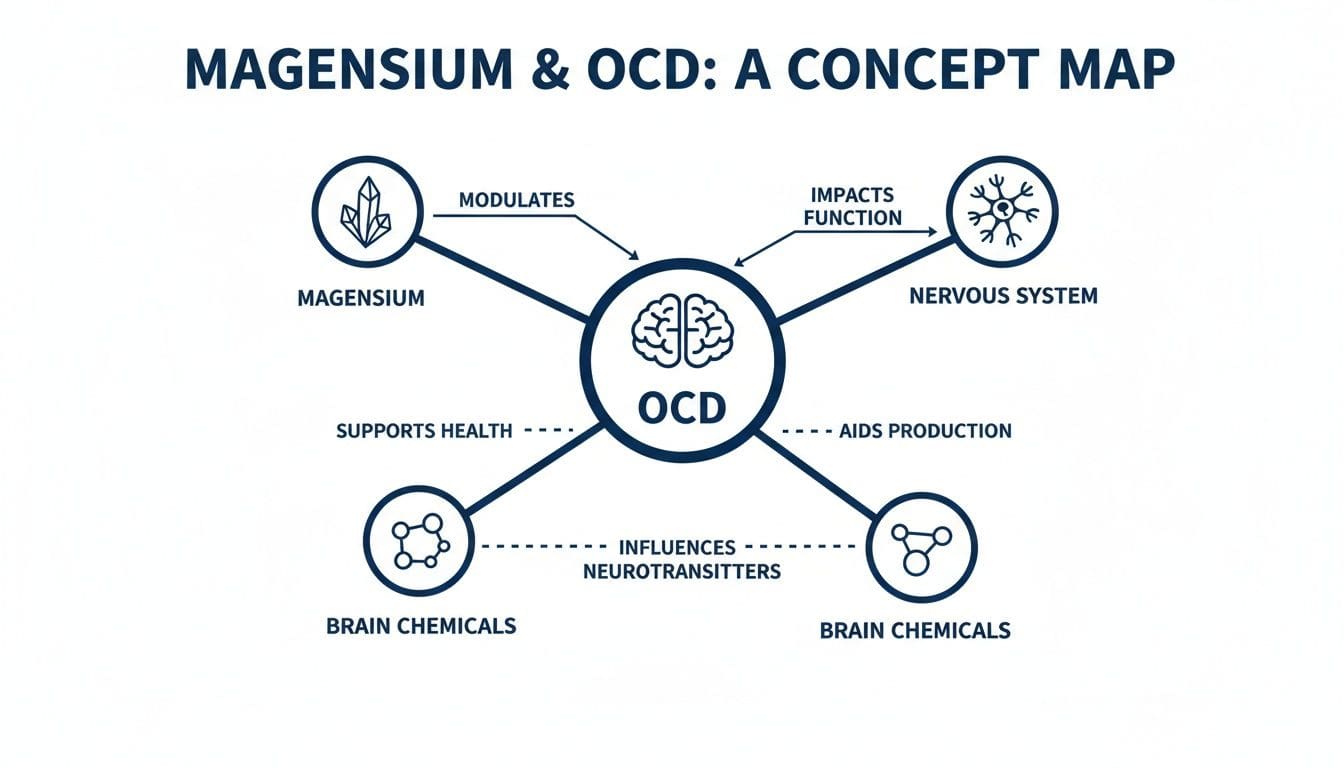
As you can see, this single mineral can influence multiple systems that contribute to OCD symptoms, creating a calming effect from several different angles.
Supporting the Brain’s Brake Pedal
On top of managing the brain’s accelerator, magnesium also supports its primary “brake pedal”—a neurotransmitter called GABA (gamma-aminobutyric acid). GABA is inhibitory, meaning it slows down neuron firing and helps you feel calm and relaxed.
Magnesium helps your brain produce and use GABA more effectively. When GABA levels are where they should be, your nervous system is much better equipped to handle stress and anxiety. For someone with OCD, this enhanced calming mechanism can make a world of difference.
- Promotes Relaxation: Increased GABA activity helps quiet the mind, making it easier to step away from obsessive thought loops.
- Reduces Anxiety: By balancing out the excitatory signals, GABA helps lower the baseline anxiety that so often comes with OCD.
- Improves Sleep: Healthy GABA function is also tied to better sleep quality, which is crucial for emotional regulation and overall mental health.
Think of it this way: Glutamate revs the engine, while GABA applies the brakes. Magnesium ensures the brakes are responsive and the accelerator isn't stuck, giving you more control over your brain's speed and direction.
This dual action—calming glutamate and boosting GABA—is at the heart of the magnesium and OCD connection. It’s not about shutting the brain down but restoring its natural equilibrium.
Magnesium’s importance is backed by research showing it’s involved in over 300 enzymatic reactions essential for brain function. For OCD, its role as an NMDA receptor antagonist is especially important, since glutamate dysregulation is a known driver of compulsions. Evidence from related conditions is also compelling: one review linked low magnesium to depression, while supplementation of just 248 mg/day significantly reduced anxiety scores, showing its potential as a safe, supportive strategy for OCD.
This connection doesn't stop at the brain; it extends to other parts of the body, particularly the gut. Maintaining a healthy gut environment is essential for producing these key neurotransmitters. You can learn more by reading our guide on the profound connection between inflammation and the gut-brain axis. This knowledge helps build a more complete picture of how nutrition and internal balance affect your mental well-being. A psychiatric nurse practitioner can help you explore these connections in a personalized care plan.
What the Research Says About Magnesium for OCD
When we look at the connection between magnesium and OCD, what does the science actually say? While we don't have large-scale clinical trials focused only on magnesium for OCD just yet, the existing research paints a compelling picture. There's a solid foundation of evidence that explains why this mineral is a key focus in integrative care.
Some of the first clues came from observational studies. This research found that people with lower magnesium levels often reported more severe OCD symptoms. This suggests that simply having enough magnesium in your system could be a foundational piece of the mental wellness puzzle.
Of course, it's important to remember that correlation isn't causation. These findings don’t prove that low magnesium causes OCD, but they definitely point to a relationship that’s worth a closer look.
Evidence from Clinical and Preclinical Studies
The most direct evidence we have comes from smaller studies and individual case reports. For example, some case studies show remarkable improvements in OCD symptoms after patients started taking magnesium. In one well-documented case, a patient saw a rapid drop in compulsive behaviors soon after beginning supplementation.
These individual stories are powerful, but they're just the starting point. They give us the clues needed to design larger, more definitive studies.
Animal studies have also provided some key insights. In lab settings, magnesium has been shown to reduce the kind of anxiety-like and repetitive behaviors that researchers use to model OCD. This helps us understand the biology behind it all, confirming that magnesium's calming effect on the brain is more than just a theory.
Proxy Evidence from Anxiety and Depression
A huge amount of evidence comes from looking at conditions that often go hand-in-hand with OCD, like anxiety and depression. Since these disorders share many of the same brain pathways and neurotransmitter systems, what works for one often has benefits for the others.
Study after study has shown that magnesium can effectively reduce anxiety symptoms.
- Generalized Anxiety: Supplementation has been shown to lower scores on anxiety scales, with some people feeling better in just a few weeks.
- Stress Reduction: Magnesium helps dial down the body’s stress-response system (the HPA axis), which can get stuck in overdrive in both anxiety and OCD.
- Improved Mood: Research consistently links healthy magnesium levels with a lower risk of depression, a very common partner to OCD.
This body of "proxy evidence" is particularly important because it shows that magnesium consistently helps modulate the exact systems—stress, anxiety, and mood—that are central to the experience of living with OCD.
This overlap makes a strong argument for magnesium as a supportive player in a well-rounded OCD treatment plan. A psychiatric nurse practitioner can help you figure out how this evidence applies to your own health and goals.
Other clinical data backs this up, too. A Serbian study, for instance, found that daily magnesium intake significantly lowered anxiety scores in pediatric migraine patients. This tracks with observations that some people with OCD might instinctively reach for more magnesium-rich foods. With comorbid depression affecting up to 50% of OCD patients, these connections are too significant to ignore. You can explore the full study on magnesium's neuropsychiatric effects to dig deeper into the science.
Putting it all together—the direct studies, the related research, and the clinical observations—you can see why integrative providers are so optimistic. Magnesium isn't a magic cure, but it’s a science-backed tool that supports overall brain health and resilience. And for anyone managing OCD, that’s fundamental.
Choosing the Right Magnesium Supplement

Stepping into the supplement aisle can feel overwhelming. You’ll see that "magnesium" isn't a single product—it comes in many different forms, each with its own unique properties. Knowing the difference is crucial for having an informed talk with your provider about how magnesium and OCD management might fit together for you.
The reason for all these options comes down to what the magnesium is bonded with, a process known as chelation. Think of the magnesium mineral as a passenger and the molecule it’s bonded to—like glycine or citrate—as the delivery vehicle. This "vehicle" dictates how well your body absorbs the magnesium, where it goes, and how gentle it is on your stomach.
For a condition like OCD, the goal is to pick a form that is highly bioavailable (easy for the body to use) and can actually reach the brain to help regulate your nervous system.
Understanding Different Magnesium Forms
Not all magnesium supplements are created equal, especially when you’re looking for mental health support. Some are better for relaxing muscles, while others are mainly known for their laxative effects. The key is to find one that matches your needs without causing other issues.
Here are a few of the most common types you'll find:
- Magnesium Glycinate: This form is attached to glycine, an amino acid that has its own calming effect on the brain. It’s highly absorbable and very gentle on the stomach, making it a top choice for mental health and sleep.
- Magnesium L-Threonate: A newer form specifically developed to cross the blood-brain barrier. Because it can raise magnesium levels directly in the brain, it’s a promising option for cognitive and neurological health.
- Magnesium Citrate: This type is bonded with citric acid and has good bioavailability. However, it’s also known for a natural laxative effect, which is a drawback if you don’t need digestive help.
- Magnesium Oxide: While common and inexpensive, this form has the lowest absorption rate. It’s much more likely to cause digestive side effects and isn’t the best choice for addressing a deficiency tied to mental health.
Choosing the right supplement is a balancing act between bioavailability and potential side effects. A form like magnesium glycinate is often preferred for OCD because it delivers calming benefits from both the magnesium and the glycine with minimal risk of digestive upset.
Comparing Common Forms of Magnesium Supplements
This table breaks down the various magnesium formulations, highlighting their main benefits, absorption rates, and what to watch out for. It’s a helpful starting point for understanding your options.
| Magnesium Form | Primary Benefit | Bioavailability | Common Considerations |
|---|---|---|---|
| Magnesium Glycinate | Calming and relaxing; excellent for sleep and anxiety | High | Very gentle on the stomach; often recommended for long-term use. |
| Magnesium L-Threonate | Brain health and cognitive function | Very High (crosses the blood-brain barrier) | Often more expensive than other forms; ideal for neurological support. |
| Magnesium Citrate | General magnesium support and constipation relief | Moderate to High | Can have a laxative effect, especially at higher doses. |
| Magnesium Oxide | Inexpensive and widely available | Low | High likelihood of causing digestive upset; not ideal for correcting deficiency. |
Having a clear picture of these differences helps you and your provider pinpoint the best fit for your unique needs.
Finding the Right Dosage
Dosage is another critical piece of the puzzle, and this is absolutely something that requires professional guidance. While some studies on anxiety use daily elemental magnesium doses between 200-450 mg, this is not a blanket recommendation.
The right amount for you will depend on your diet, current magnesium levels, and your overall health. A psychiatric nurse practitioner can help you navigate these factors safely and might even recommend lab testing to get a precise look at your nutrient status before suggesting a dose.
It's also important to remember that many supplements, including those used alongside treatments like SSRIs, need careful thought. You can learn more about this in our related article on SSRI supplements and diet for depression. Self-prescribing, even with a common mineral like magnesium, can lead to imbalances or side effects.
Ultimately, this information is here to empower you. By understanding the options, you can have a more productive conversation with your healthcare provider and work together to create a safe, effective, and personalized plan for your OCD treatment.
How Magnesium Complements Conventional OCD Treatment

It’s critical to understand that magnesium is not a replacement for evidence-based OCD treatments. Think of it as a valuable teammate—a supportive element working alongside standard care to help you get better results.
Nutritional strategies involving magnesium and OCD management are designed to complement, not compete with, proven therapies.
The most effective treatment plans for OCD are almost always multi-faceted. They combine medication, specialized therapy, and supportive lifestyle changes. By addressing a potential nutrient deficiency, you give your brain and body the resources they need to function at their best, creating a stronger foundation for other treatments to work.
Supporting Therapy Like ERP
Exposure and Response Prevention (ERP) is the gold standard of therapy for OCD. It involves facing feared thoughts or situations without engaging in compulsions. As you can imagine, this process takes immense courage and can feel incredibly stressful, especially at the start.
This is where magnesium’s calming properties can be a game-changer. By helping to regulate your nervous system and lower your baseline anxiety, magnesium can make the hard work of ERP feel more manageable.
If your nervous system is already on high alert, jumping into an exposure exercise is like trying to learn a new skill during a fire drill. Magnesium can help turn down that initial alarm, creating a calmer internal state so you can engage more effectively with your therapist.
Working Alongside Medications
Selective Serotonin Reuptake Inhibitors (SSRIs) are the most commonly prescribed medications for OCD. They work by increasing serotonin, a key neurotransmitter that helps regulate mood.
Magnesium and SSRIs work on different but complementary brain pathways.
- SSRIs primarily target the serotonin system to reduce obsessive thoughts and compulsive urges.
- Magnesium works on the glutamate-GABA system, helping to lower neurological excitability and promote a state of calm.
By supporting both systems, you’re taking a more complete approach to balancing your brain chemistry. There is no evidence that magnesium interferes with SSRIs; in fact, its ability to improve sleep and reduce anxiety can often support the overall goals of medication. You can explore a more complete picture of this approach in our article on integrative OCD treatment.
The best outcomes often come from a carefully constructed plan that blends medication, therapy, and supportive lifestyle strategies. Magnesium can be a powerful part of that lifestyle component, helping to enhance your body’s natural resilience.
A Collaborative Approach to Wellness
Integrating nutritional support like magnesium into a conventional OCD treatment plan is a decision that should always be made with a qualified healthcare provider. A psychiatric nurse practitioner can help you understand how all the pieces of your treatment fit together.
They can assess your individual needs, rule out any contraindications, and ensure your magnesium use is both safe and effective. This turns a general wellness idea into a specific, actionable part of your personalized care plan.
Working together, you can create a strategy that addresses your OCD from every angle—biochemical, psychological, and nutritional. This partnership is key to building lasting well-being.
When to Discuss Nutrition With a Professional
Going down the rabbit hole of online research on topics like magnesium and OCD is a great starting point. But it's easy to get overwhelmed by all the information out there. Self-treating with supplements—even something that seems as safe as magnesium—can be a shot in the dark without the right guidance.
Taking the next step to talk with a professional is what turns that curiosity into a safe, effective action plan. This is especially true when you're dealing with something as complex as OCD. A qualified provider, like a psychiatric nurse practitioner, helps you navigate the nuances and build a strategy that actually works for you.
Why Professional Guidance Is Essential
Working with a professional moves you beyond guesswork. A psychiatric nurse practitioner can offer several key benefits that you just can't get from reading articles on your own.
- Personalized Recommendations: They can help you find the right type and dose of magnesium for your unique body chemistry, increasing the odds of a positive outcome while minimizing any side effects.
- Safety and Monitoring: A provider will look at your current medications to flag any potential interactions. They'll also monitor your progress over time, making adjustments as you go.
- Lab Screenings: Sometimes, they might suggest blood work to check your actual nutrient levels. This gives you objective data to guide your treatment choices.
This kind of collaborative approach ensures that any nutritional strategy fits safely and seamlessly into your overall OCD treatment plan.
Moving from self-research to a professional consultation is an act of empowerment. It means you are taking a proactive, informed, and safe approach to your mental health, ensuring every step you take is a step in the right direction.
A skilled provider will help you understand not just if magnesium might help, but how it fits into your life. To see how these different elements come together, you can explore our guide on integrative psychiatry and nutrition for mental health.
Ultimately, seeking professional advice ensures your journey is supported by expertise, safety, and a plan tailored just for you.
Common Questions About Magnesium and OCD
When you start looking into how magnesium and OCD management can work together, a lot of practical questions come up. We've put together clear, straightforward answers to the most common ones to help you feel more confident about this nutritional strategy.
Can I Get Enough Magnesium for OCD From Food Alone?
A diet rich in magnesium is always the best place to start, but getting therapeutic amounts just from food can be tough. Modern farming has depleted magnesium from the soil, which means many foods aren't as nutrient-dense as they once were.
Your own body’s needs also play a huge role. Things like chronic stress, your diet, and certain health conditions can make your body burn through magnesium faster. A psychiatric nurse practitioner can look at your diet and help you figure out if a supplement is a safe and smart addition to your plan.
How Long Does It Take for Magnesium to Help OCD Symptoms?
Nutritional support isn't a quick fix, so patience is really important here. The timeline for seeing results from magnesium can be very different from person to person. Some people notice a shift in their general anxiety levels or sleep quality within a few weeks of consistent use.
However, a noticeable impact on core OCD symptoms—like intrusive thoughts or compulsions—might take several months to develop. Think of it as a long-term supportive measure, not an overnight cure.
Magnesium works by gently helping to restore balance in your nervous system over time. Consistency and professional guidance are essential for seeing the best results, as it helps create a calmer baseline from which other therapies can work more effectively.
Are There Any Risks to Taking Magnesium for OCD?
Magnesium is widely considered safe, especially when you stick to the right doses. The most common side effect is digestive upset, like loose stools. This happens most often with certain forms, such as magnesium citrate or oxide.
However, high doses can be risky for anyone with kidney problems, since their bodies can't filter out the excess mineral efficiently. It can also interfere with some medications, including certain antibiotics and diuretics. This is exactly why talking to a provider first is so important—they can make sure it’s a safe option for you.
Will Magnesium Replace My OCD Medication or Therapy?
Absolutely not. Magnesium should never be considered a replacement for proven, first-line OCD treatments like SSRIs and Exposure and Response Prevention (ERP) therapy. It’s best viewed as a complementary therapy that supports your overall health.
By helping to calm the nervous system, magnesium can create a better internal environment, potentially making your primary therapies even more effective. It works best as one piece of a complete, professionally guided treatment plan that tackles OCD from every angle.
At Integrative Psychiatry of America, our board-certified psychiatric nurse practitioners specialize in creating personalized mental health plans that may include nutritional strategies. If you're ready to explore how a carefully managed approach can support your OCD treatment, schedule a consultation today. Visit us at https://integrativepsychiatryofamerica.com to get started.