
A lot of adults in Pennsylvania reach treatment after a frustrating pattern. They've tried medication-only care that felt rushed, or supportive counseling that never fully addressed focus, panic, sleep, or mood instability. They know something's off, but they also know the answer probably isn't just “take this and check back later.”
That gap matters whether someone lives in Philadelphia, Reading, Lancaster, Scranton, Erie, Harrisburg, Allentown, Pittsburgh, or a smaller town where specialty mental health care can feel harder to reach. Patients often want a clinician who can evaluate symptoms carefully, prescribe when appropriate, and also ask practical questions about stress, routines, exercise, nutrition, and what daily life looks like.
That's why Welcome Tom Koste PMHNP-BC to Integrative Psychiatry of America is meaningful news for adults seeking virtual psychiatric care in Pennsylvania. Tom Koste, M.S.N., PMHNP-BC brings a style of care that many patients have been actively looking for. It's clinically grounded, whole-person, and designed for treatment that feels both professional and personal. Readers who want to understand the practice philosophy can review the online care model in Pennsylvania.
Table of Contents
- Introducing a New PMHNP for Pennsylvania
- Understanding the Role of a Psychiatric Nurse Practitioner
- Tom Koste's Patient-Centered Approach to Integrative Care
- Common Conditions Treated with a Holistic Model
- Accessing Virtual Psychiatric Care Across Pennsylvania
- How to Schedule Your First Appointment
Introducing a New PMHNP for Pennsylvania
A patient in Bucks County may be managing anxiety that gets worse at night. Another in Philadelphia may have trouble staying organized, sleeping consistently, or recovering from burnout after months of pushing through. Someone in Montgomery County may feel depressed, but also notice that appetite, movement, stress, and routine seem to affect symptoms more than anyone has taken time to discuss.
Tom Koste fits that need well. Tom Koste, M.S.N., PMHNP-BC is a Certified Psychiatric-Mental Health Nurse Practitioner known for a compassionate, integrated style of care across Pennsylvania. He focuses on the whole person, not just a diagnosis label or a medication refill, and that difference shows up in how treatment is structured.
What patients are often looking for
Many adults aren't asking for endless theory. They want answers to practical questions.
- What's causing these symptoms beyond the surface presentation?
- Which treatment options make sense for this specific history and daily routine?
- How will medication be monitored if it's part of the plan?
- What else can support recovery besides medication alone?
Tom Koste's clinical focus includes mood and anxiety disorders, bipolar disorder, SAD, ODD, and sleep-related concerns. His background includes experience with organizations such as Springfield Psychological and Reading Behavioral Healthcare, and that kind of experience tends to matter most when a clinician has to individualize care instead of forcing every patient into the same template.
The most reassuring mental health care often feels organized, attentive, and realistic. Patients usually know when a clinician is treating a chart instead of treating a person.
For adults searching statewide telepsychiatry in Pennsylvania, that's the value of this addition. The goal isn't more noise. The goal is care that listens carefully, diagnoses responsibly, and builds a treatment plan people can successfully follow at home.
Understanding the Role of a Psychiatric Nurse Practitioner
Many patients still aren't sure what a PMHNP-BC does. That uncertainty is understandable. Titles in mental health can blur together, especially when people are comparing therapy, medication management, and diagnostic evaluations across different providers.
Tom Koste is a Board-Certified Psychiatric-Mental Health Nurse Practitioner at a family-based, physician-guided practice serving Pennsylvania communities including Philadelphia, Bucks County, and Montgomery County through secure telehealth, with a standard visit cost of $150, as listed in his provider profile.
What a PMHNP-BC actually handles
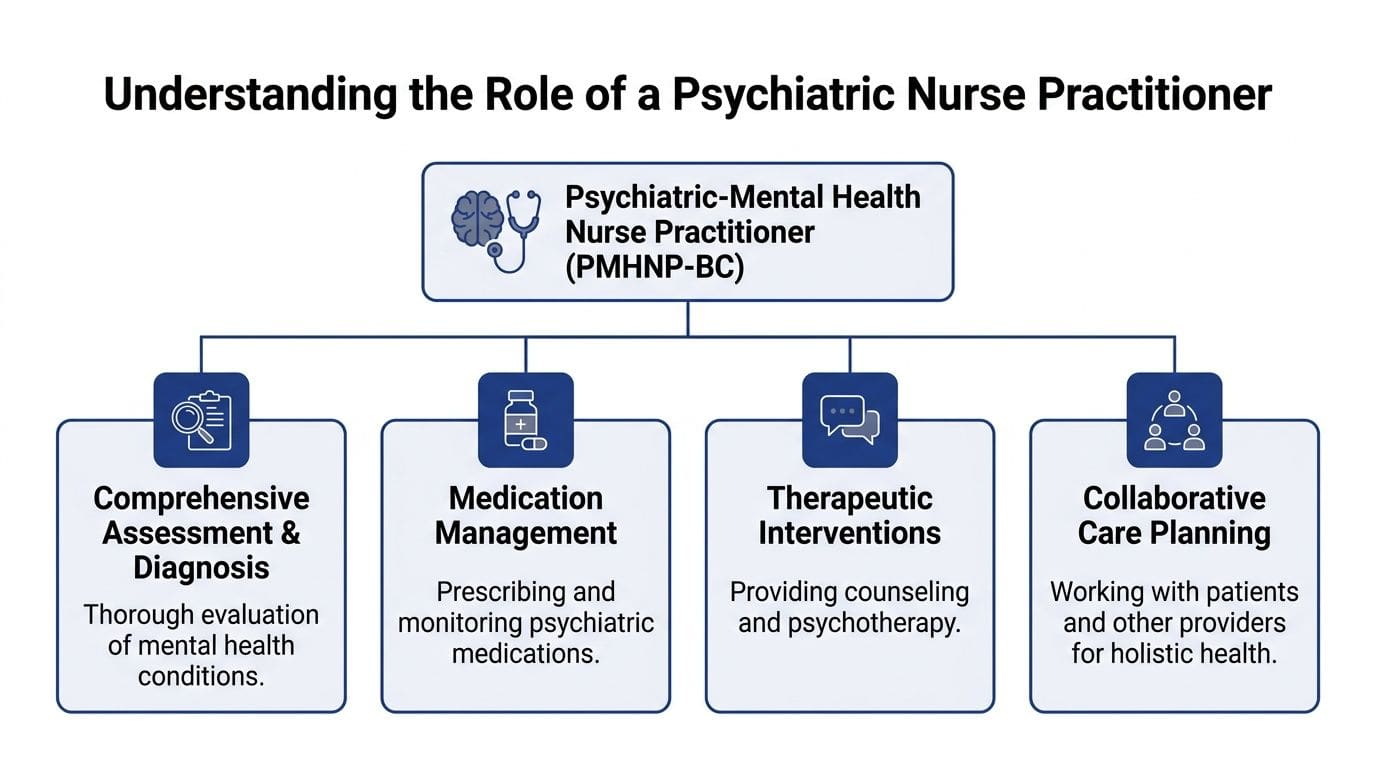
A psychiatric nurse practitioner is an advanced-practice clinician with specialized psychiatric training. In practical terms, that means a PMHNP can evaluate symptoms, make diagnoses, prescribe and monitor psychiatric medication, and provide therapeutic support as part of ongoing care.
That combination matters. Some patients need a clinician who can sort through overlapping issues such as anxiety, ADHD, depression, insomnia, trauma symptoms, or mood instability without splitting every part of care into separate appointments with separate offices.
Why this role is useful for patients
The value isn't just prescribing authority. It's the blend of medical decision-making and patient-centered nursing perspective. Good psychiatric treatment usually requires both.
Here's where a PMHNP often helps:
| Need | What the role provides |
|---|---|
| Diagnostic clarity | Careful review of symptoms, timing, severity, and functional impact |
| Medication decisions | Selection, adjustment, and monitoring of treatment when appropriate |
| Ongoing support | Follow-up visits that look at response, side effects, and next steps |
| Coordination | Practical collaboration with therapists, primary care, or other clinicians |
For patients comparing provider types, this guide on psychiatric NP vs psychiatrist roles can help clarify the differences.
Practical rule: If a patient needs diagnostic evaluation, medication management, and a clinician who can keep the plan coherent over time, a PMHNP is often a strong fit.
What doesn't work well is assuming all medication visits are the same. They aren't. Some feel transactional. Others involve active clinical reasoning, close follow-up, and meaningful adjustment based on how a person is functioning day to day.
Tom Koste's Patient-Centered Approach to Integrative Care
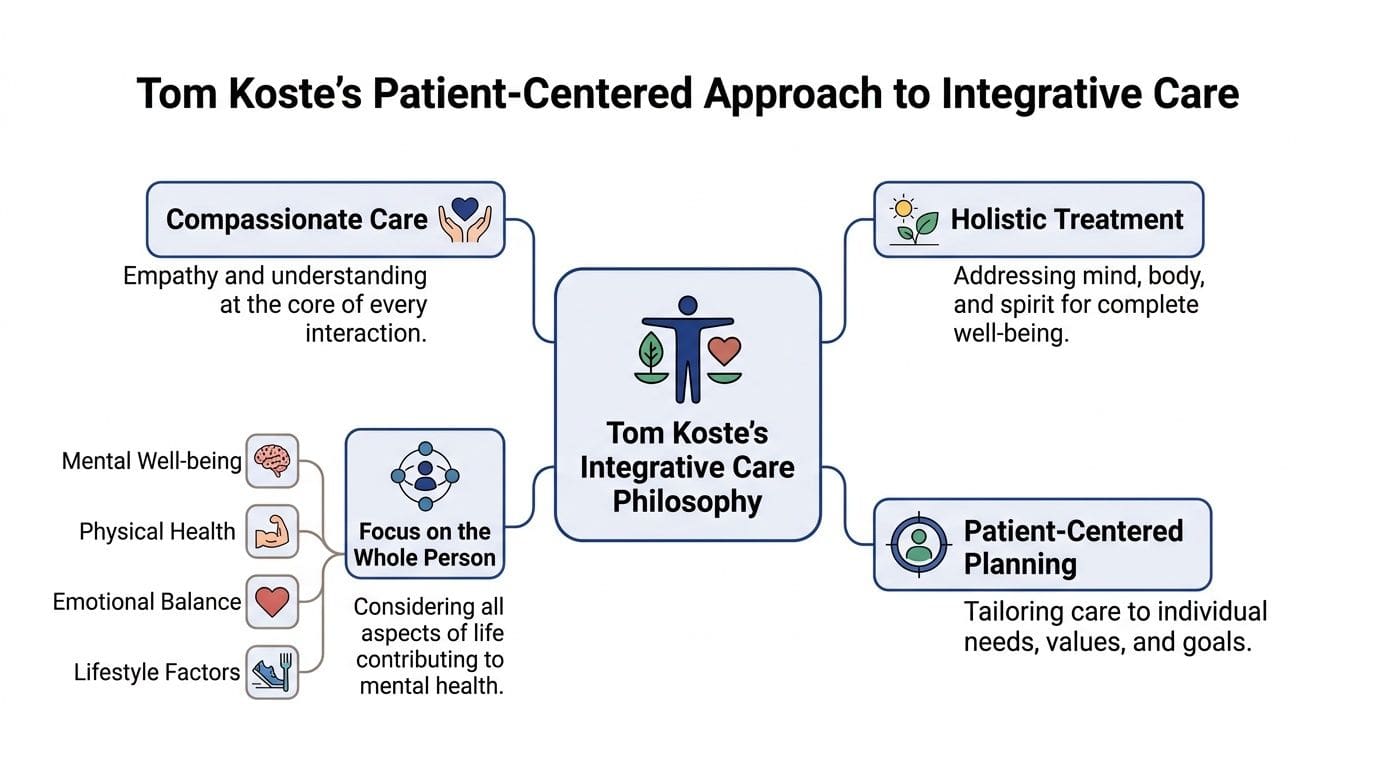
Tom Koste's clinical philosophy can be summarized in three words: compassionate, comprehensive, and individualized. Those words aren't branding language when they're applied correctly. They describe how treatment decisions get made.
He doesn't frame care as a simple choice between medication or lifestyle change. That split is too blunt for real psychiatric work. Patients with depression, anxiety, ADHD, bipolar disorder, or persistent sleep disruption often need a plan that respects biology and behavior at the same time.
What whole-person care looks like in practice
Whole-person psychiatry is often misunderstood. It doesn't mean avoiding medication at all costs, and it doesn't mean treating serious symptoms with generic wellness advice. It means asking better questions and using more than one tool when that's clinically appropriate.
The practice offers integrative treatment tools including pharmacogenomic genetic testing, advanced laboratory screening, nutritional counseling, exercise programming, and mindfulness-based interventions alongside traditional psychiatric medication management, as described in this integrative treatment overview.
That kind of model creates a more useful treatment conversation. If a patient is struggling with fatigue, poor concentration, irritability, or inconsistent sleep, it helps to examine medication needs while also looking at routine, physical health, activity level, and other contributing factors.
What tends to work better over time
A patient-centered plan usually includes several layers instead of a single intervention. The exact mix depends on the person, but the logic is consistent.
- Medication when indicated can reduce symptom intensity enough for the patient to re-engage with daily life.
- Nutritional support can help patients build more stable habits that support mood, focus, and energy.
- Exercise guidance often matters because movement affects sleep, stress tolerance, and emotional regulation.
- Mindfulness tools can help patients slow down spiraling thoughts and respond more deliberately.
Patients interested in a broader explanation of this model can review this article on the integrative psychiatry approach.
Medication can be essential. It also isn't the whole story for many patients. Lasting psychiatric care usually improves when treatment addresses behavior, routine, and physical well-being alongside symptoms.
What usually doesn't work is adding “healthy habits” as an afterthought after the prescription is written. When lifestyle factors are clinically relevant, they need to be part of the plan from the start, not a vague suggestion at the end of the visit.
Common Conditions Treated with a Holistic Model
Adults rarely experience mental health symptoms in neat categories. Anxiety can disrupt sleep. Sleep loss can worsen mood. Poor focus can increase stress, and chronic stress can make depression feel heavier. An integrated model works well because it reflects how symptoms show up in life.

Tom Koste specializes in the diagnosis and management of mood and anxiety disorders, bipolar disorder, SAD, ODD, and sleep-related issues. For prospective patients in Pittsburgh, Allentown, Scranton, Reading, or Lancaster, that matters because these conditions often require more than symptom suppression. They require a plan a person can sustain.
Why the holistic model fits these concerns
For depression, medication may be appropriate, but treatment often improves when sleep, activity, and nutrition are addressed directly. Readers exploring broader support options may find this guide to holistic depression treatment helpful.
For ADHD, it's common to talk about medication first, but structure, meal timing, exercise, and environmental setup also affect outcomes. Adults who want practical ideas around food and consistency may find these nutrition strategies for ADHD useful alongside formal clinical care.
For anxiety and sleep-related problems, overly narrow treatment can miss the daily patterns that keep symptoms going. Caffeine habits, nighttime routines, avoidance behavior, and stress overload often need direct attention.
Good psychiatric care doesn't force every diagnosis into the same playbook. The treatment has to fit the condition, the patient, and the way symptoms interact.
The practice also specializes in extensive care for first responders, boxers, gamers, and entertainers, with culturally competent treatment that includes Suboxone-assisted addiction recovery and integrative weight management. That's important because some patients don't just need symptom care. They need care that understands performance pressure, public-facing work, high-intensity schedules, or recovery from substance use.
A short overview of mental health care themes in this area is worth watching:
Accessing Virtual Psychiatric Care Across Pennsylvania
Virtual psychiatric care works best when it feels simple, private, and consistent. That matters for adults who are balancing work, parenting, school, long commutes, or symptoms that already make leaving home harder than it should be.
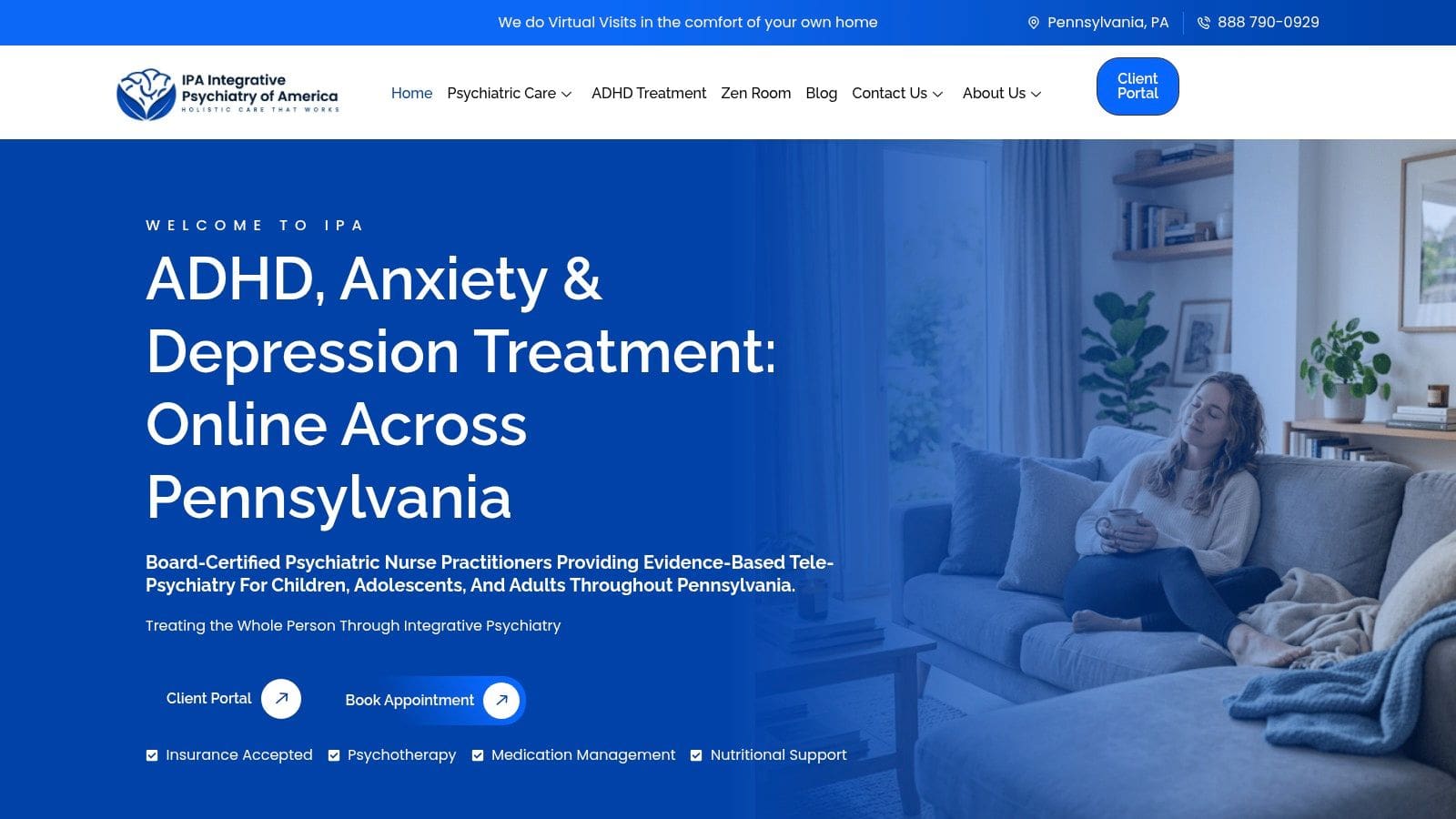
Integrative Psychiatry of America provides secure, HIPAA-compliant telehealth services exclusively for Pennsylvania residents, including adults and young adults in Philadelphia, Bucks County, Montgomery County, and surrounding communities, as noted on the practice's Pennsylvania telehealth page.
What the process looks like
Virtual care tends to reduce friction when the system is organized. Patients don't need to travel across Philadelphia traffic or arrange a half day off for a routine follow-up. They can attend from home in Erie, Harrisburg, Scranton, or a quieter part of the state, provided they're located in Pennsylvania.
A typical experience includes:
- Initial scheduling through the online system.
- A secure virtual visit for evaluation and treatment planning.
- Ongoing follow-up for medication management and symptom review.
- Portal communication for messaging, appointment requests, and medication refills.
What patients should expect from telepsychiatry
Telehealth is convenient, but convenience alone isn't enough. The visit still needs to feel clinically thorough. Patients should expect privacy, clear next steps, and instructions they can follow after the appointment.
- Confidential setting: Visits are conducted through a HIPAA-compliant platform.
- Home-based access: Care is available without requiring in-person appointments.
- Practical continuity: The patient portal supports communication and routine follow-up tasks.
What doesn't work well in virtual psychiatry is treating the video platform as a shortcut. Strong telepsychiatry still depends on careful assessment, organized follow-up, and a treatment plan that fits the patient's real environment.
How to Schedule Your First Appointment
Starting care is easier when the next step is obvious. For many adults, the hardest part isn't deciding they need help. It's sorting through websites, provider titles, and appointment logistics while already feeling overwhelmed.
A clear first step is to book the initial visit and prepare a short summary of current symptoms, past treatment, medications, and what isn't working. That makes the evaluation more productive and gives the clinician a stronger starting point.
A low-friction way to begin
Patients who aren't ready to book immediately can still do something useful today. Screening tools and symptom trackers help clarify what's been happening and what needs attention first.
Helpful starting points include:
- Adult ADHD concerns: Review the Adult ADHD Assessment
- Anxiety symptoms: Use the Anxiety Symptom Checker
- Daily structure: Try the Daily Agenda Planner
- Mood tracking: Use the Feeling Journal
- Movement support: Explore the Exercise Routine Generator
- Grounding during stress: Practice with the 5-4-3-2-1 Grounding Tool
Why follow-through matters
Integrative Psychiatry of America reports a patient retention average that is double the National Benchmark, a milestone noted on its practice profile. While retention doesn't replace clinical judgment, it often reflects whether patients feel engaged enough to continue care.
Patients also tend to value systems that reduce administrative hassle. For anyone curious how clinics improve access by reducing scheduling friction, this explainer on how practices automate patient scheduling offers a useful operational perspective.
Key takeaway: The best first appointment is the one that actually happens. A good intake doesn't require perfect preparation. It requires a clear decision to start.
If symptoms are interfering with work, relationships, concentration, or sleep, waiting for things to become unmanageable usually isn't the better option. Thoughtful psychiatric care works best when people come in early enough to build a plan before the problem grows more complicated.
If Tom Koste's whole-person style sounds like the kind of support that's been missing, explore care options at Integrative Psychiatry of America. Adults across Pennsylvania can learn more about virtual evaluations, medication management, insurance verification, and practical mental health tools, then schedule the next step from home.