
A lot of people in Philadelphia arrive at mental health care feeling worn down, not confused. They've already tried short medication visits, changed prescriptions, pushed through side effects, and kept functioning on the outside while still feeling unlike themselves. The missing piece often isn't motivation. It's a care model that looks beyond the label and asks what else is shaping mood, focus, sleep, stress tolerance, and daily functioning.
That's where Philadelphia Integrative care makes sense for many adults and families. It combines standard psychiatric treatment with a broader clinical lens, so care can include therapy, lifestyle patterns, medical contributors, and practical habits that support recovery in real life.
Table of Contents
- A New Path for Mental Wellness in Philadelphia
- What Is Integrative Mental Health Care
- Conditions We Treat With a Whole-Person Approach
- How Online Integrative Psychiatry Visits Work
- Specialized Support for Unique Communities
- Insurance, Payment, and Scheduling Your First Visit
A New Path for Mental Wellness in Philadelphia
Philadelphia residents often say the same thing in different ways. Treatment helped a little, but not enough. The medication reduced the edge of anxiety, but sleep stayed poor. Therapy offered insight, but energy, concentration, or irritability still felt off.

That frustration is understandable. Over 21% of U.S. adults, or approximately 57 million people, experienced mental illness in 2021, with anxiety and depression among the most common conditions, according to National Alliance on Mental Illness mental health statistics. When need is this widespread, brief and symptom-only care won't fit everyone.
Philadelphia Integrative care offers another path. Instead of asking only which diagnosis fits, it asks what factors are keeping the nervous system strained. Stress biology, nutrition, sleep disruption, trauma history, hormone shifts, medical conditions, and medication response can all matter.
Practical rule: If treatment keeps changing but the overall pattern stays the same, the plan may need a wider lens, not just a different prescription.
For many people, telehealth also removes a practical barrier. Care is easier to access when appointments happen from home, work, or a private quiet space instead of requiring a commute across the city or suburbs. That's one reason many readers looking for a Philadelphia mental health provider online start with virtual options.
Mental wellness also depends on what happens between visits. Daily routines matter. For readers who want a simple nonclinical companion resource, these daily exercises for inner happiness offer approachable ways to support emotional steadiness outside appointments.
What Is Integrative Mental Health Care
Integrative mental health care is still psychiatry. It still uses diagnosis, medication management, therapy referrals, careful follow-up, and clinical decision-making. The difference is that it doesn't stop there.
More than symptom control
A useful comparison is home repair. Traditional symptom-only care can feel like patching cracks in the wall. Sometimes that's enough. Sometimes it isn't, because the underlying problem is in the foundation, drainage, wiring, or materials behind the surface.
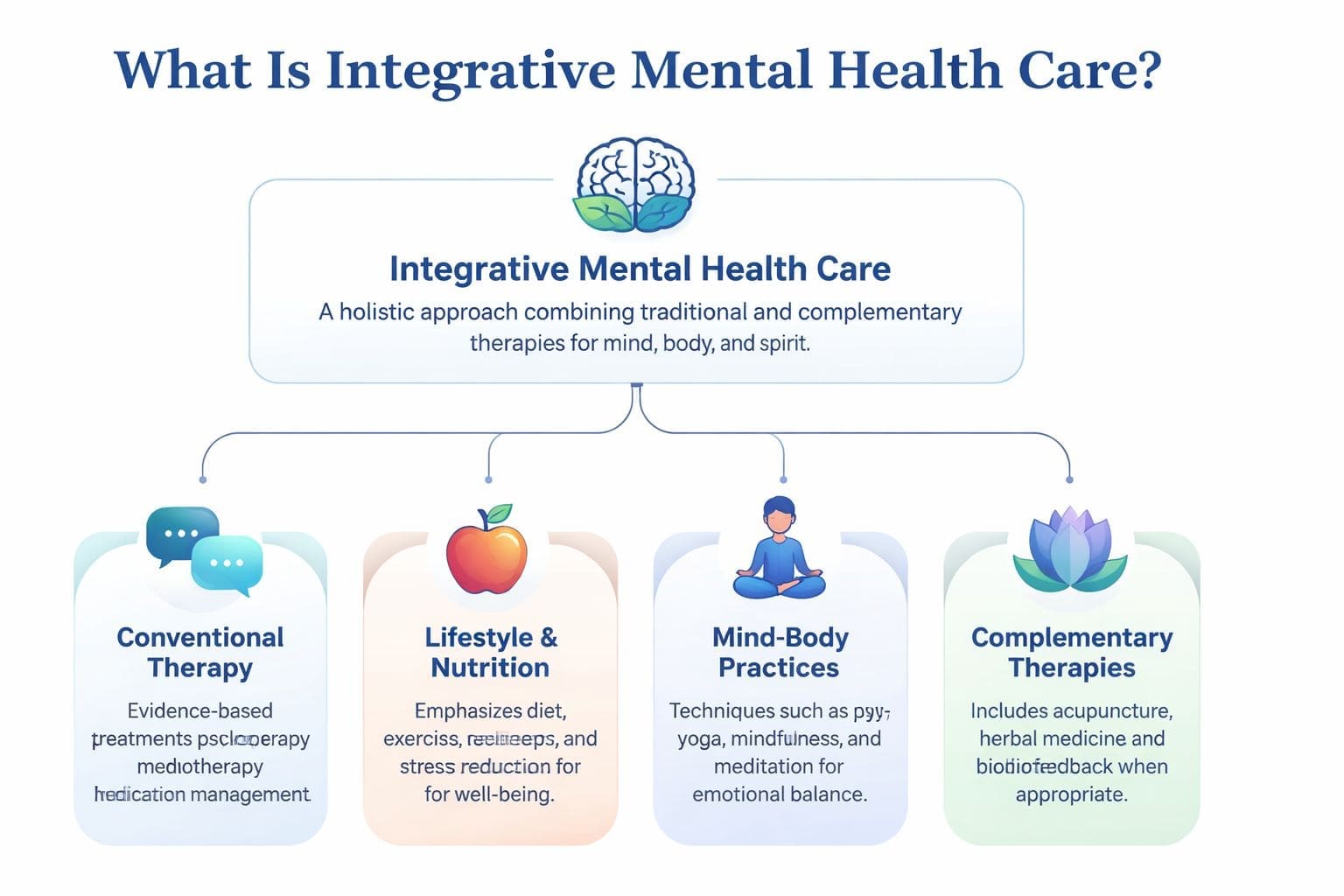
In a Philadelphia Integrative model, the treatment plan may include:
- Medication when it's useful. Prescribing still matters for many people with anxiety, depression, ADHD, OCD, PTSD, or opioid dependence.
- Psychotherapy or behavior-based work. Medication can lower symptom intensity, but it doesn't automatically build coping skills, improve boundaries, or change avoidance patterns.
- Lifestyle review. Sleep habits, food patterns, movement, substance use, work stress, and digital overload often shape symptoms more than patients expect.
- Medical and biological exploration. When appropriate, lab work or genetic testing can help explain why someone responds well to one option and poorly to another.
Evidence from integrative practice supports the logic of this approach. Meeting Point Health's discussion of multi-modal care notes that combining therapeutic approaches across multiple systems can create synergistic effects and support more sustainable remission for chronic conditions.
How personalization actually works
Personalized care sounds good, but patients usually want to know what it means in practice. It means the clinician doesn't assume that two people with the same diagnosis need the same plan.
A person with panic may need medication support, caffeine reduction, trauma-focused therapy, and sleep stabilization. Someone else with panic may need a medical workup review, obsessive thought tracking, and breathing retraining because the attacks are being maintained by fear of bodily sensations.
Good integrative care asks, “What is driving this pattern?” not just “What symptom needs to go down fastest?”
Some people also benefit from learning the basics of habit support before tackling complex goals. For readers trying to improve attention and consistency between visits, this piece on building sustainable brain health habits gives a practical framework that fits well with psychiatric treatment.
A broader overview of this model appears in the integrative psychiatry approach, including how medication, therapy, and lifestyle strategies can work together instead of competing for attention.
Conditions We Treat With a Whole-Person Approach
Different diagnoses need different treatment logic. That's one reason Philadelphia Integrative care works best when it stays specific instead of treating every problem with the same script.
When anxiety is not just anxiety
Anxiety can show up as racing thoughts, chest tightness, insomnia, perfectionism, stomach distress, or irritability. A medication-only plan may help some of that, but it can miss what is reinforcing the pattern day to day. Caffeine use, shallow sleep, chronic overcommitment, trauma triggers, and nonstop device stimulation all matter.
For adults seeking anxiety treatment online Pennsylvania, the most helpful plans usually include both symptom relief and behavior change. That can mean medication management alongside nervous system regulation skills, therapy, exercise guidance, and routines that lower baseline overstimulation.
Depression is similar. Some patients describe sadness. Others mainly report numbness, low motivation, difficulty thinking clearly, or a sense that everything takes too much effort. In those cases, treatment often works better when it includes mood care, sleep review, activity structure, nutrition support, and screening for physical contributors when clinically indicated.
ADHD depression OCD PTSD and recovery care
ADHD deserves more nuance than “trouble paying attention.” Adults often arrive after years of underperformance, shame, missed deadlines, relationship strain, and burnout. Strong ADHD treatment Philadelphia adult plans often combine medication with practical systems for time blindness, task initiation, sleep consistency, and food intake during the day.
OCD and PTSD also respond poorly to generic advice. OCD tends to pull patients into reassurance, checking, mental review, and rigid avoidance. PTSD can look like irritability, emotional shutdown, nightmares, hypervigilance, or concentration problems. In both cases, medication may be part of care, but it usually isn't the whole answer.
A whole-person approach can also help in areas that overlap with reproductive and hormonal health. Mood symptoms may intensify around cycle changes, PMDD, perimenopause, or other shifts that deserve careful assessment. For readers curious about how hormone-related patterns can affect wellbeing, these Venus Health Co. fertility wellness insights offer a useful background perspective.
Short examples help show the difference:
| Condition | What often doesn't work well alone | What a whole-person plan may include |
|---|---|---|
| Anxiety | Medication without sleep or stress review | Medication, therapy, caffeine review, coping practice |
| Depression | Waiting for motivation to return on its own | Medication, therapy, activity structure, nutrition support |
| ADHD | Productivity advice without clinical treatment | Medication, routines, executive function supports, meal and sleep planning |
| PTSD | Symptom suppression without trauma-informed care | Medication, therapy, trigger mapping, body-based regulation |
| Opioid dependence | Medication without recovery structure | Suboxone, counseling, exercise, nutrition, accountability |
Some symptoms are primary psychiatric symptoms. Others are amplified by exhaustion, inflammation, hormone shifts, or chaotic routines. Good treatment separates those threads instead of lumping them together.
How Online Integrative Psychiatry Visits Work
Telehealth works best when the process is clear. Most patients don't need more jargon. They need to know what happens, how long it takes, and whether the visit will feel thorough.

What happens before the first appointment
The process usually starts with online scheduling, intake forms, consent paperwork, and insurance or self-pay review. This is also where patients can upload medication history, prior diagnoses, and relevant records if they have them.
From there, the clinician reviews the information before the visit. That matters because a strong telehealth appointment doesn't begin cold. It begins with context.
At virtual mental health services in Pennsylvania, patients can access care through a HIPAA-compliant platform, use a patient portal, request refills, and manage appointments remotely. The telehealth format fits especially well for adults balancing work, parenting, commuting, or privacy concerns.
What the visit looks like on screen
The first appointment is longer than a typical quick check-in because it needs to be. According to Philadelphia Integrative Psychiatry's FAQ on appointment structure, initial adult psychiatric intakes are 55 minutes, pediatric intakes are 85 minutes, and this structured timing on a HIPAA-compliant platform supports diagnostic accuracy.
That time is used for more than symptom checklists. The clinician may explore:
- Current concerns such as anxiety, focus issues, low mood, compulsions, trauma symptoms, or substance use.
- History including prior medications, side effects, therapy experiences, sleep pattern, and family background.
- Whole-person factors such as appetite, exercise, work stress, relationships, cycle-related symptoms, and medical issues.
- Next steps which may include medication changes, therapy recommendations, lab or genetic testing discussion, and follow-up timing.
For readers who want a visual sense of virtual care, this short video offers helpful context.
Follow-up visits are usually more focused, but they still review the full picture. If a medication helps attention but worsens appetite or sleep, that matters. If mood improves once workload changes and eating becomes consistent, that matters too.
Specialized Support for Unique Communities
Some patients need more than general mental health literacy. They need a clinician who understands the culture around their stress.
Why niche communities need tailored care
First responders often carry trauma exposure, sleep disruption, hypervigilance, and a workplace culture that rewards emotional suppression. A generic plan that only says “reduce stress” won't land well. Care has to respect operational demands, confidentiality concerns, and the fact that some people are trained to stay activated.

Gamers and entertainers face a different mix of pressure. Irregular sleep, long screen exposure, performance anxiety, public scrutiny, travel, and income instability can all affect mood and cognition. Treatment has to fit the person's actual schedule and demands or it won't be used consistently.
The same is true for women whose ADHD has been overlooked because symptoms presented as overwhelm, internalized anxiety, disorganization, or chronic self-criticism rather than disruptive behavior. This is one area where culturally informed care changes outcomes because it changes what gets recognized. Readers interested in this overlap may find integrative treatments for ADHD in women especially relevant.
One factual example of a telehealth whole-person model is Integrative Psychiatry of America, which provides online psychiatric care in Pennsylvania for concerns including anxiety, depression, ADHD, OCD, PTSD, opioid dependence, and integrative weight management, with additional support for communities such as first responders, gamers, boxers, and entertainers through secure virtual care.
Tailored care isn't about niche branding. It's about whether the treatment plan reflects the patient's actual life.
Insurance, Payment, and Scheduling Your First Visit
Cost questions deserve direct answers. Many patients hesitate to book because they're unsure what insurance will cover and what may be billed separately.
Questions to ask before booking
A useful starting point is to separate standard psychiatric services from more specialized integrative services. According to this explanation of integrative depression treatment and coverage questions, medication management and therapy are often covered by standard plans, while services such as genetic screening or nutritional counseling may require out-of-pocket payment.
Before scheduling, patients should ask:
- What does insurance usually cover for intake visits, follow-ups, and therapy-related services?
- Which services may be self-pay if genetic testing, labs, or nutrition support are recommended?
- What is the process for verification before the first appointment?
- How are follow-ups scheduled if medication changes need closer review?
Transparent pricing helps patients make calm decisions instead of guessing. A practical place to review options is the pricing page for psychiatric care and related services.
The smoother approach is to verify benefits first, clarify likely out-of-pocket items, and book once the financial path makes sense. That prevents a common problem in integrative care, where the clinical plan is appropriate but the cost structure was never explained clearly enough.
If Philadelphia Integrative care sounds closer to what's been missing, Integrative Psychiatry of America offers online psychiatric care across Pennsylvania with whole-person treatment options, insurance verification, and online scheduling for adults, teens, and families who want a more personalized path forward.