
When exploring ways to manage ADHD, you might come across discussions about essential oils for ADHD. The short answer is they can be a supportive tool, but they are not a cure or a replacement for professional medical treatment.
Can Essential Oils Really Help with ADHD?
Let's set a realistic tone from the start. Essential oils will not replace the treatment plan prescribed by your psychiatric nurse practitioner. However, some research and many personal accounts suggest they can help manage certain symptoms.
Think of them as another tool in your wellness toolkit, designed to support your brain and body, not to treat the core condition. Our goal is to give you an honest overview so you can decide if they fit into your life safely and effectively.
Understanding Their Role in an ADHD Toolkit
Essential oils are highly concentrated plant extracts. In aromatherapy, their scent molecules interact with the brain’s emotional and memory centers. For someone with ADHD, this can offer support for common daily challenges.
For example, a person struggling with restlessness might find the scent of lavender calming before trying to sleep. Someone having trouble starting a work task could use peppermint to create a more alert and focused environment. These are not solutions in themselves, but environmental aids that can make managing symptoms feel less difficult.
It's helpful to view essential oils like you would exercise or mindfulness—a complementary practice that supports your primary treatment, not a substitute for it. They work alongside evidence-based care to help you function at your best.
A Complementary, Not Primary, Solution
It is critical to frame the use of essential oils for ADHD correctly. They are a complementary therapy, meaning they are intended to work with, not in place of, your established medical care.
A comprehensive ADHD treatment plan almost always involves a combination of medication, therapy, and lifestyle adjustments. Integrating essential oils can enhance this plan by addressing specific daily hurdles.
- Promoting a calm environment to reduce feelings of being overwhelmed.
- Creating focus-oriented rituals to help with task initiation.
- Supporting relaxation and sleep hygiene, which are often disrupted by ADHD.
This approach is central to modern mental health care. You can learn more about how different elements combine by exploring the integrative psychiatry approach, which looks at the whole person. This method ensures that every part of your well-being is considered, from medical treatment to supportive lifestyle habits like aromatherapy.
The key is open communication with your provider to ensure every tool you use is safe and beneficial for your unique needs.
How Aromatherapy Interacts with the ADHD Brain
Have you ever wondered how a simple scent can sharpen your focus? It isn’t magic—it’s biology. The process involves a direct and powerful connection between your nose and your brain, sometimes called the 'scent-to-emotion highway.'
When you inhale an essential oil, its tiny aromatic molecules travel up your nasal passage directly to the olfactory bulb. This structure is a key part of the limbic system, which acts as the brain's command center for emotions, memory, and alertness.
Unlike your other senses, which get routed through a processing station called the thalamus, your sense of smell has a direct line to these deep brain regions. This is exactly why a specific scent can trigger a vivid memory or an immediate emotional response.
The Scent and Neurotransmitter Connection
For those with ADHD, the brain often struggles with dysregulation of key neurotransmitters, especially dopamine and norepinephrine. These chemical messengers are essential for managing attention, motivation, and executive function. The idea behind using essential oils for ADHD is that certain aromatic compounds might help influence this delicate neurochemical balance.
Think of your brain's communication system as an orchestra where some instruments are playing too loudly and others too quietly. Certain essential oils can act like a conductor, gently guiding these sections toward a more harmonious state. For example, some oils might promote calm, while others may encourage alertness.
The limbic system is a primitive part of the brain that influences everything from fear responses to pleasure. Because scent directly interacts with this area, aromatherapy can have a remarkably quick effect on your mood and mental state, offering a way to ground a racing mind or sharpen scattered focus.
This interaction is not a substitute for the targeted action of ADHD medications. Those are specifically designed to regulate these neurotransmitter systems. Instead, aromatherapy works as a complementary layer of support. It provides sensory input that can help create an environment conducive to focus or relaxation, making it easier to manage daily symptoms.
From Scent to Brainwave: A Grounding Effect
Beyond influencing neurotransmitters, some scents may also affect brainwave patterns. ADHD is often associated with specific brainwave activity that makes sustained focus difficult. Grounding, calming scents are thought to encourage brainwave patterns linked to a more relaxed yet alert state.
A compelling example comes from research by the late Dr. Terry S. Friedmann, a physician who explored holistic treatments. In his study, children with ADHD who inhaled vetiver essential oil several times a day showed noticeable improvements in behavior and focus. The theory is that the oil’s molecules reached the brain’s limbic system and hypothalamus—the hormone control center—to help regulate brain activity for better concentration. You can read more about these fascinating findings on vetiver's potential for ADHD support.
This points to a broader concept in integrative wellness: the body and mind are deeply interconnected. Factors that influence one can impact the other. For instance, the link between our digestive health and mental state is becoming increasingly clear. You can learn more about this by exploring the relationship between inflammation and the gut-brain axis, which highlights another way holistic approaches can support overall well-being.
Ultimately, understanding how aromatherapy works with the brain helps frame its role correctly. It's a tool for creating a supportive sensory environment. This is why it can be a valuable addition to a complete care plan from a psychiatric nurse practitioner, helping you manage your ADHD from multiple angles.
The Best Essential Oils for ADHD Symptoms
When you're looking for ways to manage ADHD, it’s easy to get overwhelmed. It's clear that not all essential oils are created equal. While many scents are pleasant, a few stand out for their potential to support focus, reduce restlessness, and promote emotional balance.
These oils have become popular for a reason—they’re often backed by a mix of early-stage research and strong anecdotal evidence from people who use them daily. Some have grounding aromas that help quiet a racing mind, while others offer an invigorating scent that can cut through brain fog.
Let's look at the most commonly recommended oils and see how they might fit into your ADHD management toolkit.
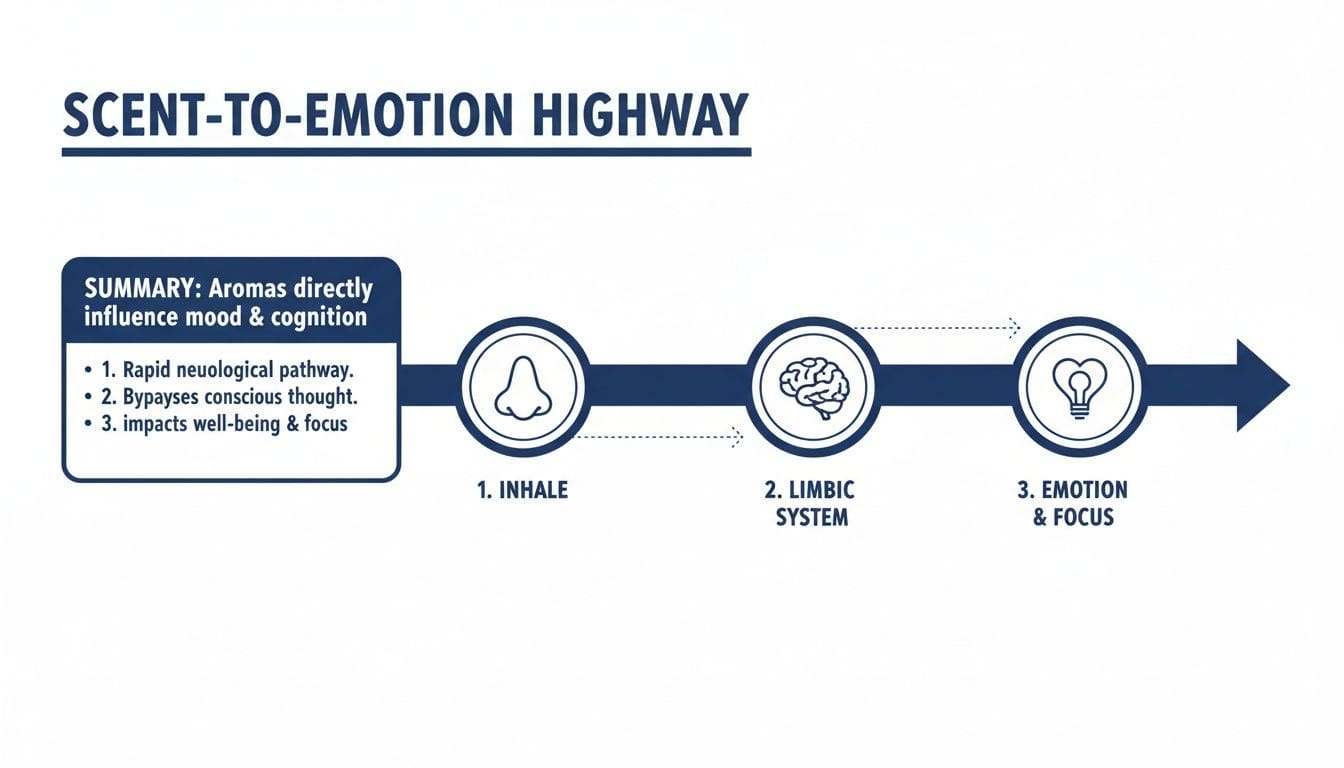
This "scent-to-emotion highway" is why certain smells can have such a fast and noticeable impact on your mood and ability to concentrate.
Vetiver: The Oil of Tranquility
Vetiver essential oil comes from the roots of the vetiver grass, giving it a deep, earthy, and grounding scent. It's often called the "oil of tranquility" for its profoundly calming effects. For a brain that feels scattered or hyperactive, vetiver can feel like a stabilizing anchor.
Its main benefit for ADHD is thought to be its ability to quiet mental chatter and improve focus. Many people find that diffusing vetiver during work or study creates a less distracting environment, making it easier to stay on task.
Lavender: A Classic for Calm and Sleep
Lavender is probably the most famous essential oil, known for its gentle floral scent and versatility. For those with ADHD, its biggest benefits are its ability to soothe anxiety, reduce restlessness, and promote better sleep—all common challenges that come with the territory.
A racing mind can make it incredibly hard to fall asleep. Adding lavender aromatherapy to your bedtime routine can help signal to your brain that it’s time to wind down. Research is starting to catch up, too. A placebo-controlled case study found that lavender led to significant improvements in attention and impulsivity in children with ADHD, suggesting its compounds help quiet overactive neural pathways.
Peppermint: For a Quick Mental Boost
While calming oils are great, sometimes the ADHD brain needs a jolt of alertness, not more calm. That’s where peppermint essential oil comes in. Its sharp, fresh scent is widely used to boost energy and sharpen mental clarity.
Think of it as a tool for fighting that classic afternoon slump or moments of intense brain fog. A quick sniff of peppermint can provide a stimulating effect that helps sharpen focus for short bursts, making it useful right before you tackle a difficult task.
A Note on Stimulation: While peppermint is invigorating for some, others with ADHD find that stimulating scents can actually increase feelings of anxiety or restlessness. It’s important to pay attention to how your body and mind react.
Other Notable Oils for Support
Beyond those main three, several other oils are often mentioned for ADHD support. Each one has a unique aromatic profile and potential benefits.
- Cedarwood: With its warm, woody scent, cedarwood is known for its calming and grounding properties. It’s thought to support the release of serotonin, which the brain converts to melatonin, making it a good choice for promoting rest before sleep.
- Frankincense: This ancient oil has a complex, earthy, and slightly sweet aroma. It's often used in mindfulness practices to reduce stress and encourage a sense of calm focus, which can be very helpful for an overactive ADHD mind.
- Sandalwood: Similar to vetiver, sandalwood has a rich, woody scent that is deeply relaxing. It's often used to enhance mental clarity and create a peaceful atmosphere for meditation or quiet work.
To help you keep track, here's a quick summary of the oils we've discussed.
Essential Oils for ADHD Symptom Support
This table highlights the most common essential oils for ADHD, their potential benefits, and how to best use them.
| Essential Oil | Potential ADHD Symptom Benefit | Primary Mechanism of Action | Best Application Method |
|---|---|---|---|
| Vetiver | Grounding, reduces mental chatter, improves focus | Sedative properties help calm an overstimulated nervous system | Diffusion, topical application (diluted) |
| Lavender | Reduces restlessness, eases anxiety, improves sleep quality | Calming compounds interact with the central nervous system | Diffusion, topical application (diluted) |
| Peppermint | Boosts alertness, enhances mental clarity, fights fatigue | Stimulating aroma activates brain regions tied to focus | Inhalation, diffusion |
| Cedarwood | Calming, promotes relaxation before sleep | May support serotonin release (a precursor to melatonin) | Diffusion, topical application (diluted) |
| Frankincense | Reduces stress, promotes calm focus | Grounding properties support mindfulness and reduce overwhelm | Diffusion, inhalation |
| Sandalwood | Enhances mental clarity, creates a peaceful state | Relaxing scent helps quiet an overactive mind | Diffusion, topical application (diluted) |
Remember, these are complementary tools. Building a set of supportive habits is what makes the biggest difference. Just as some people combine supplements for better brain function, you may also want to learn more about how L-theanine and caffeine work together to enhance mental clarity. The right combination is key.
How to Use Essential Oils Safely and Effectively
Before you start using essential oils to support your ADHD symptoms, it’s important to know how to handle them safely. Because they are highly concentrated plant extracts, a little goes a very long way. Following a few simple rules will help you use them with confidence.
There are three main ways to use essential oils, but for home use, we generally recommend just two. Let’s walk through each method so you can make the right choice for your routine.
Aromatic Use With a Diffuser
The easiest and safest way to begin is by using essential oils aromatically. This simply means inhaling the scent after it has been dispersed into the air. This is the primary way the oils’ compounds can reach your brain’s limbic system to produce a calming or stimulating effect.
An ultrasonic diffuser is the best tool for this. You just add water and a few drops of oil, and the device releases a fine, cool mist. This method is perfect for creating a focused work environment with peppermint or a relaxing bedroom atmosphere with lavender.
Start by diffusing for only 30-60 minutes at a time. Make sure the room is well-ventilated, and pay attention to how you feel. This lets you test your response to a scent without overdoing it.
Topical Application on the Skin
Topical use involves applying essential oils to your skin, allowing them to be absorbed. However, you must never apply undiluted essential oils directly to your skin. They are incredibly potent and can cause burns, irritation, or allergic reactions.
To apply them safely, you first have to dilute them with a carrier oil. This is a neutral, plant-based oil that “carries” the essential oil safely onto your skin.
Popular Carrier Oils:
- Jojoba Oil: Its structure is very similar to the skin’s natural oils, making it a great choice for almost any skin type.
- Coconut Oil (Fractionated): This type of coconut oil stays liquid and feels less greasy than the solid version.
- Sweet Almond Oil: A gentle oil that’s rich in vitamin E.
- Grapeseed Oil: A very lightweight option that absorbs quickly.
A safe dilution to start with is the 1% rule. This translates to 1 drop of essential oil for every 1 teaspoon of carrier oil. This low concentration is strong enough to be effective but gentle enough to minimize the risk of a skin reaction.
Apply your diluted oil to pulse points like your wrists, temples, or the back of your neck. The soles of your feet are another good spot, as the skin there is less sensitive.
Safety First Always
Before using any new oil, always do a patch test. Apply a small amount of the diluted mixture to your inner elbow and wait 24 hours. If you see any redness or feel irritation, don’t use that oil. Be aware that some oils, especially citrus oils like lemon and bergamot, can cause photosensitivity, making your skin more likely to burn in the sun. Finally, always buy 100% pure, therapeutic-grade oils from a reputable company to avoid synthetic additives.
A Warning on Internal Use
The third method, internal use, means swallowing or ingesting essential oils. We strongly advise against this unless you are under the direct care of a certified clinical aromatherapist working with your medical provider.
Essential oils are powerful enough to be toxic if ingested. They can damage the lining of your mouth and digestive tract, put stress on your liver, and interact with your medications. For these reasons, you should stick to aromatic and properly diluted topical use at home.
Pairing Essential Oils with Your Professional ADHD Care
The best way to approach essential oils is to see them as one part of a much bigger picture. They are a supportive player, not a standalone solution. Real, lasting progress in managing ADHD comes from a coordinated plan, and that’s where integrating aromatherapy with professional care is so important.
Think of it like building a house. Your primary treatments—like medication and therapy from your psychiatric nurse practitioner—are the strong foundation. Essential oils, along with good nutrition and exercise, are the supportive beams that add extra stability and comfort.
From Theory to Practice: Real-World Integration
Putting this idea into practice is much simpler than it sounds. It’s all about creating small, consistent rituals that complement your main treatment goals. The aim is to use aromatherapy to make your environment more supportive of focus, calm, and rest.
For example, if your treatment plan includes improving sleep hygiene, diffusing lavender in your bedroom an hour before bed can be a powerful sensory cue. The calming scent signals to your brain that it’s time to wind down, reinforcing the work of any medication prescribed to help regulate your sleep.
Focus is another area where this works well. If you struggle with procrastination, inhaling a bit of vetiver or peppermint right before a work session can become a helpful ritual. This simple act can help create a focused mental space, making it easier to shift into a productive mindset.
The goal is collaboration between all parts of your wellness plan. Essential oils shouldn’t operate in a vacuum. When used thoughtfully, they can enhance the effectiveness of your evidence-based treatments by helping to manage in-the-moment symptoms of restlessness or brain fog.
This integrated approach ensures every action you take is working together toward the same goal. The supportive habits you build with essential oils for adhd can make a noticeable difference in your day-to-day experience.
Always Partner with Your Provider
The most critical step in this entire process is open communication with your provider. Before adding any new complementary therapy to your routine, including essential oils, you must discuss it with your psychiatric nurse practitioner.
This conversation is non-negotiable for several reasons:
- Safety: Your provider knows your complete health profile, including all medications you take. They can help you avoid oils that might have unintended interactions or side effects.
- Alignment: They can help you select oils that actually support your specific treatment goals. For instance, if you’re working on managing anxiety, they would likely support calming oils over stimulating ones.
- Coordination: Keeping your provider in the loop ensures your entire care plan is cohesive. This prevents different treatments from accidentally working against each other.
This partnership is the cornerstone of effective integrative care. It ensures every tool you use, from prescribed treatments to supportive aromatherapy, works in harmony to help you thrive. Medications are often a critical part of this plan, and you can learn more by reading our guide on understanding ADHD medication.
Ultimately, successfully using essential oils for ADHD is all about perspective. By embracing them as a cooperative element within a professionally guided treatment plan, you can unlock their potential as a valuable supportive tool on your journey to better focus and well-being.
Frequently Asked Questions About Essential Oils for ADHD
Diving into the world of essential oils for ADHD is exciting, but it naturally brings up a lot of questions. As a complementary tool, it’s crucial to understand the best practices to use them safely and effectively. This section gives you direct answers to the most common questions we hear, so you can move forward with confidence.
Can I Stop My ADHD Medication if I Use Essential Oils
Absolutely not. It is critical to understand that essential oils are a complementary therapy, not a replacement for your prescribed ADHD medication. Your psychiatric nurse practitioner has recommended evidence-based treatments that target the core neurobiology of your ADHD.
Stopping your medication without a provider’s guidance can cause a major return of symptoms and create other health risks.
Think of essential oils the same way you would exercise or a healthy diet. They are supportive habits that can enhance your main treatment plan and improve your overall quality of life, but they don’t replace the core treatment itself. Always discuss any changes you want to make to your medication with your provider first.
How Long Until I See Results with Essential Oils
The effects can vary a lot from person to person. Unlike medication with a predictable onset, the benefits of aromatherapy are often more subtle and build over time. It’s important to set realistic expectations.
You might feel an immediate, in-the-moment shift, like a sense of calm from inhaling lavender or a quick mental boost from peppermint. These effects are usually short-lived but can be a great tool for managing a specific moment of stress or brain fog.
For more lasting changes, like better sleep or feeling more grounded, consistency is everything. This usually means using the oils as part of a daily routine for several weeks. It’s best to approach this with patience and track small, positive shifts over time instead of expecting an overnight fix.
Remember, essential oils work gradually to create a supportive environment. The goal is to build consistent, positive habits that, over time, contribute to better overall well-being and symptom management.
What Is the Best Way for a Beginner to Start
Starting simple is always the safest and most effective way to begin. The easiest entry point for any beginner is aromatic diffusion. This method carries the lowest risk and lets you gently introduce an oil to your system.
Here’s a simple plan to get you started:
- Get an Ultrasonic Diffuser: These are common, affordable devices that use water to create a cool, scented mist.
- Choose a Gentle Oil: Start with a well-researched, mild oil like lavender for calm or vetiver for grounding.
- Diffuse in Short Bursts: Add just a few drops to your diffuser and run it for 30-60 minutes at a time in a well-ventilated room. Pay close attention to how the scent makes you feel.
If you’re curious about applying oils to your skin, always start with proper dilution. A safe beginner’s formula is one drop of essential oil mixed with one teaspoon of a carrier oil, like jojoba or fractionated coconut oil. Apply this to your wrist and wait 24 hours to check for any skin sensitivity before using it more widely.
Are Some Essential Oils Better to Avoid for ADHD
Yes. While no oil is universally “bad” for ADHD, some might be counterproductive depending on your specific symptoms and sensitivities. The key is to listen to your body. An oil that helps one person might not be right for you.
For example, if you struggle with low energy and lethargy, a highly sedative oil like clary sage might actually increase fatigue. While it’s calming, it could make it harder for you to get going.
On the other hand, some people find that highly stimulating oils like peppermint can actually make them feel more anxious or restless. The invigorating effect, while intended to boost focus, can sometimes feel like too much for an already busy mind.
This is why working with a professional is so important. A psychiatric nurse practitioner can help you align your choices with your broader health goals. The scents you introduce can play a role in your mental state, much like your diet can.
Can I Use the Same Oils for My Child with ADHD
You must use extreme caution when considering essential oils for children. Their bodies are smaller and their skin is more sensitive, which makes them more vulnerable to adverse reactions. A dose or oil that is safe for an adult may not be safe for a child.
Here are some critical safety rules:
- Always Consult a Professional: Never use essential oils on a child without first consulting their pediatrician and your psychiatric nurse practitioner.
- Higher Dilution is Necessary: If cleared for use, oils must be diluted far more than for adults. A common guideline is just 1-2 drops of essential oil per two tablespoons of carrier oil.
- Avoid Certain Oils: Some oils, like peppermint and eucalyptus, should not be used on or around young children because they contain compounds that can affect their breathing.
- Never Allow Ingestion: Children should never ingest essential oils under any circumstances.
Safety must always come first. While many parents have found success using carefully chosen and highly diluted oils, this is a decision that requires professional medical guidance to avoid harm.
Are you ready to build a truly integrated and personalized plan for managing ADHD? At Integrative Psychiatry of America, our board-certified psychiatric nurse practitioners create care plans that look at the whole you. We combine evidence-based medical treatments with supportive lifestyle guidance to help you achieve your goals.
Schedule your consultation today and take the first step toward a more focused and balanced life.