
Many adults looking into Ketamine treatment Philadelphia arrive at the same point emotionally. They've tried standard antidepressants, changed doses, added therapy, kept appointments, and still feel stuck. Some are functioning on the outside and struggling in private. Others are exhausted by the cycle of brief improvement followed by another downturn.
That's where ketamine-based care can become worth discussing. It isn't a shortcut, and it isn't a cure by itself. But for people with hard-to-treat depression, anxiety, or trauma-related symptoms, it can offer a different treatment pathway than the one that has already fallen short. In Philadelphia, the most useful question usually isn't “Does ketamine work?” It's “Which kind of ketamine treatment fits my diagnosis, medical history, schedule, and follow-up needs?”
For patients who want a whole-person framework instead of isolated symptom management, integrative psychiatry in Philadelphia can help frame the bigger picture. That includes medication management, therapy coordination, safety screening, and realistic planning for what happens after the first phase of treatment.
Table of Contents
- Understanding Your Options for Ketamine Treatment in Philadelphia
- What is Ketamine and How Does It Work for Mental Health
- Comparing Ketamine Infusions and Esketamine Spravato
- Your Ketamine Treatment Journey What to Expect
- Is Ketamine Treatment Safe and Are You a Candidate
- Costs Insurance and Access in Pennsylvania
- Next Steps with Integrative Psychiatry of America
Understanding Your Options for Ketamine Treatment in Philadelphia
Philadelphia patients usually encounter three practical pathways when they start researching ketamine care. They may see clinics offering IV ketamine infusions, programs using intramuscular ketamine, and specialty psychiatric programs providing intranasal esketamine, also known by the brand name Spravato. Those options can sound interchangeable online, but they aren't.
Some people search for depression treatment Philadelphia, others for anxiety treatment Philadelphia, PTSD treatment Philadelphia, or treatment-resistant depression Philadelphia. They often land on pages that promise fast relief but don't slow down enough to explain what the day-to-day commitment entails. That gap matters, because practical details often determine whether treatment is sustainable.
What patients are really choosing between
A useful way to think about ketamine therapy Philadelphia is that patients aren't only choosing a medication. They're choosing a care model.
- Infusion-focused clinics may center the in-person treatment experience itself.
- Psychiatric programs may focus more on diagnosis, medication planning, and long-term follow-up.
- Telehealth-integrated practices may combine psychiatric evaluation, preparation, and aftercare with coordinated in-person treatment when needed.
Clinical reality: The right option isn't the one that sounds most advanced. It's the one that matches diagnosis, medical safety, transportation, insurance realities, and the need for ongoing support.
What tends to work better
Patients usually do better when they ask concrete questions early:
- Which form is being offered: IV, IM, or Spravato?
- Who evaluates eligibility: a psychiatric prescriber, a medical clinic, or both?
- What monitoring is required during and after treatment?
- What happens after the initial series if symptoms return?
- Can follow-up be handled by telehealth for medication management and care coordination?
A modern psychiatric approach doesn't treat ketamine as a stand-alone event. It treats it as one tool within broader mental health treatment Philadelphia. That's especially important for adults balancing work, family, transportation, and the emotional energy it takes just to begin.
What is Ketamine and How Does It Work for Mental Health
Ketamine isn't new. Ketamine was first synthesized in 1962 and developed as an anesthetic, and its psychiatric role became mainstream much later, with intranasal esketamine receiving FDA approval for treatment-resistant depression. Philadelphia programs using this model often structure care around a minimum 2-hour visit and an initial schedule of twice a week for four weeks, as described in this overview of ketamine's clinical history and outpatient use.
That history matters because it separates medical ketamine from the confusion people often bring in after reading social media posts or hearing about recreational misuse. In psychiatric care, ketamine is used in a controlled clinical setting, with screening, supervision, and follow-up.
A simpler way to understand the mechanism
The technical explanation is that ketamine affects the NMDA receptor. For many patients, that language doesn't help much. A more useful image is that depression can trap the brain in rigid, overlearned pathways. Ketamine appears to interrupt some of that stuck signaling, which is why clinicians often describe it as helping the brain reboot or rewire certain patterns.
That doesn't mean a patient walks out with a permanently reset nervous system. It means the treatment may create a window where symptoms shift quickly enough that therapy, healthier routines, and medication planning have a better chance to take hold.
For patients working on mood symptoms outside the treatment room, supportive practices can still matter. Some people also find structured self-talk tools helpful alongside formal care, such as these gentle support for depression, especially when motivation is low and daily structure feels hard to maintain.
Why psychiatric follow-up still matters
A ketamine response can feel dramatic for some people and subtle for others. The key point is that response and recovery aren't the same thing. Recovery usually still requires psychiatric assessment, symptom tracking, and adjustment over time.
Patients exploring broader whole-person care may also find it helpful to understand how the integrative psychiatry approach combines medication management with lifestyle, behavioral, and therapeutic support.
Ketamine can open a door. Patients still need a treatment plan that helps them walk through it.
Comparing Ketamine Infusions and Esketamine Spravato
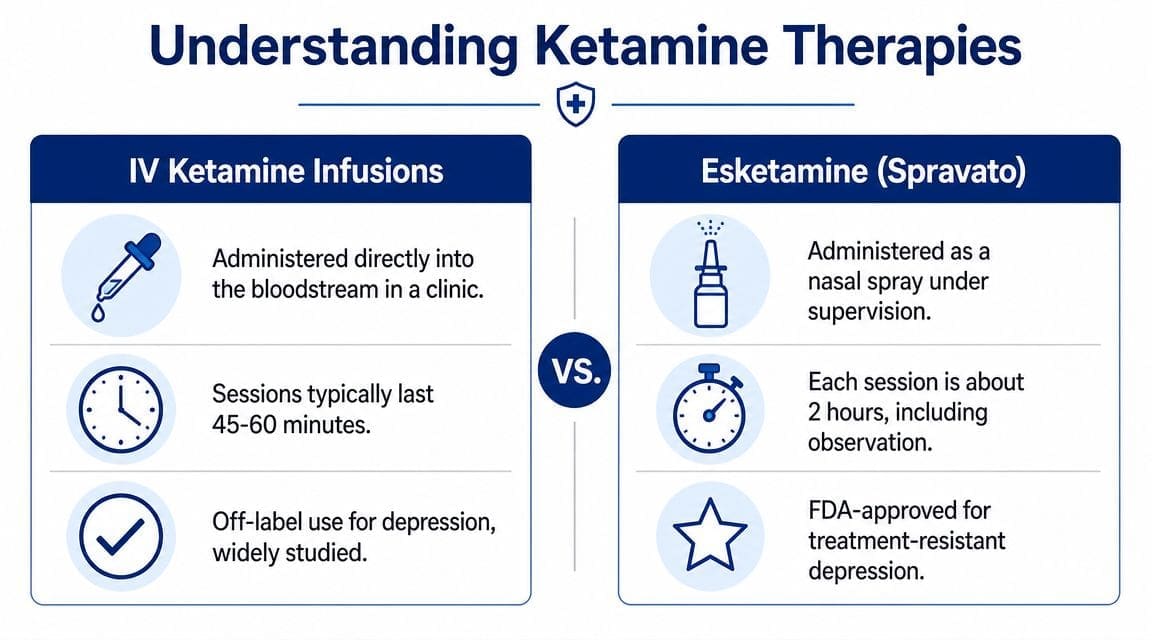
The most common confusion in Philadelphia ketamine treatment is the difference between IV ketamine and esketamine nasal spray. Patients often hear “ketamine” and assume every option follows the same rules. It doesn't.
The practical difference
One regional clinical source notes that IV or IM ketamine is often used when clinicians want a deeper dissociative experience in a series-based approach, with a typical 6-session course over 3-6 weeks, and that these sessions require monitoring and a driver afterward. The same source connects ketamine's NMDA-receptor antagonism with rapid symptom effects in depression, anxiety, PTSD, and neuropathic pain in clinical practice, as described by Mindstream Medicine's ketamine overview.
By contrast, Spravato Philadelphia programs use intranasal esketamine, which is the FDA-approved ketamine-related option for specific depressive conditions. That difference affects insurance, setting, documentation, and monitoring.
IV ketamine vs Spravato at a glance
| Feature | IV Ketamine Infusion | Esketamine (Spravato) Nasal Spray |
|---|---|---|
| Administration | Given directly into a vein in a clinic | Given as a supervised nasal spray |
| Regulatory status | Used off-label for depression | FDA-approved for treatment-resistant depression |
| Typical care model | Often offered in series-based treatment plans | Structured psychiatric outpatient protocol |
| Monitoring needs | Observation during and after treatment, plus transportation planning | In-clinic observation after dosing |
| Insurance pathway | Often more difficult because it is off-label | More likely to have an insurance pathway |
| Patient decision factors | Depth of experience, self-pay expectations, travel logistics | Eligibility, certified site access, repeated observation visits |
For patients already getting care for depression treatment in Philadelphia, this comparison often changes the conversation. The treatment question becomes less about hype and more about fit.
What each option tends to suit
IV ketamine may appeal to patients who:
- Want a series-based model and understand it's generally off-label for depression
- Can arrange transportation after sessions
- Are comfortable with clinic-based procedures and closer physiologic monitoring
Spravato may fit patients who:
- Meet criteria for treatment-resistant depression
- Need a pathway that may align better with insurance
- Prefer a psychiatric outpatient structure tied to an FDA-approved product
Decision point: Patients shouldn't choose based on marketing language like “stronger” or “better.” They should choose based on diagnosis, medical safety, access, and the type of follow-up they'll actually maintain.
A final practical note. Some patients searching for ketamine infusion Philadelphia, Spravato Philadelphia, IV ketamine Philadelphia, or esketamine treatment Philadelphia are really asking a broader question: which treatment can they start and realistically continue? That's often the deciding factor.
Your Ketamine Treatment Journey What to Expect
The unknown is often what makes people most anxious. Patients usually feel better when they know what the process looks like from the first contact through the ride home.

A telehealth-first psychiatric model usually starts with evaluation, not immediate scheduling. That means reviewing symptoms, treatment history, current medications, medical conditions, substance use risk, and goals. For patients considering remote psychiatric support before or after in-person treatment, online depression treatment can help organize that first step without requiring another trip across the city.
Before the first session
The intake process should answer a few basic questions clearly:
- Is ketamine appropriate at all for the diagnosis?
- Which route makes sense if the patient qualifies?
- What medications need review before treatment begins?
- What support will be in place afterward if symptoms improve, stay the same, or worsen?
This is where good psychiatric care matters. A rushed intake can miss blood pressure concerns, dissociation history, psychosis risk, or unrealistic expectations.
What treatment day usually feels like
For esketamine treatment Philadelphia, the visit is not a quick medication check. The Penn Interventional Psychiatry Network notes that intranasal esketamine is given on an outpatient basis, that each visit lasts a minimum of 2 hours, and that the early treatment schedule is typically twice weekly for up to four weeks. Penn also notes that monitoring matters because acute effects can include dissociation, nausea, vertigo, somnolence, and blood-pressure increases, as outlined by Penn's esketamine treatment program.
Patients often describe the session itself as unusual but manageable when they've been prepared properly. The treatment room is generally calm, and the biggest benefit of good preparation is that it reduces fear when perception shifts temporarily.
A short overview can also help patients visualize the rhythm of treatment before they begin:
After the session
The end of the session isn't the end of treatment. Monitoring continues until the patient is safe to leave according to clinic protocol. Patients typically need a quiet rest period afterward rather than a packed workday.
Patients usually do best when they keep the rest of the day simple, avoid major decisions, and pay attention to mood changes over the next several days.
This is also the point where telepsychiatry Pennsylvania, medication management Philadelphia, and follow-up psychiatry Philadelphia become more than convenience features. They're how the initial response gets interpreted and turned into a durable care plan.
Is Ketamine Treatment Safe and Are You a Candidate
The safest ketamine program is often the one that says “not yet” or “not for you” when the screening raises concerns. Patients sometimes view evaluation as gatekeeping. In reality, it's one of the clearest signs that a clinic takes psychiatric and medical risk seriously.
Who may be considered
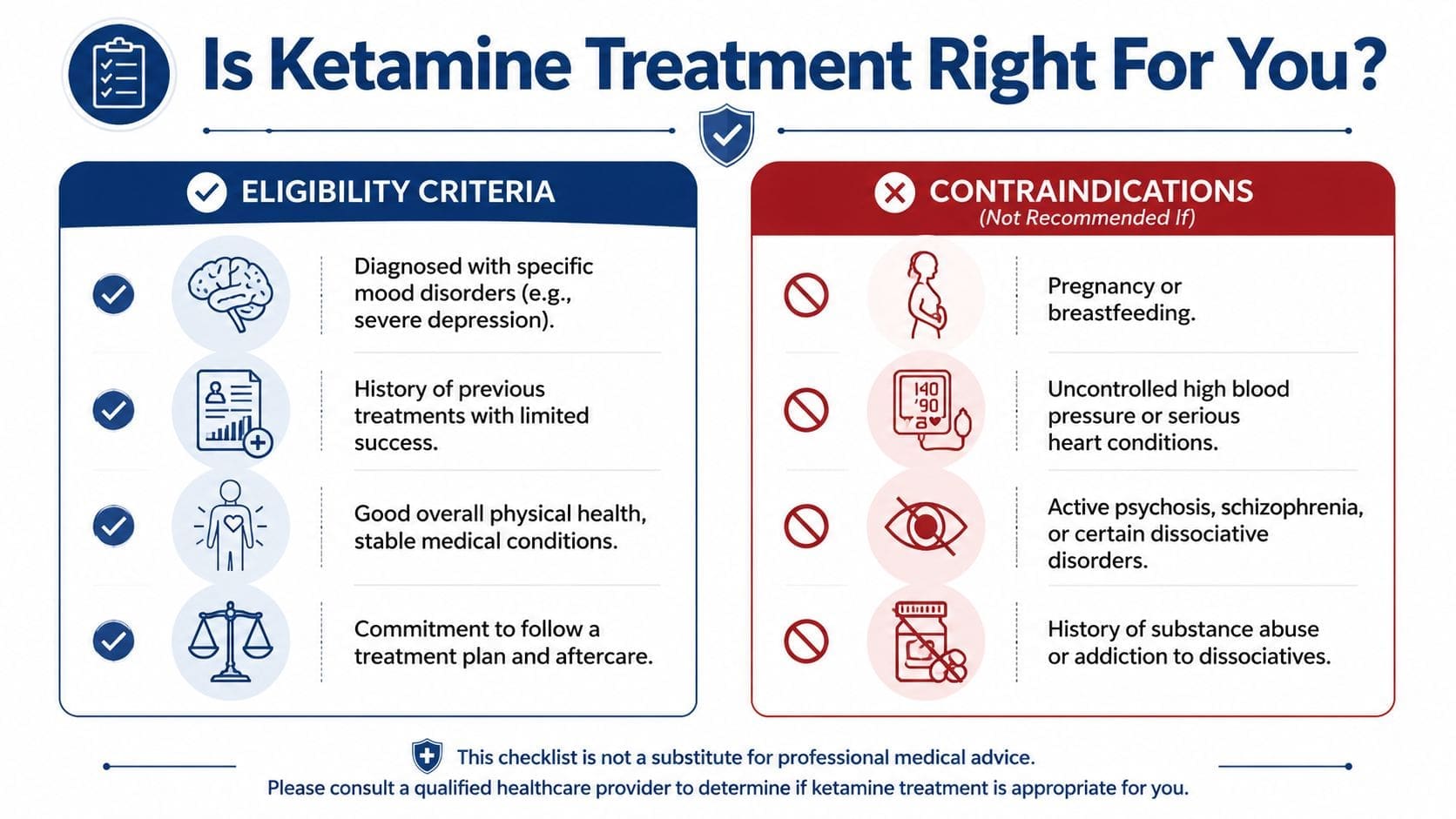
A patient may be a reasonable candidate when there is a documented mood disorder, a history of inadequate response to prior treatment, and enough medical stability to tolerate the treatment safely. In psychiatric practice, that usually means the clinician is looking at the whole picture, not just a diagnosis code.
That whole picture includes current symptoms, prior antidepressant trials, trauma history, substance use, sleep, blood pressure, and the ability to follow through with the treatment plan afterward.
When caution matters most
One regional source makes two points that patients need to hear clearly. First, ketamine is not a stand-alone cure, and relapse after stopping treatment is common, so aftercare planning matters. Second, ketamine can raise blood pressure and may not be suitable for people with uncontrolled hypertension or psychosis, as noted in this discussion of ketamine suitability and follow-up planning.
That means a careful clinic should pause or reconsider treatment if a patient has:
- Uncontrolled blood pressure
- Active psychosis or a psychotic disorder history
- Substance-use concerns that increase misuse risk
- A plan for treatment sessions but no plan for follow-up care
Safety principle: If a provider barely asks about your psychiatric history, medications, cardiovascular status, or substance use, that's not a convenience. It's a warning sign.
What actually supports better outcomes
Ketamine tends to make the most clinical sense when it's part of a larger plan. That may include psychotherapy, medication adjustments, sleep support, trauma treatment, and ongoing psychiatric follow-up.
Patients searching for mental wellness Philadelphia, integrative psychiatry Pennsylvania, PMHNP Philadelphia, or online mental health care Pennsylvania often need exactly that blend. A treatment series without maintenance planning can leave people with early improvement and no structure to protect it.
Costs Insurance and Access in Pennsylvania
The financial side of Ketamine treatment Philadelphia is where many patients get frustrated. The main issue isn't just price. It's that different ketamine options move through very different insurance pathways.

A practical summary from a regional overview is that Spravato has FDA approval for treatment-resistant depression, which makes it more likely to be covered by insurance, while standard ketamine infusions remain off-label. The same source notes that Spravato must be given in a certified healthcare setting with post-dose monitoring, which creates its own scheduling and transportation burdens, as described in this review of ketamine access and affordability pathways.
Why insurance coverage differs
Insurance plans usually have a clearer framework for a medication that has FDA approval for a specific psychiatric indication. That doesn't mean approval is automatic. It often still involves documentation, prior authorization, and proof that standard treatment has been tried.
Off-label IV ketamine is different. Even when a patient and clinician believe it makes clinical sense, coverage may be limited or absent because the insurer doesn't treat it the same way as an FDA-approved psychiatric medication.
Questions worth asking before you commit
Patients comparing Spravato insurance Pennsylvania, ketamine cost Philadelphia, or ketamine clinic Philadelphia should ask:
- Will the evaluation visit be billed separately from the treatment itself?
- Is prior authorization required for Spravato?
- What part of the process is in-network or out-of-network?
- How often must the patient travel in person during the induction phase?
- What follow-up can be handled remotely after treatment days?
For people who want psychiatric management with less travel for routine follow-up, online psychiatry for depression in Philadelphia can reduce some of the logistical burden, even though the medication administration itself may still require an in-person certified setting.
Access isn't only about money
Access also depends on work schedules, childcare, transportation, and whether a patient can reliably show up for repeated observed treatments. That's why telehealth psychiatry Pennsylvania, psychiatric nurse practitioner Philadelphia, and virtual medication management Pennsylvania have become part of the ketamine conversation. They don't replace monitored treatment visits. They make the rest of care more workable.
Next Steps with Integrative Psychiatry of America
Patients looking for Ketamine treatment Philadelphia usually need more than a list of clinic names. They need a process that starts with psychiatric screening, stays grounded in safety, and doesn't disappear after the first few treatments. That's where a telehealth-integrated model can be useful.
A psychiatric nurse practitioner can evaluate whether ketamine-based care fits the diagnosis, review current medications, identify risks that could make treatment inappropriate, and help plan what follow-up should look like if treatment moves forward. That includes maintenance strategy, symptom tracking, and deciding when a different treatment path may make more sense.
One option in Pennsylvania is Integrative Psychiatry of America, which provides telepsychiatry, medication management, and ongoing psychiatric follow-up that can support patients before and after ketamine-based treatment when clinically appropriate. In practice, that means patients can handle evaluation and follow-up remotely while coordinating necessary in-person treatment components through the appropriate clinical setting.
The best next step is usually simple. Gather the treatment history, current medication list, and questions about safety, transportation, insurance, and follow-up. Those details do more to clarify candidacy than broad promises ever will.
If ketamine-based care is on the table, Integrative Psychiatry of America offers a starting point for psychiatric evaluation, telehealth follow-up, insurance verification, and online scheduling across Pennsylvania, including Philadelphia.