
You search integrative psychiatrist near me late at night because something about standard mental health care hasn’t felt complete. Maybe medication helped a little but not enough. Maybe appointments felt rushed, side effects took over, or nobody asked about sleep, nutrition, stress, hormones, or the pace of daily life in Pennsylvania.
That search makes sense. Nearly one in five U.S. adults live with a diagnosable mental health condition each year, and medication-only remission rates for depression are often below 30%, while integrative models report patient satisfaction above standard care, according to Rupa Health’s overview of integrative psychiatry. People aren’t looking for “alternative” care as much as they’re looking for care that feels more complete.
Table of Contents
- Finding a Better Path to Mental Wellness in Pennsylvania
- What Is Integrative Psychiatry A Whole-Person Philosophy
- Comprehensive Care for Anxiety Depression ADHD and More
- Convenient and Secure Telehealth Across Pennsylvania
- What to Expect During Your First Online Visit
- Specialized Programs and Accessible Pricing Options
- Frequently Asked Questions about Our Services
- Can a psychiatric nurse practitioner do what people expect from a psychiatrist search?
- Can medications for ADHD, anxiety, depression, or opioid dependence be managed online?
- How do prescriptions and refills usually work in telepsychiatry?
- Will online visits still feel personal?
- What if previous treatment hasn’t worked?
- Is private information protected in online psychiatric care?
- How does billing usually work?
- When should someone schedule an appointment?
Finding a Better Path to Mental Wellness in Pennsylvania
Many people in Pennsylvania start with a simple goal. They want relief from anxiety, depression, ADHD symptoms, obsessive thinking, trauma reactions, or burnout. Then they realize the harder part isn’t just finding a prescriber. It’s finding a clinician who looks beyond the diagnosis.
That’s where integrative care matters. A modern psychiatric nurse practitioner can manage medications and also assess the everyday drivers that often shape mental health, including sleep disruption, stress load, eating patterns, physical activity, and medical factors that can worsen mood or concentration. For many adults, that combination feels closer to what they were hoping to find when they typed integrative mental health care near me or online psychiatric nurse practitioner Pennsylvania into a search bar.
The right treatment plan doesn’t start with “What medication fits this symptom?” It starts with “What’s happening in this person’s life and body that may be contributing to the symptom?”
A telepsychiatry model makes that approach more practical. Someone in Philadelphia, Pittsburgh, a suburb, or a rural town can meet from home, protect privacy, and keep follow-up care consistent. That matters because mental health treatment usually works best when patients can stay engaged with it.
For readers comparing options, compassionate psychiatry and mental health care in Pennsylvania offers a useful example of what whole-person virtual care can look like when it’s built around access, medication management, and broader lifestyle support instead of prescription-only visits.
What Is Integrative Psychiatry A Whole-Person Philosophy
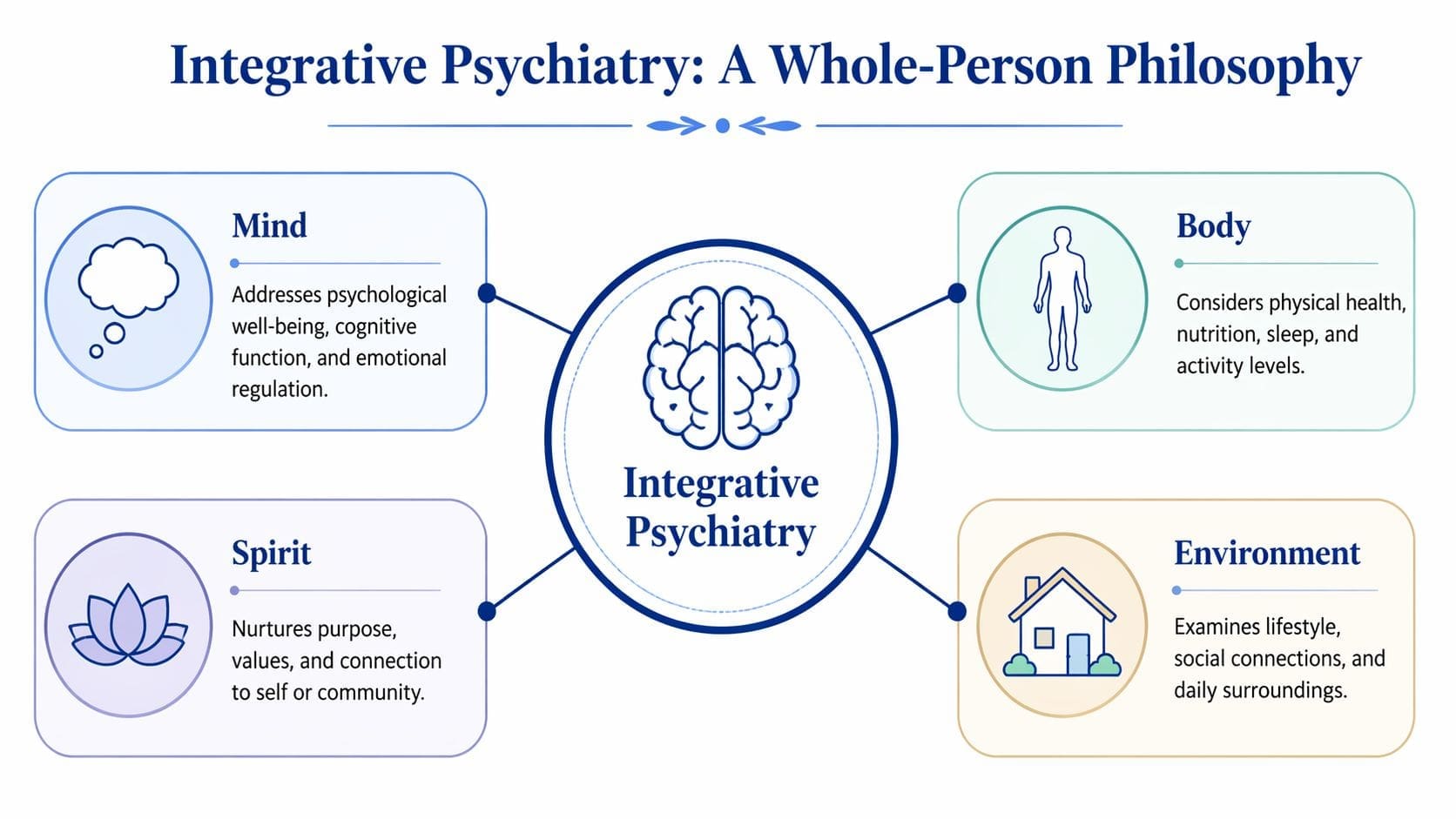
An integrative psychiatry approach isn’t just standard medication management with a wellness label added on top. It treats mental health as the result of multiple interacting factors. Brain chemistry matters. So do stress physiology, nutrition, activity level, sleep quality, and biological differences that affect how a person responds to treatment.
That’s why the phrase integrative psychiatrist near me often points people toward a broader philosophy rather than a job title alone. In practice, psychiatric nurse practitioners can lead this kind of care by combining psychiatric evaluation, medication management, behavioral support, and individualized testing when appropriate.
Why symptom control alone can fall short
Traditional care can be effective, especially when someone needs diagnosis, medication, and close monitoring. The trade-off is that short appointments sometimes narrow the focus to symptom suppression. If the plan doesn’t account for sleep, diet, nervous system regulation, or medical contributors, progress may stall even when the prescription is technically appropriate.
Personalized prescribing is one clear example. Pharmacogenomic testing can identify cytochrome P450 enzyme variants present in 5 to 10 percent of Caucasians, and guided prescribing can reduce non-response rates from 40% in standard care to under 25%. That doesn’t replace clinical judgment, but it can reduce some of the guesswork that frustrates patients who’ve already tried several medications.
Some patients also benefit from gut-health support as part of a larger plan. For readers interested in the nutrition side of care, this overview of prebiotics and probiotics supplements is a practical starting point for understanding one piece of the mind-body connection.
Traditional vs integrative psychiatry
| Aspect | Traditional Psychiatry | Integrative Psychiatry (Our Approach) |
|---|---|---|
| Primary focus | Diagnosis and symptom reduction | Whole-person assessment with symptom reduction and root-cause exploration |
| Medication use | Often central to treatment | Used when appropriate, alongside lifestyle and behavioral strategies |
| Visit content | Symptoms, diagnosis, prescription decisions | Symptoms, history, sleep, nutrition, stress, activity, and medical context |
| Personalization | Based mainly on clinical interview | Can include lab review and genetic screening to inform choices |
| Goal | Stabilize symptoms | Improve function, resilience, and long-term wellness |
For adults navigating attention issues, mood symptoms, or trauma-related distress, the integrative psychiatry approach and resources on ADHD in adults show how this model can move beyond trial-and-error toward a more individualized plan.
Comprehensive Care for Anxiety Depression ADHD and More
The clearest test of an integrative model is how it handles real conditions, not abstract philosophy. Anxiety, depression, ADHD, OCD, PTSD, and substance use issues rarely stay inside neat diagnostic boundaries. They overlap with sleep deprivation, chronic stress, inconsistent routines, physical health problems, and sometimes medication side effects from past treatment.
How whole-person care changes treatment
A patient seeking anxiety treatment online Pennsylvania may expect a discussion about SSRIs or as-needed medication. A broader evaluation also looks at caffeine use, panic triggers, sleep timing, exercise tolerance, and whether racing thoughts are anxiety, ADHD, trauma, or a combination of several factors. That distinction matters because treatment can fail when the label is incomplete.
For depression treatment online medication, a prescription may still be part of the answer. But progress is often stronger when the plan also addresses behavioral activation, nutrient intake, movement, and the daily structure that tends to collapse during depressive episodes. The same logic applies to PTSD treatment online Pennsylvania and OCD treatment telehealth Pennsylvania, where medication may help, but functional recovery often depends on a more layered strategy.

ADHD is another area where simple prescribing often falls short. Adults searching ADHD treatment Philadelphia adult, ADHD medication management online, or online ADHD treatment Pennsylvania may need stimulant or non-stimulant medication, but they also benefit from workarounds for executive dysfunction, sleep regularity, and a realistic review of how anxiety or depression may be amplifying focus problems. For people dealing with overlapping symptoms, co-occurring ADHD, anxiety, and depression support is especially relevant.
Clinical reality: A medication can be appropriate and still be insufficient. Many patients need both symptom relief and practical changes that make daily functioning easier.
Support for substance use and physical health factors
Opioid dependence requires the same whole-person mindset, but with even tighter follow-up. When Suboxone is integrated with counseling and exercise at 150 minutes per week, cravings can drop by 40% and 12-month abstinence can reach 65%, compared with 40% in standard medication-assisted treatment. Medication-only care can keep people alive, which matters. It may not be enough to help them rebuild routines, reduce stress triggers, and sustain recovery.
That same principle carries into integrative weight management Pennsylvania and hormone-related mental health concerns. Some adults who feel flat, irritable, or unmotivated aren’t dealing with a purely psychiatric issue. They may need screening for broader health contributors and a coordinated plan that respects both mental and physical symptoms. The keyword search may still be psychiatric medication management online, but the clinical need is often larger than medication alone.
Convenient and Secure Telehealth Across Pennsylvania
Virtual care changed what “near me” means. For many adults, the best fit isn’t the nearest office. It’s the clinician they can see consistently, from a private space, without losing half a day to travel, parking, waiting rooms, or taking extra time off work.
Why virtual access matters in Pennsylvania
Pennsylvania has strong demand for mental health care, but access isn’t evenly distributed. Data cited for 2025 shows a 35% surge in demand for telepsychiatry in Pennsylvania, while only 12% of integrative providers offer HIPAA-compliant virtual care statewide. That gap affects city residents with packed schedules and rural residents with limited local options.
A telepsychiatry model also helps adults who value discretion. Logging in from home is often easier than walking into a waiting room, especially for professionals, parents, first responders, or patients living in small communities where privacy can feel limited. Someone searching telepsychiatry Pennsylvania, virtual mental health services PA, or online depression treatment Pennsylvania is often looking for that mix of convenience and confidentiality.
For readers comparing virtual options, integrative psychiatry in PA through virtual mental health services shows how online care can include follow-ups, medication refills, and broader care planning rather than one-off video appointments.
What secure telepsychiatry should include
Security isn’t a side issue in mental health. A serious telehealth setup should use a HIPAA-compliant platform, secure messaging, and a patient portal that supports appointment requests and refill communication in a structured way. Anyone evaluating providers can also review general guidance on HIPAA-compliant video conferencing platforms to understand the features that matter.
This short video gives a helpful overview of virtual psychiatric care in practice.
One example of this care model is Integrative Psychiatry of America, which provides online psychiatric nurse practitioner care across Pennsylvania, including medication management, therapy-informed support, nutritional education, exercise counseling, lab and genetic screening, and Suboxone treatment through a secure telehealth platform.
What to Expect During Your First Online Visit
Starting care is easier when the process is clear. Most adults don’t need more motivation. They need fewer unknowns.

The first steps before the appointment
The process usually begins with online scheduling, insurance review, and intake paperwork. Many practices now use structured digital workflows because they reduce errors and let patients complete forms before the visit. If someone wants a sense of how that works, this overview of digital patient intake forms explains why the process is often smoother than traditional clipboard check-ins.
Helpful preparation often includes:
- Medication list: Include current prescriptions, supplements, and anything tried in the past.
- Main concerns: Write down the symptoms that interfere most with daily life.
- Basic history: Past diagnoses, therapy history, substance use history, and major medical issues all matter.
- Goals for care: Some patients want better focus. Others want fewer panic episodes, steadier mood, or safer recovery support.
What happens in the evaluation
The first online evaluation is usually a collaborative conversation, not a rushed checklist. A psychiatric nurse practitioner reviews symptoms, psychiatric history, medical background, sleep, stress, lifestyle patterns, and what the patient wants from treatment. If medication is appropriate, that discussion includes benefits, trade-offs, side effects, and how follow-up will work.
Bring the questions that feel basic. Those questions are often the ones that make treatment feel understandable and manageable.
A personalized plan may include medication management, recommendations for therapy, behavioral strategies, nutrition or exercise guidance, and possible lab or genetic screening when clinically relevant. Patients who want extra help preparing can also review NAMI’s guidance on getting the most out of appointments.
Specialized Programs and Accessible Pricing Options
Good psychiatric care is never one-size-fits-all. A treatment plan that works for an office worker with ADHD may not fit a first responder with trauma exposure, an entertainer with irregular hours, a boxer managing performance pressure, or a gamer whose sleep schedule and screen time affect focus and mood.
Care that fits real-world stress
Specialized programs matter because culture shapes symptoms and treatment barriers. First responders may underreport distress because they’re trained to keep functioning. Entertainers and gamers may struggle with irregular sleep, public pressure, overstimulation, or unstable routines. Athletes may need careful attention to performance demands, injury history, and identity shifts around training and competition.
An inclusive practice also needs to be safe for LGBTQ+ patients and people from different backgrounds without making them explain or defend basic parts of their identity before treatment can begin. Clinicians don’t need a separate diagnosis to recognize when stigma, workload, family stress, or community context is affecting mental health. They need enough range to tailor care accordingly.
Specialized care isn’t about niche branding. It’s about recognizing that stress, coping, and help-seeking look different across communities.
Paying for care without guesswork
Access also depends on pricing clarity. Patients should know whether a practice accepts insurance, how to verify benefits, what self-pay options exist, and whether membership models are available for ongoing care. Confusion around billing often delays treatment longer than clinical hesitation does.
For Pennsylvania patients comparing options, pricing information and payment pathways can help clarify insurance verification, cash-pay care, and membership structures before scheduling. That transparency matters because adults searching mental health medication management Pennsylvania or online mental health provider Pennsylvania are often trying to solve a practical problem as much as a clinical one.
Frequently Asked Questions about Our Services
Can a psychiatric nurse practitioner do what people expect from a psychiatrist search?
Yes. A board-certified psychiatric mental health nurse practitioner evaluates mental health conditions, diagnoses, prescribes medications where appropriate, and provides ongoing medication management. Many people search integrative psychiatrist near me when they’re really looking for a qualified prescribing clinician who also offers a broader treatment approach.
Can medications for ADHD, anxiety, depression, or opioid dependence be managed online?
In many cases, yes. That can include common psychiatric medications and, when clinically appropriate and legally permitted, controlled medications such as stimulants for ADHD or Suboxone for opioid dependence. Safe prescribing still requires careful assessment, follow-up, and monitoring.
How do prescriptions and refills usually work in telepsychiatry?
Most telepsychiatry practices send prescriptions electronically to a patient’s pharmacy. Refill timing depends on the medication, the treatment plan, and whether follow-up is due. Patient portals help by giving patients a secure way to request refills and communicate about side effects or pharmacy issues.
Will online visits still feel personal?
They can, if the practice is structured well. Video visits often improve consistency because patients can attend from home or work without travel barriers. For many adults, that convenience makes them more likely to stay engaged in treatment.
What if previous treatment hasn’t worked?
That’s often when an integrative model is most helpful. A broader evaluation can uncover mismatched diagnoses, lifestyle factors, medical contributors, or treatment choices that didn’t fit the patient’s biology or daily routine. The next step isn’t always “more medication.” Sometimes it’s a more accurate and individualized plan.
Is private information protected in online psychiatric care?
It should be. Patients should look for a HIPAA-compliant telehealth platform, secure messaging, and a clear privacy process around records, prescriptions, and portal communication. If a practice can’t explain how privacy is protected, that’s a valid reason to keep looking.
How does billing usually work?
Practices may accept insurance, offer self-pay rates, or provide membership options for ongoing care. The easiest path is to verify coverage before the first appointment so there are no surprises around session costs or follow-up visits.
When should someone schedule an appointment?
Schedule when symptoms are interfering with work, relationships, sleep, concentration, or daily function. It’s also reasonable to book when current treatment feels incomplete, side effects are a problem, or a patient wants a more holistic plan that includes medication management, behavioral support, and attention to the factors that shape mental health outside the prescription pad.
If the search for integrative psychiatrist near me has really been a search for more complete, more accessible care, Integrative Psychiatry of America offers a Pennsylvania telepsychiatry option led by board-certified psychiatric nurse practitioners. Patients can review services, check insurance, and schedule a confidential online visit to explore care for anxiety, depression, ADHD, OCD, PTSD, substance use, weight concerns, and other whole-person mental health needs.