
When you’ve tried standard treatments for depression without success, it can feel incredibly isolating. The journey to find relief from major depressive disorder can be long and frustrating, especially when conventional therapies like SSRIs don't provide the expected results. For those looking for a different path, this guide explores a promising, evidence-informed option: using naltrexone for depression. We will introduce you to low-dose naltrexone (LDN), an innovative approach used in integrative mental health care that offers a unique mechanism for tackling persistent depressive symptoms. This comprehensive overview will cover the science behind LDN, its potential benefits, the safety profile, and how to discuss this cutting-edge treatment with your provider.
A New Source of Hope for Treatment-Resistant Depression

It’s easy to lose hope when initial therapies for major depressive disorder (MDD) fall short. MDD is a leading cause of disability worldwide, and disturbingly, current antidepressant treatments fail to help about one-third of patients. These individuals are left to manage persistent, debilitating symptoms, a condition often referred to as treatment-resistant depression. This form of depression is not just a lack of response; it's a significant barrier to daily functioning, affecting work, relationships, and overall quality of life. The challenge is that standard antidepressants, which primarily target neurotransmitters like serotonin, don't address all the underlying biological factors contributing to mood disorders.
This challenge, known as treatment-resistant depression, underscores the urgent need for new strategies in mental healthcare. You can read the full research on treatment-resistant depression to understand the scope of this issue. For many, the search for an effective treatment becomes a cycle of trial and error with different medications, each with its own set of side effects and limited efficacy. This is where innovative approaches that look beyond traditional mechanisms become crucial.
This is where Low-Dose Naltrexone (LDN) enters the picture. While full-dose naltrexone is FDA-approved for addiction, LDN uses a much smaller dose for a completely different purpose. Instead of blocking opioid receptors 24/7, it provides a brief, gentle blockade that signals your body to increase its production of natural, mood-boosting endorphins. This "rebound effect" is a key part of how LDN works, but it's only one half of the story.
A Focus on Underlying Causes
The real potential of using naltrexone for depression lies in its unique ability to target inflammation. A growing body of research now connects chronic, low-grade inflammation in the brain—often called “neuroinflammation”—to stubborn depressive symptoms that don’t respond to conventional antidepressants. This inflammatory process can disrupt brain chemistry, reduce neuroplasticity (the brain's ability to form new connections), and contribute to feelings of fatigue, anhedonia (the inability to feel pleasure), and cognitive fog associated with depression.
LDN works by helping to regulate the brain's immune cells, calming the inflammatory processes that can contribute to depression. This makes it a compelling option for those whose depression might be linked to underlying immune or inflammatory issues, which are often overlooked in conventional mental health treatment. By addressing this root cause, LDN offers a novel way to manage mood disorders that is distinct from standard psychiatric medications.
In this guide, we'll walk you through how LDN works, what the latest research shows, and how to discuss this option with a psychiatric provider. We’ll also explain how an integrative practice like ours approaches this therapy, from evaluation to follow-up, ensuring a safe and personalized treatment journey. Understanding the potential of low-dose naltrexone can empower you to have a more informed conversation about your mental wellness plan.
For those exploring other advanced treatments, you might also find our guide on ketamine for anxiety and depression helpful. Like LDN, it offers a unique mechanism for tackling persistent symptoms and is another cornerstone of modern, integrative mental healthcare for complex mood disorders.
Understanding Naltrexone and Its Role in Depression
To really get how naltrexone can work for depression, we first need to separate its two very different uses. The dose completely changes what this medication does in the body, shifting its entire purpose from one thing to another. This is a critical distinction that often causes confusion, but understanding it is key to appreciating the potential of low-dose naltrexone for mental health.
You’ve probably heard of naltrexone in its standard-dose form. It’s typically prescribed at 50 mg and is FDA-approved to treat opioid and alcohol use disorders. At this higher dose, it puts up a powerful, long-lasting roadblock on the brain’s opioid receptors. This consistent blockade stops substances like opioids or alcohol from creating a rewarding "high," which is key to reducing cravings and helping people in recovery. It acts as a constant antagonist, preventing the activation of these receptors.
But when we talk about using naltrexone for depression, we're talking about something else entirely: Low-Dose Naltrexone (LDN). This is an off-label approach where the dose is just a tiny fraction of the standard amount, usually somewhere between 1 mg and 4.5 mg per day. The "off-label" status simply means it's being used for a purpose other than what it was originally approved for by the FDA—a common and legal practice in medicine when there is scientific evidence to support its use.
To make this clearer, let's compare the two side-by-side.
Standard Naltrexone vs Low-Dose Naltrexone (LDN)
This table breaks down how standard-dose naltrexone differs from its low-dose application, highlighting their unique purposes, dosages, and effects.
| Feature | Standard-Dose Naltrexone | Low-Dose Naltrexone (LDN) |
|---|---|---|
| Primary Use | FDA-approved for Opioid and Alcohol Use Disorders | Off-label for chronic pain, autoimmune conditions, and depression |
| Typical Daily Dose | 50 mg or higher | 1 mg to 4.5 mg |
| Mechanism | Constant, high-level blockade of opioid receptors | Brief, intermittent blockade of opioid and other receptors |
| Primary Effect | Blocks the effects of opioids and alcohol, reduces cravings | Increases endorphin production and reduces inflammation |
| Main Goal | Supports addiction recovery | Modulates the immune system and boosts natural mood regulators |
As you can see, these aren't just different doses—they're different treatments altogether. While standard naltrexone is a blockade, LDN is more of a modulator. It's about a nuanced, gentle interaction rather than a full-force stop. This distinction is what makes LDN for depression a viable therapeutic option.
The Two-Pronged Approach of Low-Dose Naltrexone
At this much smaller dose, naltrexone’s effect is completely transformed. Instead of a constant roadblock, LDN delivers a brief, gentle "pulse" of receptor blockade. It’s like quickly flicking a light switch on and off. This temporary block tricks your body into thinking it’s not making enough endorphins—your natural, feel-good chemicals. In response, your system ramps up its own endorphin production, which can lead to better mood regulation and an improved sense of well-being. This is known as the "rebound effect," and it's a clever way to harness the body's own homeostatic mechanisms for a therapeutic benefit.
But the most powerful benefit of LDN for depression might actually be its anti-inflammatory effects. This is where it really sets itself apart from traditional antidepressants.
A growing body of research shows a clear link between chronic inflammation in the brain—or neuroinflammation—and symptoms of depression. LDN gets right to the heart of this issue by calming down overactive immune cells in the brain called microglia. When these cells get stuck in an "on" position, they flood the brain with inflammatory signals that disrupt mood and thinking. If you want to dive deeper, you can explore our guide on the connection between inflammation and the gut-brain axis. LDN acts on Toll-like receptors (TLR4) on these glial cells, which are key regulators of the brain's immune response.
By dialing back this microglial activity, LDN helps quiet the inflammatory storm in the brain. This creates a healthier, less "hostile" environment for your neurons, potentially relieving depressive symptoms that are rooted in inflammation. This makes it a particularly promising treatment for individuals who have not responded to typical antidepressants.
This dual action is what makes LDN such a compelling option. It works on two fronts at once: boosting your body's natural mood-lifters while actively reducing the inflammation that can drive depression. It’s a unique strategy that tackles the condition from different angles, which is why integrative psychiatric nurse practitioners find it to be an invaluable tool, especially for patients who haven't found relief with other treatments. This integrative approach to mental health is about using every available tool to address the root causes of illness.
What the Evidence Says About LDN for Depression
When you're exploring a different path for depression, you want to know what the science actually says. The research on low-dose naltrexone (LDN) is a growing and exciting field, but it's important to look at the evidence with clear eyes—understanding both its promise and its limitations. The clinical evidence for LDN and depression is still developing, but existing studies and extensive clinical experience provide valuable insights.
Right now, the research points to LDN as an adjunctive therapy. Think of it as a "helper" medication, used to boost the effectiveness of your existing treatment plan, not as a standalone cure for depression. For many people, that supportive role is exactly what they need to finally see progress, especially in cases of treatment-resistant depression where standard monotherapy has failed.
Interpreting Clinical Study Results
You'll often see clinical studies mention scales like the Montgomery-Åsberg Depression Rating Scale (MADRS). When a study talks about a "MADRS score reduction," it's a clinical way of saying patients felt a real, noticeable improvement in their symptoms. That might look like better sleep, more energy to get through the day, or finding joy in activities again. These scales provide an objective measure of subjective experiences, allowing researchers to quantify the effectiveness of a treatment like naltrexone for depression.
A recent 2026 study examined LDN as an add-on for patients who were already taking antidepressants. In that particular trial, the results showed that LDN didn't significantly reduce MADRS scores any more than a placebo did. You can read the full research about these findings on Frontiers in Pharmacology.
At first glance, that might sound disappointing. But it’s just one piece of a much larger puzzle, and it highlights a key point: LDN isn't a silver bullet, and its effects can be subtle and highly individual. The story definitely doesn't end there. Clinical trials often struggle to capture the full picture of a treatment's effectiveness, especially for conditions as complex as depression where multiple biological pathways are involved.
The Bigger Picture Beyond a Single Study
Even when one study doesn't show a major statistical win, the case for LDN remains strong. This is because of its unique mechanism and its outstanding safety profile—two factors that make it a compelling option. Many practitioners and patients report significant anecdotal success, which, while not as rigorous as a controlled trial, points toward a real therapeutic effect that warrants further investigation.
The primary value of using naltrexone for depression lies in its ability to target inflammation. This is a pathway completely different from that of traditional antidepressants, making it an invaluable tool for certain individuals.
For anyone whose depression might be linked to underlying neuroinflammation, LDN offers a targeted approach that other medications simply don't have. This is a cornerstone of integrative psychiatry—we look past the symptoms to treat the root causes. You can learn more about holistic depression treatment options that embrace this comprehensive view. This is where personalized medicine shines; treatment is matched to the individual's specific biological makeup.
So, what’s the bottom line from the evidence we have today?
- LDN is an add-on therapy. Currently, there are no studies that support using it as a primary, standalone treatment (monotherapy) for depression. Its strength is in synergy with other treatments.
- Its safety is remarkable. Side effects are generally mild and often fade quickly, giving it a major advantage over many other psychiatric medications. This favorable risk-benefit ratio makes it an attractive option.
- It targets inflammation. This makes LDN a logical choice for patients who show signs of immune system issues or for those who haven't found relief with standard treatments. It's a key part of an anti-inflammatory treatment for depression.
This unique combination of safety and a novel anti-inflammatory action makes LDN a smart and valuable option to discuss with your psychiatric nurse practitioner. It's especially relevant if you're looking for a more personalized and root-cause approach to your mental health. This is a perfect example of using an off-label depression medication in a safe and evidence-informed way.
Safety Precautions and Potential Side Effects of LDN
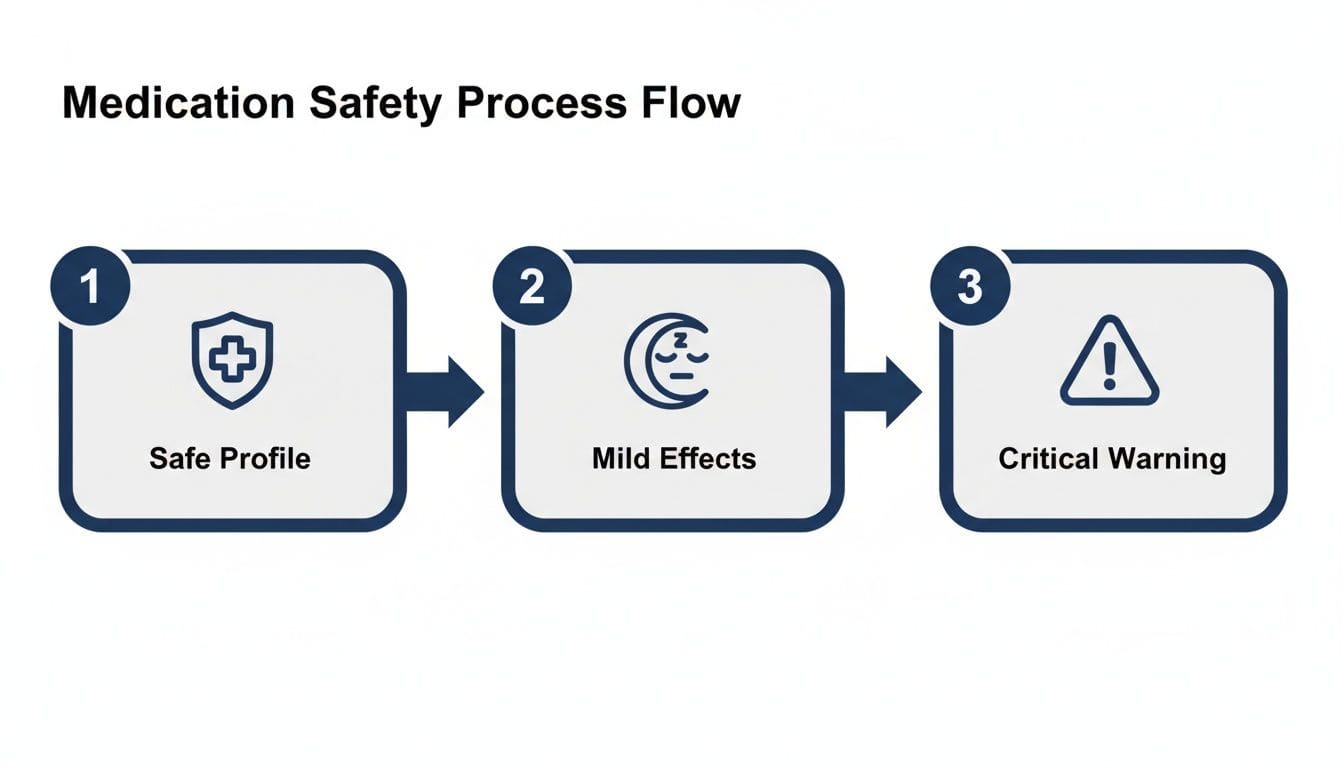
Whenever we consider a new treatment, the first question is always: "Is it safe?" Fortunately, low-dose naltrexone (LDN) has a strong reputation for being very well-tolerated. Most people find it has minimal and often temporary side effects. Its favorable safety profile is one of the main reasons it's so appealing as an adjunctive therapy for depression and other chronic conditions.
If side effects do pop up, they’re usually mild and tend to disappear within the first couple of weeks as your body gets used to the medication. In a way, they're often a sign that the LDN is starting to do its job by modulating the immune and endorphin systems.
Common mild side effects include:
- Vivid dreams: Some people notice their dreams become more intense or memorable, which isn't always a bad thing! This is thought to be related to the endorphin surge.
- Temporary sleep disturbances: You might have some trouble falling or staying asleep at first. If this happens, we can often fix it by simply moving your dose to the morning.
- Mild headache or nausea: These are usually short-lived and go away on their own without any intervention.
The Most Important Precaution: Opioid Use
There is one critical, non-negotiable rule with LDN: you cannot be taking opioid medications. This includes everything from prescription painkillers like oxycodone or hydrocodone to illicit opioids like heroin.
Naltrexone is an opioid antagonist, or a blocker. Taking it—even a tiny dose—while you have opioids in your system will slam the brakes on those receptors and trigger precipitated withdrawal. This isn't just unpleasant; it's a sudden and severe medical event with intense nausea, vomiting, muscle cramps, and anxiety. It absolutely must be avoided. A washout period of 7-14 days is typically required after stopping opioids before starting LDN.
Open and honest communication with your psychiatric nurse practitioner is essential here. We need to know about any and all opioid use, even if it's occasional or "as-needed," to keep you safe.
Who Should Avoid LDN?
Beyond opioid use, a few other situations might make LDN the wrong choice. It’s generally not recommended for individuals with acute liver disease, since naltrexone is processed by the liver. Your provider will likely run liver function tests before starting treatment.
Also, if you have a planned surgery coming up, you’ll likely need to stop LDN beforehand. This ensures that opioid-based pain medications can be used effectively after your procedure if needed.
Ongoing research continues to reinforce LDN's strong safety profile. A pilot study for major depressive disorder looked into how LDN's opioid-blocking action at low doses could reduce glial inflammation, with the goal of improving depression without adding significant side effects. You can read more about this research on clinicaltrials.gov.
This is why a thorough evaluation with a qualified provider is so important. We need to understand your complete health picture, including your personal and family medical history, before determining if using naltrexone for depression is a safe and appropriate path for you. To get a better sense of how your biology influences treatment, our guide on genetic testing for mental health can offer some valuable insights. This type of testing can help personalize your treatment plan even further.
Your LDN Treatment Journey: An Integrative Approach
Starting any new medication can bring up a lot of questions. We get it. That's why when we consider naltrexone for depression, we map out a careful, collaborative process tailored specifically to you and guided by one of our psychiatric nurse practitioners. Our approach is not just about prescribing a pill; it's about creating a comprehensive wellness strategy.
It all starts with a comprehensive evaluation. This first meeting is our chance to understand your unique situation—your symptoms, your health history, and what you’ve tried before. This deep dive ensures we create a safe and effective starting point if low-dose naltrexone (LDN) is a good fit. We'll discuss your experience with past antidepressants, any history of chronic pain or autoimmune issues, and your overall lifestyle. This information helps us determine if your depressive symptoms might have an inflammatory component, making you a strong candidate for LDN.
The Dosing Strategy: Start Low, Go Slow
When it comes to LDN, we live by a simple but critical rule: start low and go slow. This methodical approach is the key to minimizing side effects and finding the precise dose that works best for your individual body chemistry. This is a hallmark of safe and effective LDN therapy for depression.
Most patients begin with a tiny dose, often just 0.5 mg per day. From there, we’ll increase it gradually over several weeks or even a couple of months. The goal isn't to get to the highest dose, but to slowly work up to a typical target of no more than 4.5 mg per day, finding your "sweet spot" along the way. Some people find their optimal dose is as low as 1.5 mg, while others need the full 4.5 mg.
This slow-and-steady titration is so important for a couple of reasons:
- It gives your body time to adjust. Introducing the medication slowly helps sidestep potential side effects like vivid dreams or sleep disruptions.
- It helps us find your ideal dose. With LDN, more is definitely not better. The most effective dose is highly personal, and this process helps us find it.
Because these doses are so small, you can't just split a standard naltrexone tablet. Your prescription will need to be filled at a special compounding pharmacy, which can create custom-made capsules with the exact dose we’ve prescribed for you.
While LDN is known for its strong safety profile, it's essential to be aware of the key considerations, especially the absolute contraindication with opioids.
More Than Just a Prescription
Here's something we can't stress enough: LDN is rarely a magic bullet on its own. At Integrative Psychiatry of America, we see it as one powerful tool in a much bigger wellness plan designed to help you thrive. True healing from depression involves a multi-faceted strategy.
LDN works best when it supports a foundation of healthy habits. Its anti-inflammatory effects are amplified when combined with lifestyle changes that also reduce inflammation.
This means we combine LDN with other proven strategies that work together. We’ll help you build an anti-inflammatory nutrition plan, explore stress-reduction techniques like mindfulness and yoga, optimize your sleep hygiene, and use targeted lab work to track your progress. It’s an approach that addresses your symptoms from every possible angle. To dive deeper into this connection, check out our article on how nutrition affects mental health.
By blending medication with targeted lifestyle changes, we create a truly personalized path forward—one where every piece of your plan works in harmony to help you feel your absolute best. This is the essence of an integrative treatment for depression.
How to Talk to Your Provider About Naltrexone
Bringing up a new treatment option with your provider can feel intimidating, but it shouldn't. The goal is to start a productive conversation about whether using naltrexone for depression makes sense for you. This should feel like a partnership, not a confrontation. An informed patient is an empowered patient, and a good provider will welcome your proactive involvement in your care.
A great way to begin is by sharing your treatment history. Giving your psychiatric nurse practitioner a clear summary of what you’ve already tried—and what didn’t work—provides crucial context. It helps them understand your experience and see why you’re exploring a different path. Mentioning specific medications, doses, and the reasons they were discontinued can be very helpful.
Questions to Start the Conversation
Instead of just asking for a prescription, it’s more effective to frame your questions around your symptoms and curiosity. This approach shows you’ve put thought into your health and are interested in finding the right fit, not just any solution.
- "I've been reading about the link between inflammation and depression. Do you think inflammation could be playing a role in my symptoms?"
- "Could I be a good candidate for an adjunctive therapy? I learned about low-dose naltrexone and its anti-inflammatory effects and was curious."
- "Given everything we've tried so far, would a medication with a different mechanism, like LDN, be a logical next step to explore?"
This kind of dialogue fosters a collaborative relationship with your provider. At an integrative practice like ours, our psychiatric nurse practitioners are already well-versed in and open to discussing evidence-informed therapies like LDN. We see these conversations as a vital part of building a truly personalized mental wellness plan. We believe in partnering with our patients to find the most effective and sustainable solutions for their treatment-resistant depression.
By opening this door, you are taking an active role in your care. This collaborative spirit is exactly what modern, whole-person mental healthcare is all about—working together to find the path that leads to your best-possible outcome.
Frequently Asked Questions About Naltrexone for Depression
If you’re considering naltrexone for depression, you probably have a few questions. Getting clear answers is the first step toward feeling confident about your treatment choices. Here are some of the most common questions we hear from patients about this novel depression treatment.
How Long Does It Take for LDN to Work for Depression?
Unlike some psychiatric medications that work quickly, low-dose naltrexone (LDN) is a slow-and-steady treatment. Its benefits build up over time as it gradually reduces inflammation and rebalances your endorphin system.
While a few people notice changes earlier, it typically takes 8 to 12 weeks to feel the full antidepressant effects. We use a "start low, go slow" approach, working with you to find the ideal therapeutic dose, so patience is important during this initial phase. Some patients report subtle improvements in energy or pain within a few weeks, with mood benefits following later.
Is LDN a Replacement for My Antidepressant?
No, LDN is not a replacement for traditional antidepressants. Instead, clinical research points to its use as an adjunctive therapy—an "add-on" treatment that works alongside your primary antidepressant.
The idea is to improve your overall results, especially if you haven't found complete relief from your first medication. LDN works on a completely different pathway by targeting neuroinflammation, complementing what your primary antidepressant is already doing. This synergistic effect is where the real power of using LDN for depression lies.
Why Do I Need a Compounding Pharmacy for LDN?
Standard naltrexone is manufactured in a 50 mg tablet. That dose is far too high for LDN therapy, where daily doses usually fall between 1 mg to 4.5 mg. Trying to slice a 50 mg pill into such small, exact pieces on your own is not only difficult but also unsafe and leads to inaccurate dosing.
A compounding pharmacy specializes in creating customized medications. They will prepare capsules with the precise low dose prescribed by your psychiatric nurse practitioner, which ensures your treatment is safe, accurate, and effective. They can also formulate it without fillers you may be sensitive to.
Does LDN Help with Other Conditions Besides Depression?
Yes, one of the most interesting things about LDN is its wide range of off-label uses. Because it helps regulate the immune system and inflammation, it has become a versatile tool in integrative medicine.
LDN is often explored for other conditions where inflammation is thought to be a root cause, including:
- Chronic pain disorders like fibromyalgia
- Autoimmune conditions like multiple sclerosis and Hashimoto's thyroiditis
- Other mental health issues like PTSD
- Long COVID symptoms and chronic fatigue syndrome (ME/CFS)
This broad potential is exactly why providers focused on whole-person health are so interested in its unique mechanism of action. The anti-inflammatory properties of LDN make it a valuable tool in a wide array of complex chronic illnesses.
At Integrative Psychiatry Of America, our psychiatric nurse practitioners are experienced in discussing and managing treatments like LDN within a complete, whole-person wellness plan. We specialize in finding innovative solutions for treatment-resistant depression and other complex mental health conditions. To learn more or to schedule a consultation, please visit https://integrativepsychiatryofamerica.com.